Profile
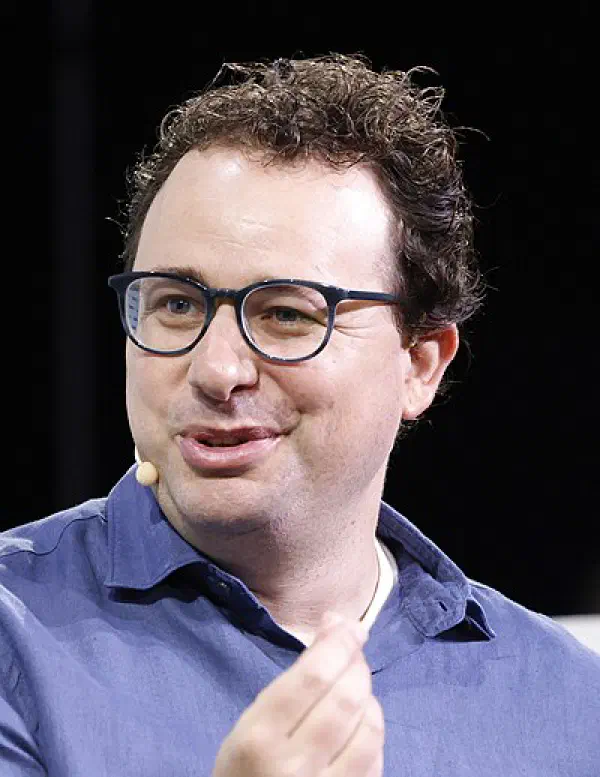
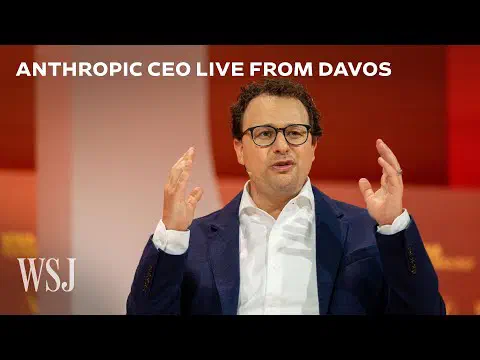
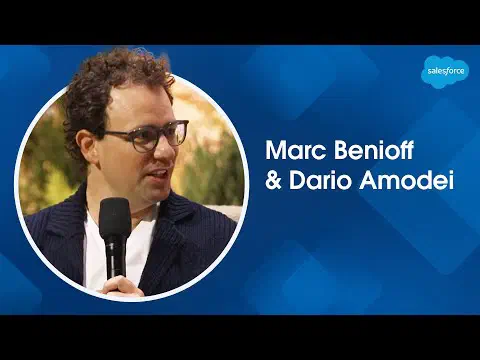
Dario Amodei is the co-founder and CEO of Anthropic, and the most consequential example in the industry of someone who bet that you could argue loudly about AI risk and still win commercially. He came to machine learning sideways — physics at Stanford, a PhD in biophysics at Princeton studying the electrophysiology of neural circuits — before landing at Baidu under Andrew Ng, where he was first author on Deep Speech 2. That paper is where the scaling thesis got into his blood: more compute and more data, applied to a dumb-simple architecture, beat clever engineering. He carried that conviction to Google Brain and then to OpenAI, where as VP of Research he was a driving force behind GPT-2 and GPT-3 and a final author on Language Models are Few-Shot Learners.
In 2021 he left with his sister Daniela Amodei and a cluster of senior OpenAI researchers — Jared Kaplan, Chris Olah, Jack Clark among them — over disagreements about direction and safety commitments. Anthropic was the result: a lab founded on the premise that the scaling curve is real, that nobody is going to stop climbing it, and that the only useful move is to be at the frontier while doing the interpretability and alignment work. That produced Constitutional AI, the Responsible Scaling Policy that most frontier labs have since imitated in some form, and the mechanistic interpretability program that Olah’s team turned into a genuine research field rather than a curiosity.
For developers, the reason Amodei matters is more prosaic and more immediate: he runs the company that ships Claude and Claude Code, which for a large slice of working programmers is now the tool the day is built around. Anthropic’s revenue trajectory has been close to absurd — roughly $1B annualized at the end of 2024, ~$9B at the end of 2025, and a reported $30B run-rate by April 2026, with Claude Code the fastest-growing product in company history. Reported private valuations put Anthropic near a trillion dollars, and the company confidentially filed for an IPO in mid-2026. If you want a clean test of whether “safety-first lab” is a viable business strategy or a marketing posture, this is the experiment running in public.
The other half of his output is essays, and they’re worth reading even if you find the argument overheated. Machines of Loving Grace (2024) is the optimistic case, laid out with unusually falsifiable predictions. The Urgency of Interpretability (2025) is the best short statement of why “we grew this thing and can’t read it” should bother you. The Adolescence of Technology (January 2026) is the one that set the current terms of debate — a 20,000-word taxonomy of five risk categories and a proposed battle plan. His register is consistent: dismissive of doomerism, dismissive of accelerationist hand-waving, and confident to a degree that makes his critics itch. Read him as the sharpest available articulation of a specific worldview, not as a neutral forecast.
Key Articles & Papers
The Adolescence of Technology Machines of Loving Grace The Urgency of Interpretability On DeepSeek and Export Controls Policy on the AI Exponential Concrete Problems in AI Safety Deep Reinforcement Learning from Human Preferences Language Models are Few-Shot Learners (GPT-3) Deep Speech 2: End-to-End Speech Recognition in English and Mandarin Anthropic's Core Views on AI SafetyVideos
Controversies
The jobs prediction. In May 2025 Amodei told Axios that AI could eliminate half of entry-level white-collar jobs within five years, and he repeated the claim in The Adolescence of Technology. Critics — including enterprise practitioners — argue he badly underestimates how slowly non-tech organizations actually adopt anything, and that dire forecasts conveniently generate urgency around his own product. He has doubled down rather than softened.
Open weights and the “safety as moat” charge. Anthropic declined to sign Nvidia CEO Jensen Huang’s July 2026 open letter opposing restrictions on open-weight models — a letter signed by Meta, Google, OpenAI, Hugging Face and others. That absence drew accusations, notably from White House AI adviser David Sacks, that Anthropic uses safety language to protect a closed-model business. Amodei responded publicly that he has never advocated banning open weights, proposing instead tighter chip controls, a crackdown on industrial-scale distillation, and mandatory safety testing for capable models regardless of licence. Whether that distinction is principled or convenient is a live argument.
The Pentagon dispute. Anthropic refused Defense Department demands to drop Claude’s contractual restrictions on mass domestic surveillance and fully autonomous lethal weapons, jeopardizing a contract worth up to $200M. The Pentagon designated Anthropic a supply-chain risk, effectively cutting the company off across the federal government. In March 2026 a federal judge issued a preliminary injunction, calling the designation “classic illegal First Amendment retaliation.” Supporters read this as the clearest proof his safety commitments have teeth; skeptics note the fight also produced excellent publicity.
“Woke AI” and the Sacks feud. Sacks has repeatedly accused Anthropic of political bias and regulatory capture, particularly over its opposition to a proposed ten-year moratorium on state AI laws and its support for California’s model-transparency bill. Amodei has publicly disputed the characterization. It remains the sharpest ongoing rift between a frontier lab and the current administration’s AI policy leadership.
Spotify Podcasts





YouTube