Anthropic President, AI safety and alignment focus
Daniela Amodei
Profile
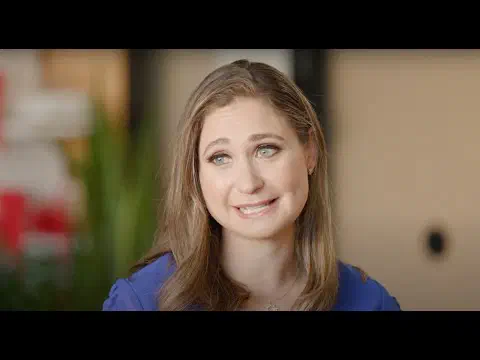
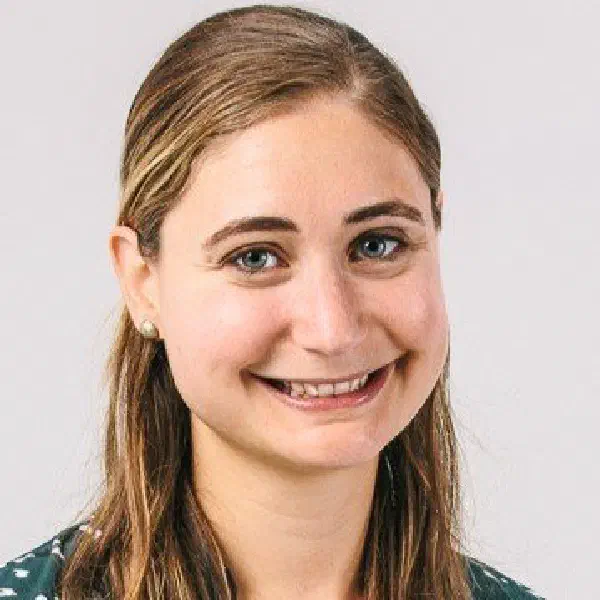
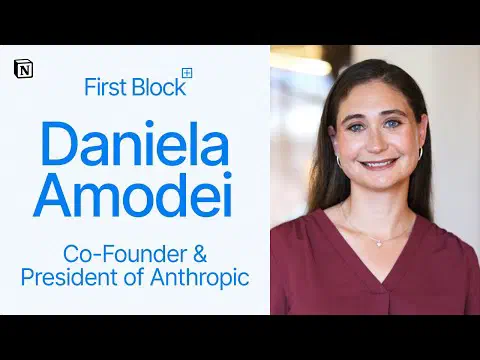
Most profiles of Anthropic are really profiles of the research. Daniela Amodei is the reason there’s a company around it. She co-founded Anthropic in 2021 with her brother Dario Amodei and five colleagues who walked out of OpenAI together, and the division of labor has held remarkably well ever since: he runs research and sets the technical direction, she runs everything that makes research shippable — operations, finance, legal, policy, comms, recruiting, and the safety and trust organization. If you use Claude in production, the parts you actually touch — the usage policies, the enterprise contracts, the deployment guardrails, the incident response — sit under her.
Her path there is unusual for a frontier lab founder, and she’s blunt about it. She has a BA in English literature from UC Santa Cruz, no CS degree, and started out in global health work and Democratic politics before joining Stripe as an early employee in 2013, where she built out operations, risk, and people teams through the company’s hypergrowth years. She joined OpenAI in 2018, managed engineering and policy teams through the GPT-2 era, and became VP of Safety and Policy — the job that put her at the center of the argument about how fast to ship. She’s argued publicly that as models absorb more of the technical work, the humanities training becomes more valuable, not less: judgment under ambiguity, reading arguments carefully, writing precisely. Developers should read that less as career advice and more as a description of what she thinks the job of building AI systems is becoming.
The operating thesis she’s articulated most consistently is what she calls “radical responsibility” — the idea that a lab owns the downstream consequences of what it ships, including the boring ones. She defines safety to cover both catastrophic risk (bio, cyber, autonomous weapons) and the unglamorous daily surface: child safety, misinformation, user wellbeing, model behavior under adversarial pressure. She also built the hiring filter to match. Anthropic ran a culture-fit interview from its earliest days, screening for communication, EQ, and kindness alongside raw technical ability, on the theory that people who won’t push back on a bad call are a safety risk. That’s a real, testable claim about org design, and it’s held up better than skeptics expected: the company is around 2,300 people and hasn’t fractured the way scaling labs usually do.
Where she is now is the interesting part. Anthropic crossed a roughly $47 billion annualized revenue run rate in May 2026 — up from about $87 million in January 2024 — closed a Series H at a $965 billion valuation, topped the CNBC Disruptor 50 list, and confidentially filed an S-1 on June 1, 2026 ahead of a public listing. Amodei is the executive who has to make “we will refuse revenue on safety grounds” survive contact with public markets, and the test cases are already public: Anthropic walked away from a $200 million Pentagon contract in February 2026 rather than loosen restrictions on domestic mass surveillance and fully autonomous weapons. She was named to TIME’s 100 Most Influential People in 2026, and Forbes pegged her net worth near $7 billion. For anyone building on Claude, she is the person whose decisions determine whether the safety posture in the model card is a real constraint or a marketing position — and so far the evidence says it costs the company money.
Key Articles & Papers
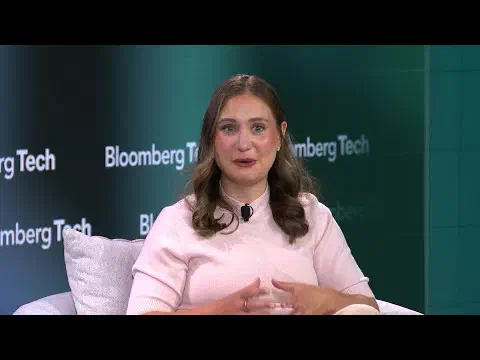
Daniela Amodei Says Curiosity Is Underrated Anthropic's Daniela Amodei on the company's 'do more with less' bet Anthropic co-founder and president Daniela Amodei on how to maintain startup culture in hypergrowth Building the Team at Anthropic: Daniela Amodei on Hiring 10x AI Engineers Anthropic co-founder doesn't regret her literature degree Core Views on AI Safety: When, Why, What, and How Anthropic's Responsible Scaling Policy Anthropic's AI safety stance clashes with the Pentagon Anthropic gives $20 million to group pushing for AI regulations ahead of 2026 elections Anthropic co-founder Daniela Amodei urges students to combine innovation with responsibilityVideos


Controversies
The copyright settlement. In Bartz v. Anthropic, authors alleged Anthropic downloaded hundreds of thousands of books from shadow libraries like LibGen to train Claude. Anthropic settled for $1.5 billion — the largest class-action copyright settlement in US history — covering roughly 500,000 works at about $3,000 per book, with final approval granted on July 20, 2026. A judge had separately found that training on lawfully acquired books could be fair use; the piracy was the problem. It’s an awkward fact for a company whose brand is doing things carefully, and worth sitting with: the safety-first lab still torrented the books.
Nepotism and insularity. Anthropic is run by two siblings, and in January 2025 Daniela’s husband Holden Karnofsky — Open Philanthropy co-founder, former OpenAI board member, and a longtime Effective Altruism figure — joined the company to work on the Responsible Scaling Policy. The hire wasn’t announced; it surfaced via his LinkedIn. Critics read the pattern as a small, ideologically homogeneous circle grading its own safety homework. The counterargument is that the field is small and the relevant expertise is scarce — but the governance optics are genuinely poor.
The Washington fight. Anthropic’s advocacy for AI regulation and its warnings about job displacement have made it a target of the Trump administration. AI czar David Sacks has accused the company of running “a sophisticated regulatory capture strategy based on fear-mongering” and called it “woke,” blaming it for the state-level regulatory patchwork burdening startups. Anthropic’s $20 million to a pro-regulation group ahead of the 2026 midterms sharpened the conflict, as did the collapsed Pentagon deal — while Greg Brockman of OpenAI became a major Trump super PAC donor. Reid Hoffman and others have defended Anthropic publicly. The honest read: whether this is principle or a moat-building strategy depends on facts not fully public, but Anthropic has demonstrably paid real costs — lost contracts, White House hostility — for positions that a pure regulatory-capture play would not require.
Spotify Podcasts





YouTube