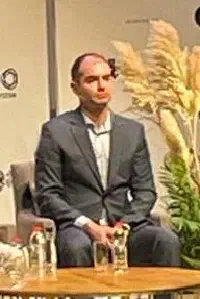
Safe Superintelligence founder and CEO, superintelligence researcher
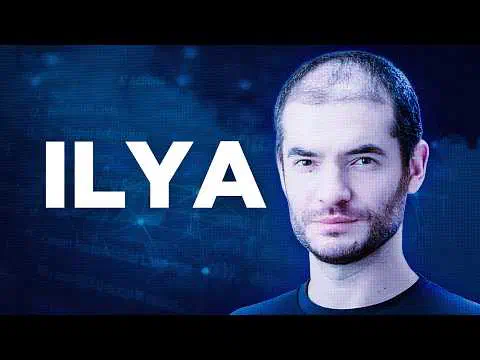
Ilya Sutskever
Profile
Ilya Sutskever is the closest thing modern AI has to a founding physicist — the researcher whose fingerprints are on nearly every result that got us here. As a graduate student under Geoffrey Hinton at the University of Toronto, he was one of the three authors of AlexNet, the 2012 convolutional network that won ImageNet by an absurd margin and effectively started the deep learning era. At Google Brain he co-authored word2vec and sequence-to-sequence learning, the paper that taught the field that a plain neural network could map one sequence to another and that machine translation was a learning problem, not a linguistics problem. He was a co-author on AlphaGo. Then he co-founded OpenAI in 2015 with Sam Altman, Greg Brockman, Elon Musk and others, and as Chief Scientist presided over GPT-1 through GPT-4, CLIP, and DALL·E.
What developers should take from his career is not the list of papers but the thesis running through them: that scale plus a simple, general objective beats clever architecture, and that predicting the next token well enough is not mimicry but compression — and compression is understanding. That conviction, which sounded faintly mystical in 2016, is the reason ChatGPT exists. His Simons Institute talk “An Observation on Generalization” is the single best hour anyone has spent explaining why the bitter lesson works, and it’s still worth watching before you read another paper on architecture tweaks.
Sutskever left OpenAI in May 2024, six months after helping the board fire Altman and then publicly regretting it. He founded Safe Superintelligence Inc. in June 2024 with Daniel Levy and Daniel Gross — a lab with, by design, exactly one product and no interim products. SSI has offices in Palo Alto and Tel Aviv, has never shipped anything, has no revenue, and has raised roughly $3B at a $32B valuation. Gross left in mid-2025 for Meta’s superintelligence effort; Sutskever became formal CEO and flatly ruled out selling the company. In July 2026, SSI announced a long-term partnership with NVIDIA including a reported $5B investment and access to the Vera Rubin platform — a roughly order-of-magnitude compute increase, and SSI’s first substantive public signal in two years that the research is “worthy of scaling up.” Earlier in 2026 he received the National Academy of Sciences Award for the Industrial Application of Science, the first time it has gone to AI work.
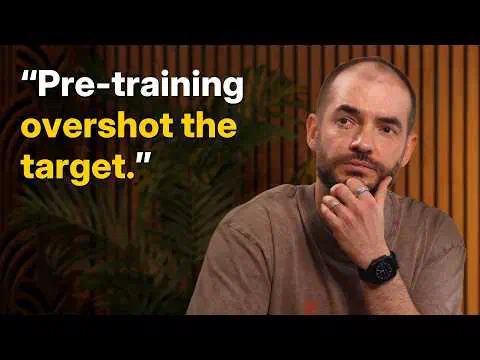
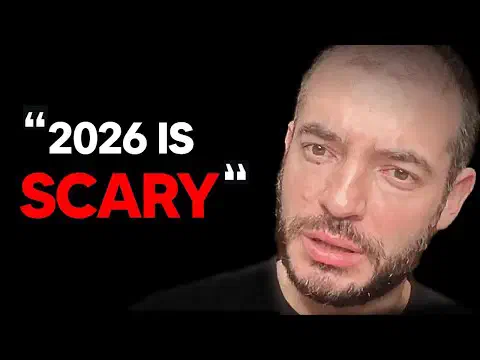
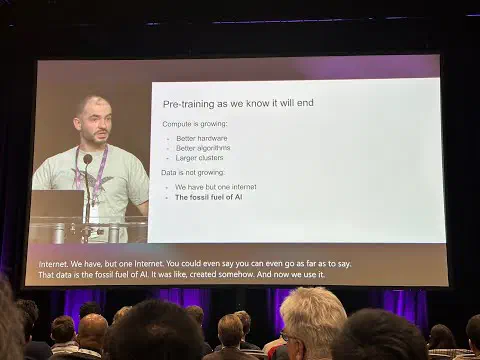
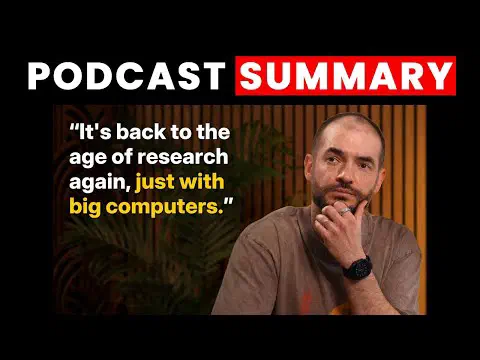
The most useful thing he’s said recently is also the most awkward for the industry that made him famous. In his NeurIPS 2024 talk he declared that pre-training as we know it will end — “we have but one internet,” data is the fossil fuel of AI, and we’ve hit peak data. In his November 2025 conversation with Dwarkesh Patel he sharpened it: 2012–2020 was an age of research, 2020–2025 an age of scaling, and 2026 onward is another age of research, where progress depends on new learning methods rather than more GPUs. For anyone learning AI today, that’s a direct claim about where the leverage is — sample efficiency and generalization, not bigger clusters. It’s a claim worth taking seriously precisely because it comes from the person with the most to lose if scaling had kept working, and worth stress-testing precisely because SSI’s valuation depends on him being right.
Key Articles & Papers
ImageNet Classification with Deep Convolutional Neural Networks (AlexNet) Distributed Representations of Words and Phrases and their Compositionality (word2vec) Sequence to Sequence Learning with Neural Networks Dropout: A Simple Way to Prevent Neural Networks from Overfitting Mastering the Game of Go with Deep Neural Networks and Tree Search Language Models are Few-Shot Learners (GPT-3) Learning Transferable Visual Models From Natural Language Supervision (CLIP) Introducing Superalignment Safe Superintelligence Inc. SSI and NVIDIA Announce Long-Term Strategic PartnershipVideos
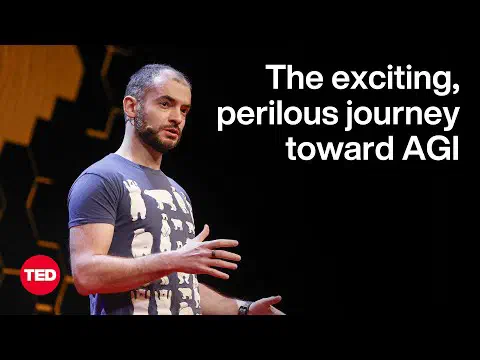
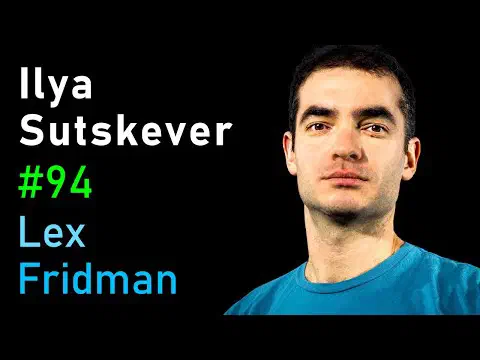
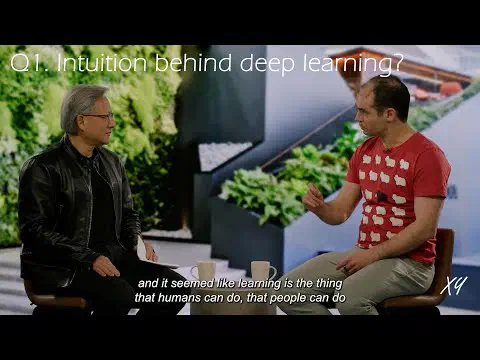
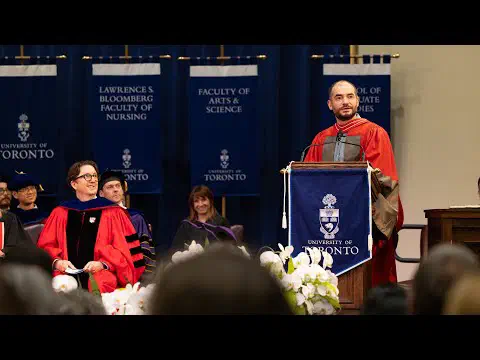
Controversies
The November 2023 OpenAI board crisis. Sutskever voted to remove Altman as CEO, then reversed within days, saying publicly that he “deeply regretted” his participation. A ~10-hour deposition taken in October 2025 for Elon Musk’s lawsuit against OpenAI was unsealed in late 2025 and showed he had authored a confidential memo alleging a pattern of dishonesty by Altman, circulated to independent directors, and that a merger with Anthropic was discussed in the aftermath. Mira Murati was reported to have contributed similar material. Sutskever’s own account is that he acted on a governance concern and misjudged how staff would react; critics read it as a failed coup by a researcher out of his depth in corporate politics. Both can be true.
The “bunker” reporting. Karen Hao’s 2025 book Empire of AI reported that Sutskever told colleagues “we’re definitely going to build a bunker before we release AGI,” and quoted a researcher describing a group at OpenAI — Sutskever among them — who believed AGI would bring “a rapture.” He has not disputed the account in detail. Whether you read it as prudent contingency planning or as evidence of quasi-religious thinking inside frontier labs depends largely on your priors about timelines.
A $32B lab with no product. SSI is the highest-valued AI company that has never shipped anything, publishes almost nothing, and gives no external evidence for its claims. That’s a deliberate structural choice — insulating research from product cycles — but it also means the field is asked to take one of its most credible researchers largely on faith, at a valuation that only makes sense if he’s right about the next paradigm.
Spotify Podcasts
YouTube