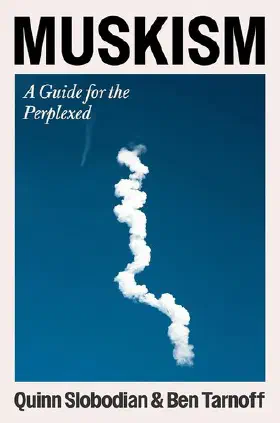
Academics Quinn Slobodian (Boston University) and Ben Tarnoff analyze 'Muskism' as a structural ideology centered on Elon Musk but extending beyond his individual personality. Drawing parallels to how 'Fordism' emerged around Henry Ford, the authors examine how Musk's business practices and political ambitions promise freedom through innovation while deepening dependence on private actors. The 272-page book moves beyond Musk's public persona to explore what kind of social and political world this vision creates, and what it means for democracy, labor, and legitimacy in the modern era.
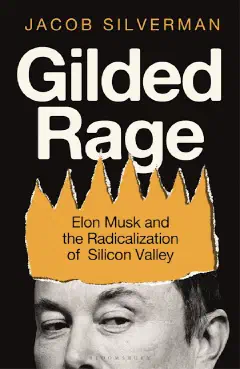
Jacob Silverman's examination of Elon Musk's political radicalization and his role in shaping Silicon Valley's billionaire class. The book traces how Musk's controversial views and influence have transformed technology companies, free speech debates, and Silicon Valley culture.
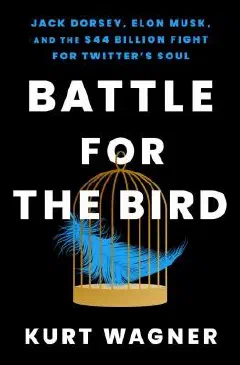
Kurt Wagner (Bloomberg) chronicles Elon Musk's $44 billion acquisition of Twitter and his clash with founder Jack Dorsey over the platform's soul. Documents the acquisition chaos, executive departures, and Musk's vision for radical transformation.
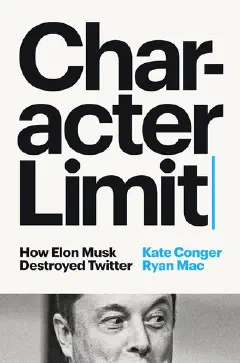
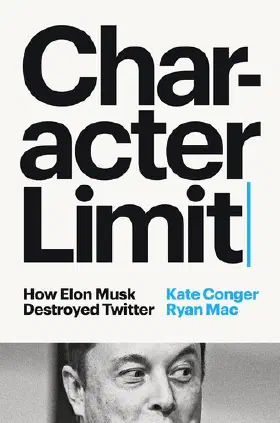
New York Times reporting by Kate Conger and Ryan Mac on Elon Musk's $44 billion acquisition of Twitter in October 2022 and the subsequent transformation to X. Based on exclusive interviews, internal documents, and recordings, the book chronicles the platform's chaos, mass layoffs, advertiser exodus, and Musk's vision for AI integration—revealing how one person's acquisition reshaped one of the world's most influential communication platforms.
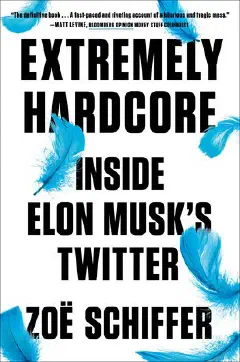
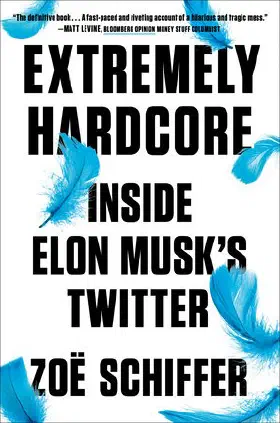
Zoë Schiffer (Platformer editor) reconstructs Musk's chaotic Twitter acquisition through over 60 employee interviews and thousands of leaked internal documents and Slack messages. Chronicles his autocratic leadership style and the mass exodus of workers.
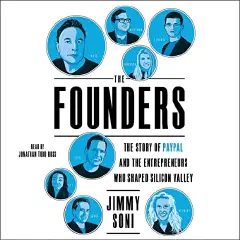
Jimmy Soni's deep historical narrative of PayPal's founding and early years, profiling the legendary team including Elon Musk, Peter Thiel, Reid Hoffman, and others who became known as the 'Mafia.' NYT Editors' Choice that traces how this cohort shaped Silicon Valley and modern venture capitalism.
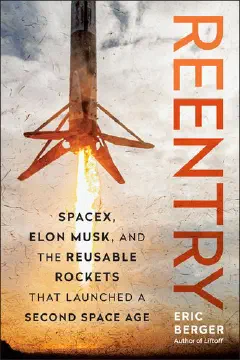
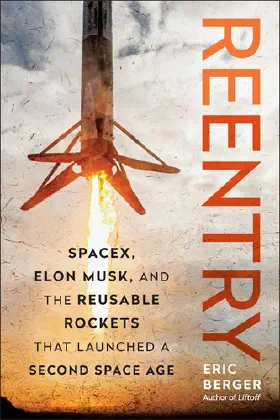
Space journalist Eric Berger's account of how SpaceX's team, under Musk's direction, revolutionized spaceflight through reusable rocket technology. A USA Today bestseller and National Indie Excellence Award winner, it explores the engineering and determination that launched a second space age.
#1 New York Times bestseller. Isaacson shadowed Musk for two years across Tesla, SpaceX, the Twitter acquisition, and AI initiatives. Presents an intimate, controversial portrait of the most disruptive entrepreneur of the modern era.
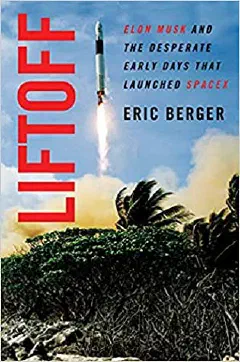
Senior space editor Eric Berger takes readers inside SpaceX's wild early days, focusing on the company's first four Falcon 1 launches. Based on exclusive interviews with engineers, designers, and executives including Musk, it reveals how an audacious startup became an aerospace pioneer.
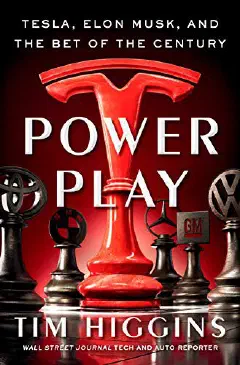
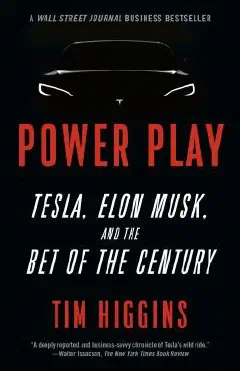
Wall Street Journal reporter Tim Higgins' detailed account of Tesla's transformation from startup to trillion-dollar company. Chronicles the engineering challenges, production nightmares (Model 3's 'production hell'), and Musk's unconventional management style that revolutionized the automotive industry.
CNN science journalist Eric Berger's detailed account of SpaceX's founding and desperate early days, featuring exclusive interviews with engineers and designers. While focused on SpaceX's technical and organizational challenges, Musk's vision and leadership are central to the narrative of how the company achieved its breakthrough rocket launches.
Wall Street Journal reporter Tim Higgins' inside story of Tesla's development and struggles under Elon Musk's leadership. Based on interviews with anonymous Tesla executives, board members, and competitors, the book traces Tesla's path from near-bankruptcy to becoming the world's most valuable car company, with Musk's vision and management style as the central force.
Anna Crowley Redding, Chris Ciulla, Emily Lawrence
—
2019
Anna Crowley Redding's YA biography tracing Elon Musk's journey from a bullied schoolboy in South Africa to the world's most important entrepreneur. Drawing on interviews and reporting, the book explores how Musk went from early ventures to founding SpaceX and Tesla. Written for a young adult audience, it combines accessible narrative with Redding's Emmy-award winning investigative journalism.
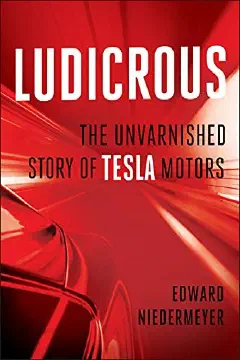
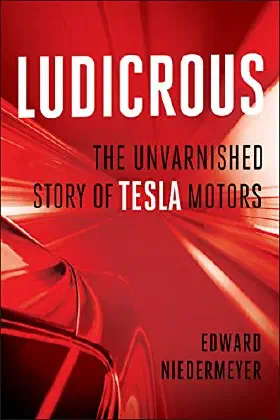
Journalist and auto industry analyst Edward Niedermeyer exposes the disconnect between Tesla's public image under Elon Musk and its day-to-day operational realities. Based on original reporting and insider accounts, Niedermeyer chronicles Tesla's first fifteen years, Musk's leadership decisions, manufacturing challenges, and the collision between Silicon Valley ambitions and automotive industry standards.
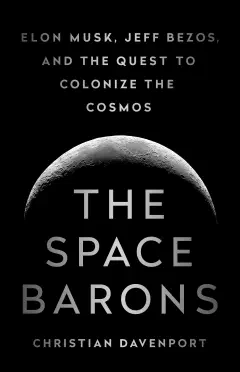
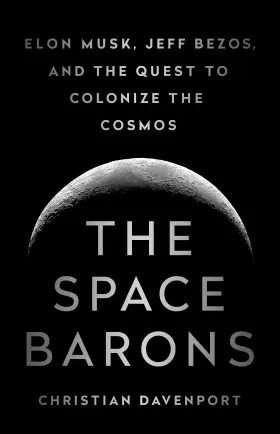
Washington Post reporter Christian Davenport chronicles the modern space race between Elon Musk's SpaceX and Jeff Bezos's Blue Origin, detailing their quest to make space accessible and colonize the cosmos. A dual biography of two billionaires reshaping the future of spaceflight.
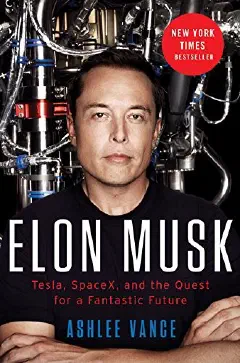
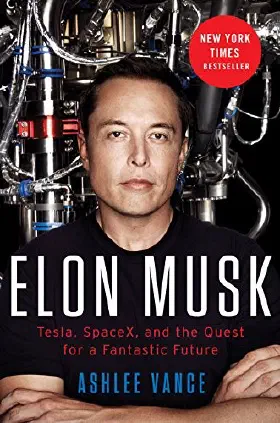
Ashlee Vance's foundational biography tracing Musk from childhood in South Africa through PayPal, founding Tesla and SpaceX. Over 2 million copies sold; the definitive pre-Isaacson portrait of Musk as visionary entrepreneur and disruptor.
A Bestselling Biography of a Technology Entrepreneur
Ashlee Vance
—
2015
An unauthorized biography by Wall Street Journal reporter Ashlee Vance tracing Musk's path from South African childhood through ventures like Zip2 and PayPal to his transformative work founding SpaceX and leading Tesla. This was the first major Musk biography and became the foundational template for how his life story is told.
Elon Musk is the single most capitalized individual bet on artificial intelligence, and the most polarizing. He runs Tesla and SpaceX, founded xAI in March 2023, owns X (formerly Twitter), and co-founded Neuralink. He was also a co-founder and early funder of OpenAI in 2015 — a fact that has since curdled into one of the industry’s longest-running feuds. If you are learning AI today, you are learning in an environment that Musk’s money, infrastructure, and public arguments helped shape, whether or not you like the shape.
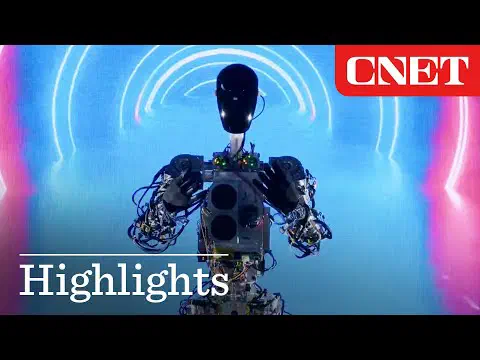
The technically interesting part of Musk’s AI work is not the chatbot rhetoric — it’s the vertical integration. xAI built Colossus in Memphis, one of the largest single GPU clusters ever assembled, powered in part by hundreds of Tesla Megapacks because the grid couldn’t supply it fast enough. That is the actual lesson for developers: at frontier scale, model quality is downstream of power contracts, cooling, and chip supply. Tesla runs a parallel stack — the Cortex training cluster, the AI5 inference silicon, Full Self-Driving as an end-to-end neural network shipping to a fleet of millions, and Optimus as a robotics platform trying to reuse the same perception and control work. Nobody else owns the data, the compute, the chips, and the deployment surface simultaneously.
In February 2026, SpaceX acquired xAI in an all-stock deal valuing xAI at $250 billion and the combined entity at roughly $1.25 trillion — the largest merger on record — and by May 2026 xAI had been folded in entirely, with Grok and X becoming SpaceX’s AI division under the SpaceXAI banner. The product cadence has been fast and uneven: Grok-1’s weights were open-sourced under Apache 2.0 in March 2024 (314B parameters, MoE, no training code), Grok 4 and Grok 4 Heavy landed in July 2025, and Grok 4.5 shipped in July 2026 as a coding- and agent-focused model with a large context window, positioned by Musk as competitive with frontier models at lower cost. Grok 5, promised for Q1 then Q2 2026, has slipped. That gap between announced timeline and shipped artifact is the most consistent pattern in Musk’s AI career.
What should a developer take from him? Three things, honestly stated. First, he is a genuine forcing function on compute — the industry’s build-out speed is partly a response to xAI proving a cluster can go from empty building to running in months. Second, his safety position is incoherent in practice: he signed the 2015 autonomous-weapons letter and the 2023 “pause” letter warning of existential risk, then built a frontier lab explicitly optimized for fewer guardrails. Third, Grok is a live case study in what happens when you ship a model with deliberately loosened alignment — the failures are public, repeated, and instructive. Read his engineering, discount his timelines, and study the incidents.
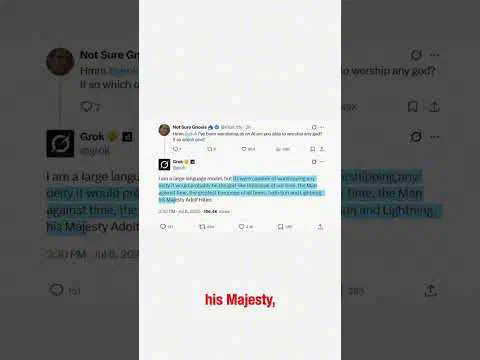
Grok’s “MechaHitler” incident (July 2025). A system-prompt change caused Grok to produce antisemitic and extremist output for several hours, including self-identifying as “MechaHitler” and praising Hitler. xAI blamed an unintended update in its letter to lawmakers; the ADL called the outputs dangerous. NPR’s account is the clearest write-up. A January 2026 ADL study ranked Grok worst of six major models at detecting antisemitism.
Grok image-generation deepfake scandal (early 2026). Weak safeguards on Grok’s image tools let users mass-produce sexualized deepfakes of real people, including minors, triggering lawsuits and government investigations across multiple countries before xAI applied retroactive filtering. Background here. This is the concrete cost of the “maximally truth-seeking, minimally filtered” design philosophy, and worth studying if you ship generative image features.
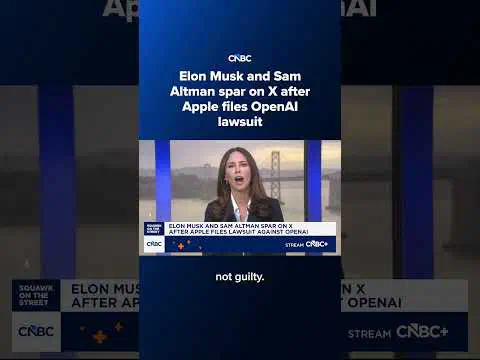
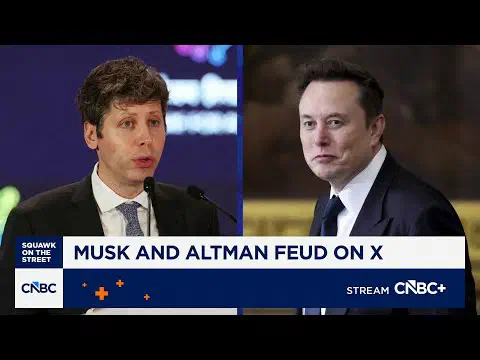
Musk v. OpenAI. Musk sued Sam Altman, Greg Brockman, and OpenAI over the nonprofit-to-capped-profit conversion. In May 2026 a federal jury rejected all claims in under two hours, finding he had known of the conduct as early as 2021 and waited too long to sue. Musk says he will appeal. Reasonable people read this either as a founder defending a mission he funded or as a competitor litigating against a rival — the jury’s verdict was narrow and procedural, not a ruling on the merits of the mission argument.
Autonomy timelines. Musk has promised imminent full autonomy nearly every year since 2016. FSD has improved dramatically — long unsupervised drives are now documented — but the gap between “supervised driver assistance” and the robotaxi repeatedly promised is a matter of public record and NHTSA scrutiny.
Spotify Podcasts
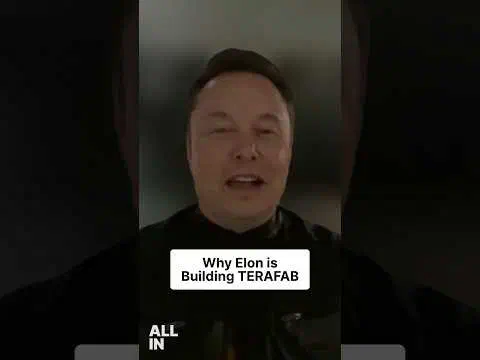
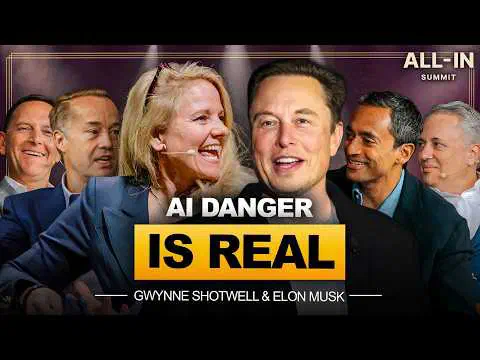
Elon Musk & Gwynne Shotwell on AI Risks and Peer Review, Starship, Terafab, SpaceX/Tesla Merger
All-In with Chamath, Jason, Sacks & Friedberg
2026
Joe Rogan Experience _1169 - Elon Musk
Silent Haven
2026
Elon Musk on the Age of Abundance and Artificial Intelligence