Eureka Labs founder, AI education pioneer
Andrej Karpathy
Profile
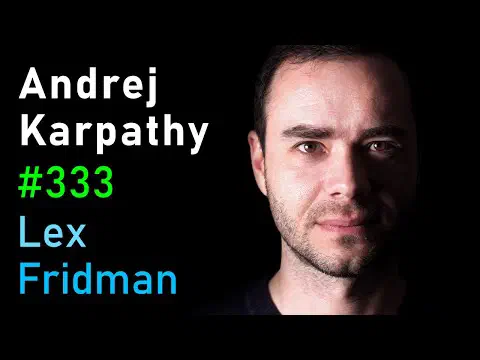
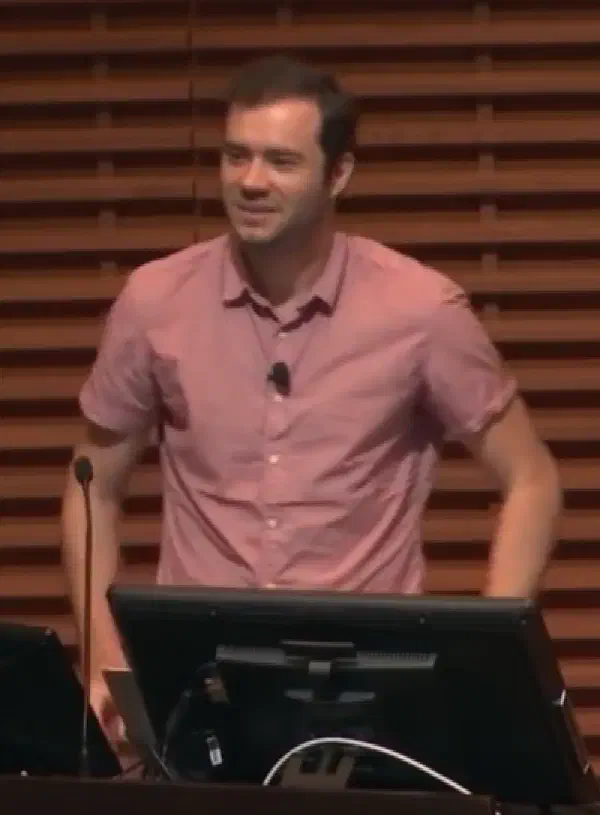
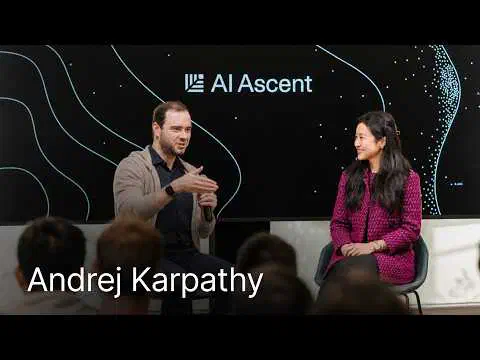
Andrej Karpathy is the closest thing modern AI has to a great lecturer — and that framing undersells him, because he’s also been in the room for three of the field’s defining builds. He did his PhD at Stanford under Fei-Fei Li, where he created and taught CS231n, the convolutional-networks course that trained a large fraction of the people now running AI labs. He was a founding member of OpenAI in 2015, left in 2017 to become Director of AI at Tesla — owning the vision stack behind Autopilot and Full Self-Driving — returned to OpenAI briefly in 2023, then left in early 2024 to found Eureka Labs, an AI-native education company. In May 2026 he joined Anthropic’s pre-training team, working on using Claude to accelerate the research loop that produces the next generation of models. He said he remains “deeply passionate about education” and plans to return to it.
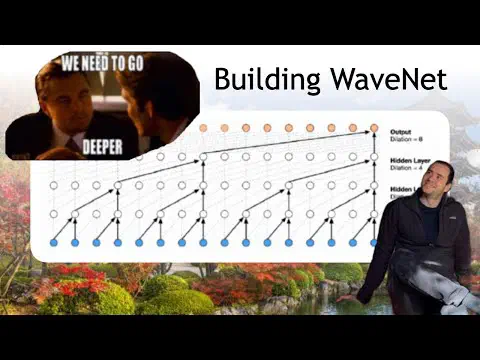
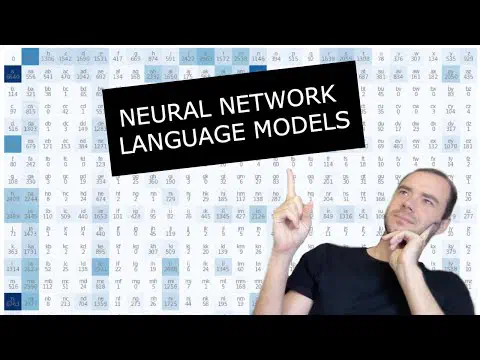
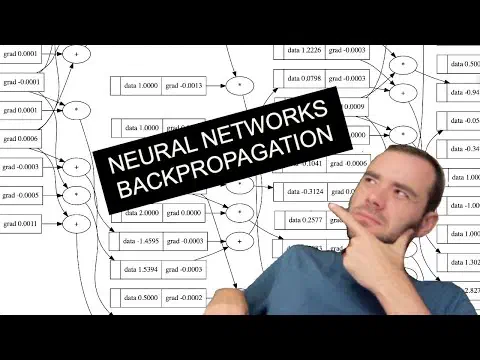
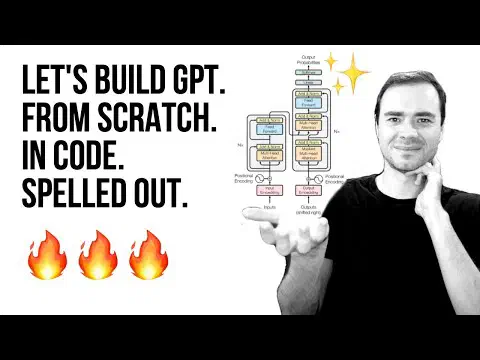
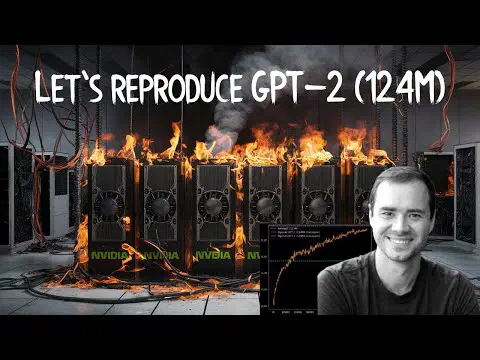
What makes Karpathy matter to a developer is a specific, unusual conviction: that you do not understand a system until you have written the smallest working version of it yourself. His GitHub is a curriculum disguised as a repo list. micrograd is a ~150-line autograd engine that makes backpropagation stop being magic. nanoGPT is a GPT-2 trainer you can actually read end to end. llm.c trains GPT-2 in raw C/CUDA with no PyTorch. nanochat — “the best ChatGPT that $100 can buy” — goes all the way from tokenizer to chat interface in one hackable codebase you can train on a rented 8×H100 node in a few hours. His Neural Networks: Zero to Hero video series builds up from micrograd to a working GPT. If you want to genuinely understand transformers rather than call them, this is the shortest honest path anyone has published.
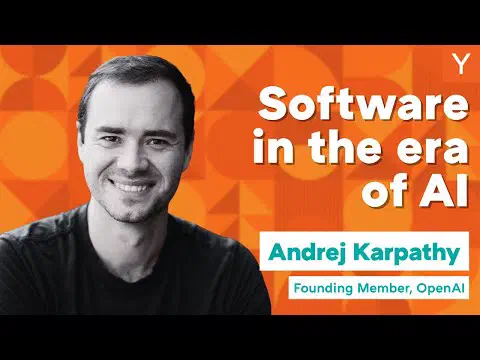
He is also the field’s most quoted framer. “Software 2.0” (2017) argued that neural network weights are a new kind of source code with datasets as the programming interface. Eight years later his YC AI Startup School keynote extended it to “Software 3.0” — English as the programming language, LLMs as a new computing substrate, and foundation models as “fallible people spirits” whose output you verify rather than trust. In February 2025 a throwaway tweet coined “vibe coding,” which became Collins Dictionary’s Word of the Year. By 2026 he had largely retired the phrase in favor of agentic engineering: you’re not writing 99% of the code, you’re orchestrating agents against a spec while remaining personally on the hook for security, regressions, and maintainability. That arc — from “give in to the vibes” to “keep the quality bar” — is a useful map of where AI-assisted development actually landed.
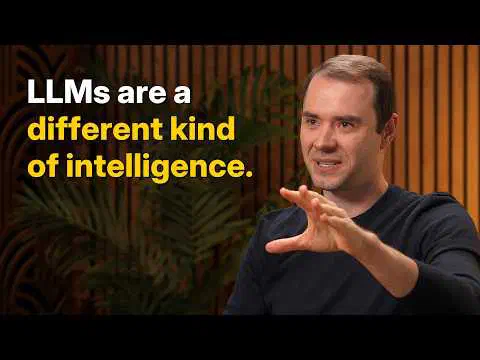
He is not a hype merchant, which is why his skepticism carries weight. On Dwarkesh Patel’s podcast in October 2025 he argued AGI is still roughly a decade away, called reinforcement learning “terrible” as currently practiced, and described frontier LLM research as summoning ghosts — intelligence statistically distilled from human text — rather than growing animals shaped by evolution and embodied drive. He has said the same about self-driving: there are several nines of reliability left before Level 4–5 is real, and each nine is years of work. Coming from the person who ran Tesla’s Autopilot AI, that’s a materially different message than the one Tesla’s CEO has been selling. For a developer trying to calibrate, Karpathy is the rare source who is both deeply inside the technology and unwilling to round the timeline down.
Key Articles & Papers
The Unreasonable Effectiveness of Recurrent Neural Networks Software 2.0 A Recipe for Training Neural Networks Deep Reinforcement Learning: Pong from Pixels Yes you should understand backprop Deep Visual-Semantic Alignments for Generating Image Descriptions Visualizing and Understanding Recurrent Networks Animals vs Ghosts Power to the people: How LLMs flip the script on technology diffusion Sequoia Ascent 2026 summaryVideos
Controversies
“Vibe coding.” His February 2025 tweet — “you fully give in to the vibes, embrace exponentials, and forget that the code even exists” — was, by his own later account, a throwaway shower thought. It became a Word of the Year and a multi-billion-dollar product category. Critics including Andrew Ng pushed back on the framing rather than the practice, arguing it glamorized unreviewed AI output in production systems. Karpathy has since been explicit that he meant it for throwaway weekend projects and has moved to agentic engineering as the serious-work term. It’s fair to say the term escaped him; it’s not fair to blame him for what the industry did with it.
Tesla autonomy timelines. He led Tesla’s AI during the years Elon Musk repeatedly promised imminent full autonomy that did not arrive. Karpathy did not publicly contradict those claims at the time; since leaving he has been consistently skeptical, noting that Level 4–5 needs several more nines of reliability and each one is years of work. Some read the shift as belated candor, others as a researcher finally free to speak plainly. Both readings have merit.
The Anthropic move. His May 2026 hire was widely covered as a blow to OpenAI and read by some as an abandonment of the education mission he’d spent two years championing — Eureka Labs shipped far less publicly than its launch suggested, and LLM101n never fully materialized as a course. He has said he intends to return to education in time.
Spotify Podcasts


YouTube