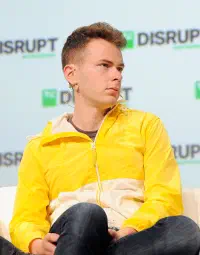
Meta Superintelligence Labs researcher, former Safe Superintelligence CEO
Daniel Gross
Profile
Daniel Gross is one of those figures who keeps showing up at the exact center of whatever is about to matter in technology. Born in Jerusalem in 1991 to American parents, he talked his way into Y Combinator at 17 — its youngest founder at the time — to build a personal-search startup called Greplin, later renamed Cue. Apple bought it in 2013, and Gross spent the next several years there running machine-learning and search efforts back when “ML at a big consumer company” meant wrangling Siri and on-device intelligence, long before transformers made the field fashionable. For a developer trying to understand who actually shaped applied AI inside the industry’s largest companies, that Apple stint is the underrated part of his résumé.
What made Gross genuinely influential, though, is what he did with capital and compute. After a stint as a YC partner launching its dedicated AI program and founding the talent-scouting experiment Pioneer, he teamed up with Nat Friedman, the former GitHub CEO, into what became the most consequential AI angel-investing partnership of the 2020s. Formalized in 2023 as NFDG — a roughly $1.1 billion fund — the duo backed Perplexity, ElevenLabs, Groq, and dozens of others. More interestingly for builders, they didn’t just write checks. They ran AI Grant, handing $250K to AI-native startups, and they built the Andromeda Cluster — thousands of H100/H200/B200 GPUs their portfolio companies could rent time on. In an era where compute, not code, was the bottleneck, Gross and Friedman understood that the scarce resource was the product.
In 2024 Gross went from funding the frontier to building it, co-founding Safe Superintelligence Inc. (SSI) with Ilya Sutskever and Daniel Levy. Gross served as CEO of the famously secretive lab, which raised over $1 billion and was reportedly valued near $32 billion on a single-product promise: build safe superintelligence and nothing else along the way. Then, in mid-2025, Meta tried to acquire SSI outright, got rebuffed by Sutskever — and hired Gross instead. He left SSI at the end of June 2025 to join Meta Superintelligence Labs, the aggressively funded unit assembled alongside Alexandr Wang and personally championed by Mark Zuckerberg. Sutskever stepped into the CEO role at SSI in his wake.
For developers today, Gross matters as a case study in leverage. He is not a papers-and-benchmarks researcher; he is an operator-investor who repeatedly identified where the frontier was heading — search, then applied ML, then the great GPU squeeze, then superintelligence itself — and positioned capital, talent, and infrastructure ahead of the crowd. His long-running interviews with Friedman are some of the clearest public thinking on where AI margins, moats, and product value actually accrue. If you want to understand the business physics underneath the models you’re building on, Gross is worth listening to.
Key Articles & Papers
An Interview with Daniel Gross and Nat Friedman about Models, Margins, and Moats An Interview with Nat Friedman and Daniel Gross Reasoning About AI An Interview with Daniel Gross and Nat Friedman about Apple and AI An Interview with Daniel Gross and Nat Friedman about the AI Hype Cycle An Interview with Daniel Gross and Nat Friedman about ChatGPT and the Near-Term Future of AI AI GrantControversies
Gross’s 2025 exit from Safe Superintelligence to join Meta drew scrutiny, less for anything he did wrong than for what it symbolized. SSI was founded on the premise of building safe superintelligence with no commercial distractions; Meta’s superintelligence effort is explicitly product- and scale-driven. Critics saw a safety-mission co-founder decamping for the industry’s most aggressive talent-and-compute raid — part of a broader wave of Meta poaching that some argued was hollowing out smaller, safety-focused labs by dangling enormous packages. Defenders note that Sutskever remained and took the CEO role, SSI kept its capital and independence, and Gross’s move was a personal career decision, not a fire sale. It’s a fair debate about incentives at the frontier rather than a scandal — but worth knowing as context for how the 2025 talent wars reshaped who works where.
Spotify Podcasts
YouTube