
Anthropic Head of Public Benefit, co-founder and policy leader
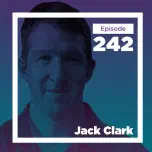
Jack Clark
Profile
Jack Clark is the closest thing the AI industry has to an embedded war correspondent who then went and helped run the war. As co-founder and Head of Public Benefit at Anthropic, he leads the newly launched Anthropic Institute, the company’s research arm for studying how advanced AI reshapes economies, security, and institutions. But most developers know him for something more humble and more durable: Import AI, the weekly newsletter he has written for the better part of a decade, now read by well over 100,000 people. If you want to understand how one of the most policy-connected people in AI actually thinks about the technology week to week, Import AI is the primary source — and it’s free.
Clark’s path is unusual. He came up not as a researcher but as a journalist — by his own description “the world’s only neural network reporter” at Bloomberg and a distributed-systems reporter at The Register — before jumping the fence in 2016 to become Policy Director at OpenAI. In 2020 he left alongside Dario Amodei and a cohort of other departing OpenAI researchers to co-found Anthropic. Along the way he helped create the AI Index at Stanford HAI — the annual data-driven report that has become the standard reference for measuring AI progress — and served on the US National Artificial Intelligence Advisory Committee. Few people have sat at as many of the tables where AI’s trajectory gets argued over.
What makes Clark worth following for a developer is that he refuses the two easy postures. He is neither an accelerationist cheerleader nor a doomer. His framing — captured in his widely-shared 2025 essay “Technological Optimism and Appropriate Fear” — is that you can believe the technology will go further and faster than almost anyone expects and hold a sober, non-hysterical fear about systems that are becoming autonomous, situationally aware, and deeply embedded in human infrastructure. That both-things-at-once stance is the intellectual house style of Anthropic, and Clark is arguably its clearest public voice.
For someone building with AI today, Clark matters as a translator. He reads the papers so you can too, he explains why a benchmark result or a policy fight actually matters, and he does it in prose that closes each week with a piece of speculative near-future fiction. He is also, fairly, a lobbyist for a company with enormous commercial stakes — and reading him well means keeping both of those facts in view at once.
Key Articles & Papers
Technological Optimism and Appropriate Fear Import AI (weekly newsletter archive) About Import AI / Jack Clark Introducing The Anthropic Institute Stanford AI Index ReportVideos


Controversies
Clark’s dual role — public-benefit steward and de facto chief policy advocate for a multi-billion-dollar company — has drawn scrutiny. During the fight over California’s SB 1047 AI-safety bill, Anthropic first declined to support the bill and pushed a set of amendments; critics (including some in the AI-safety community itself) argued the company’s lobbying worked to soften provisions like pre-harm enforcement and independent oversight while Anthropic publicly positioned itself as pro-regulation. Anthropic ultimately said the amended bill’s benefits “likely outweigh its costs.” Clark has since been a vocal advocate for AI regulation and against blanket federal preemption of state safety laws, but the underlying tension remains: the same person calling for guardrails also represents a company with a direct commercial interest in where those guardrails land. Readers of Import AI do well to weigh his analysis against that fact rather than despite it.
Spotify Podcasts







YouTube