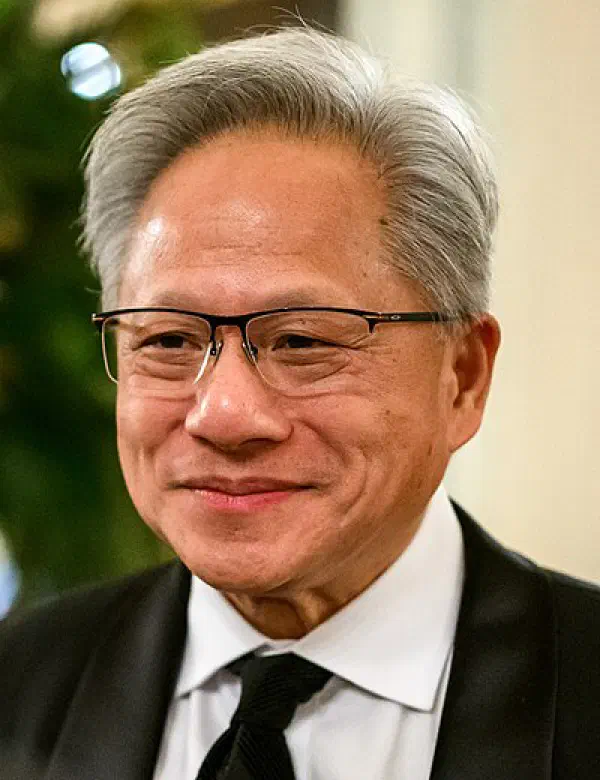
NVIDIA CEO and co-founder, AI infrastructure pioneer
Jensen Huang
Biographies
Profile
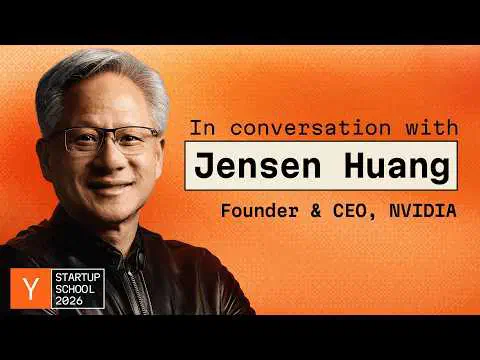
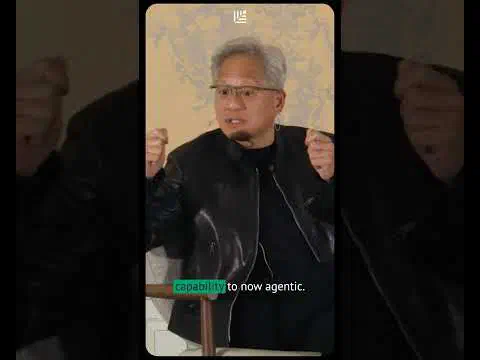
Jensen Huang is the closest thing the AI era has to a kingmaker, and he got there by being right about one thing for thirty years: that general-purpose CPUs would run out of road, and that massively parallel hardware plus a software moat would inherit the future. He co-founded NVIDIA in 1993 in a Denny’s, spent the nineties and 2000s fighting a brutal commodity war over 3D game graphics, and then made the decision that actually matters to anyone reading this: in 2006 he bet the company on CUDA, shipping a C-like programming model on every consumer GPU and eating years of gross-margin pain to do it. Wall Street hated it. It was, in retrospect, the single most consequential platform decision in modern computing — because when Ilya Sutskever, Alex Krizhevsky and Geoffrey Hinton trained AlexNet on two gaming GPUs in 2012, the ladder was already leaning against the wall.
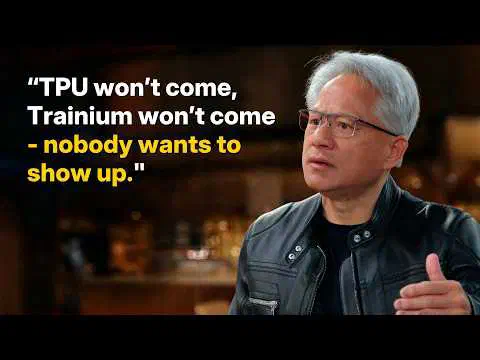
What Huang understood before nearly anyone is that the moat was never the silicon. Competitors have built faster chips on paper repeatedly; almost none have beaten the stack. cuDNN, NCCL, TensorRT, Triton, the driver, the compiler toolchain, twenty years of accumulated kernels, and the plain fact that every ML tutorial on earth assumes cuda:0 — that is the lock-in. If you are learning to build with AI today, this is the practical takeaway: your PyTorch code runs on a substrate Huang spent two decades making inevitable, and the “GPU-poor vs. GPU-rich” divide that shapes which labs can train frontier models is a direct consequence of his supply decisions. He then extended the same logic upward, arguing that the unit of computing is no longer the chip or the server but the AI factory — a whole datacenter, networking included, sold as one product. NVLink, InfiniBand, the Mellanox acquisition and rack-scale systems like GB200/NVL72 are that thesis expressed in metal.
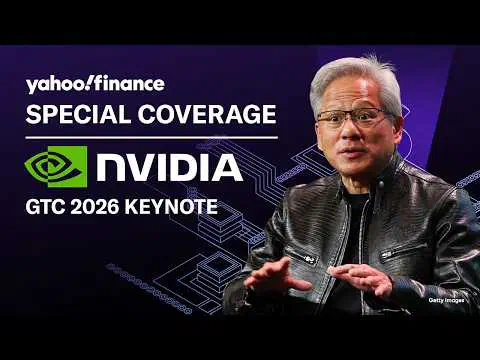
Today NVIDIA sits around $5 trillion in market value, having become the first company ever to cross that mark in late 2025 before trading the world’s-most-valuable crown back and forth with Apple through 2026. The cadence has become an annual architecture drumbeat — Hopper, Blackwell, and now the Vera Rubin platform unveiled through 2026, including NVIDIA’s first standalone datacenter CPU. At GTC in March 2026 — CUDA’s twentieth anniversary — Huang said Blackwell and Vera Rubin purchase orders had reached roughly $1 trillion through 2027, double the prior year, and pitched the shift from generative AI to agentic and physical AI as the next platform wave. In December 2025 he made NVIDIA’s largest deal ever, a ~$20B licensing-and-acquihire of Groq’s inference technology that brought Jonathan Ross in-house — a candid admission that inference, not training, is where the next fight happens, and that Huang would rather buy the sharpest challenger than race it.
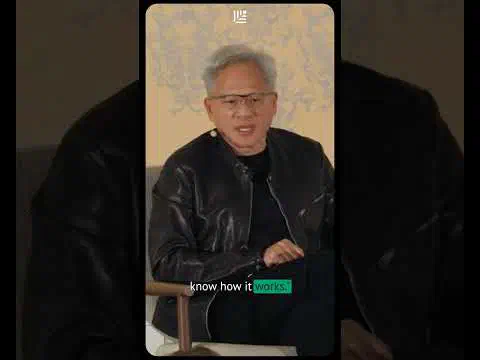
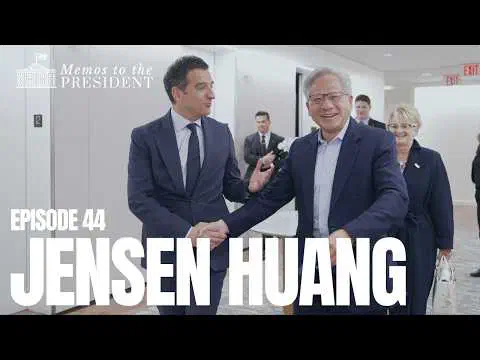
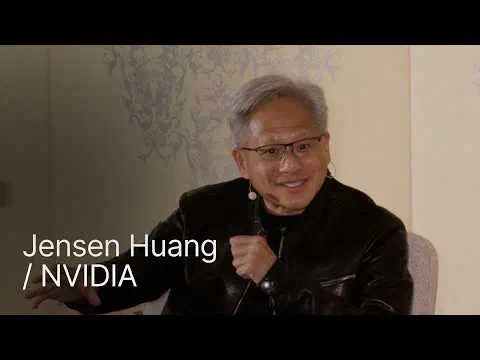
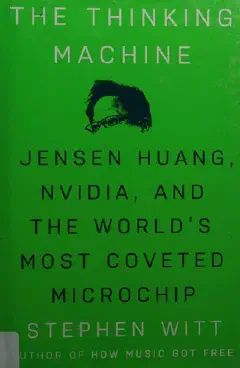
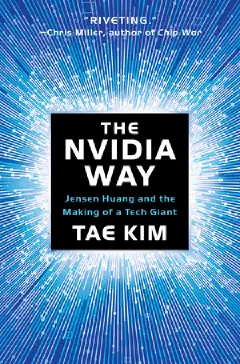
He is also, unusually for a hardware CEO, a genuinely good teacher. The leather jacket and the two-hour unscripted keynotes are a bit, but the content underneath is real technical argument: why Moore’s Law’s economics broke, why accelerated computing is a full-stack co-design problem, why “the more you buy, the more you save” is a claim about performance-per-watt-per-dollar rather than a punchline. Stephen Witt’s 2025 biography The Thinking Machine — Financial Times Business Book of the Year — is the best portrait of how the management style (flat org, ~60 direct reports, no 1:1s, “pain and suffering” as an explicit value) produced this. He was named the 2026 IEEE Medal of Honor recipient and appointed to the President’s Council of Advisors on Science and Technology. Where he is vulnerable is exactly where the incentives are loudest: he is the largest single beneficiary of the AI capex boom, and increasingly its underwriter too.
Key Articles & Papers
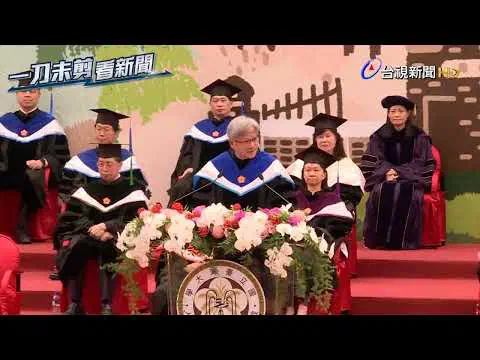
An Interview with Nvidia CEO Jensen Huang About AI's iPhone Moment An Interview with Nvidia CEO Jensen Huang About Chip Controls, AI Factories, and Enterprise Pragmatism An Interview with Nvidia CEO Jensen Huang About Accelerated Computing An Interview with Nvidia CEO Jensen Huang About Manufacturing Intelligence NTU Commencement Speech 2023 (full transcript) NVIDIA CEO Jensen Huang | Acquired Jensen Huang: NVIDIA — The $4 Trillion Company & the AI Revolution (transcript) NVIDIA CEO Jensen Huang and Global Technology Leaders to Showcase Age of AI at GTC 2026 Jensen Huang biographer Stephen Witt: What I learned about Nvidia's CEOVideos
Controversies
China export controls and the revenue-share deal. Huang has campaigned relentlessly against US restrictions on advanced chip sales to China, arguing they “largely backfired” by incubating a domestic Chinese hardware and software stack rather than slowing it. In August 2025 he negotiated an arrangement in which NVIDIA and AMD would hand the US government 15% of China chip revenue in exchange for export licenses — reported as a haggle down from Trump’s initial 20% ask. Critics called it an unconstitutional export tax dressed as national-security policy, and noted it undercut the security rationale for the controls in the first place (TIME). Beijing then discouraged domestic firms from buying the chips anyway. In June 2026 Senator Elizabeth Warren invited Huang to testify before the Senate Banking Committee, and in July he met with Commerce Secretary Howard Lutnick amid an investigation into possible export violations. He is on the opposite side of this argument from Dario Amodei, who has publicly argued controls are working — an honest disagreement between two people with very different exposures to the outcome.
Circular financing. NVIDIA invests in, lends to, or guarantees debt for AI companies that then buy NVIDIA GPUs — OpenAI, CoreWeave, and others. By July 2026 a fresh round of deals worth over $750 billion had revived the accusation that this is vendor financing inflating its own demand signal. Huang has pushed back — noting, for instance, that the proposed $100B OpenAI investment was never binding and would proceed incrementally — and the deals are disclosed, not hidden. But the structural critique stands: when the supplier funds the customer, revenue growth stops being a clean read on end demand, and the downside compounds if AI economics disappoint.
Buying the competition. The ~$20B Groq deal in December 2025 — structured as a non-exclusive licensing agreement plus an acquihire of Groq’s leadership rather than a conventional acquisition, at roughly 3x Groq’s last private valuation — was widely read as neutralizing the most credible specialized inference challenger while sidestepping the merger review a straight acquisition would have triggered. Reasonable people disagree on whether that is savvy dealmaking or regulatory arbitrage; either way, it is a reminder that the CUDA moat is defended commercially as well as technically.
Spotify Podcasts




YouTube