
PrometheusRoot
Blog Links Prometheans 100+ AI Books AI Companies Why are you here?
← Prometheans 100+
×
Demis Hassabis
pioneer
FounderResearcherIndustry leader
X / Twitter Wikipedia
deepmindalphafoldalphagogeminigooglenobel

Recognition

TIME 100 AI 2023 TIME 100 AI 2024

Related

pioneer Sam Altman pioneer Sundar Pichai
← Prometheans 100+ Demis Hassabis
TIME 100 AI 2023 TIME 100 AI 2024

Google DeepMind CEO and Isomorphic Labs founder

Demis Hassabis

CEO & Co-Founder — Google DeepMind Founder & CEO — Isomorphic Labs Co-Founder — DeepMind
Listen — profile
0:00 / 4:05

Biographies

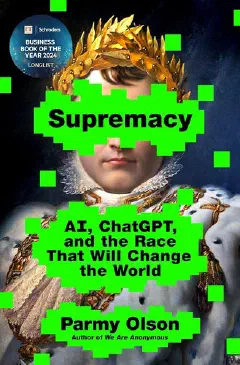
Supremacy
Supremacy
AI, ChatGPT and the Race That Will Change the World
Parmy Olson · 2024 ●
Parmy Olson's chronicle of the AI race between Demis Hassabis and Sam Altman for AGI dominance.
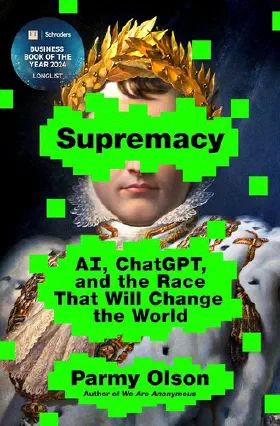
Supremacy

Supremacy

AI, ChatGPT and the Race That Will Change the World

Parmy Olson — 2024

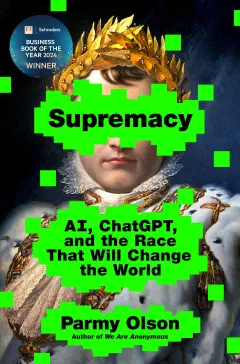
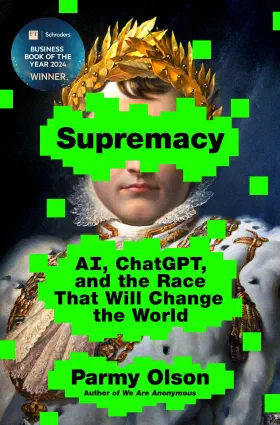
Financial Times Business Book of the Year (2024). Narrates the intertwined competition between Google DeepMind's Demis Hassabis and OpenAI's Sam Altman to build artificial general intelligence, exploring their personal trajectories and the commercial and strategic stakes in reshaping the world.

ISBN
9781250337740
Published
2024
More →
Supremacy: AI, ChatGPT, and the Race That Will Change the World
Parmy Olson · 2024 ●
Dual portrait of Sam Altman and Demis Hassabis as the two founders whose rival labs set the pace of…
Supremacy: AI, ChatGPT, and the Race That Will Change the World

Supremacy: AI, ChatGPT, and the Race That Will Change the World

Parmy Olson — 2024

Dual portrait of Sam Altman and Demis Hassabis as the two founders whose rival labs set the pace of the modern AI race.

Publisher
St. Martin's Press
Published
2024
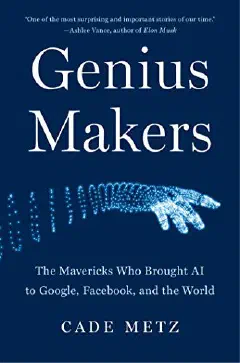
Genius Makers: The Mavericks Who Brought A.I. to Google, Facebook, and the World
Cade Metz · 2021 ●
Journalist Cade Metz's history of AI pioneers — Goodfellow's GAN breakthrough at Montreal bar to Google.
Genius Makers: The Mavericks Who Brought A.I. to Google, Facebook, and the World

Genius Makers: The Mavericks Who Brought A.I. to Google, Facebook, and the World

Cade Metz — 2021

Group biography of the researchers and executives — Hinton, Hassabis, LeCun, Altman, and others — who turned deep learning into a global industry.

Publisher
Dutton
ISBN
9781524742683
Published
2021
More → Amazon
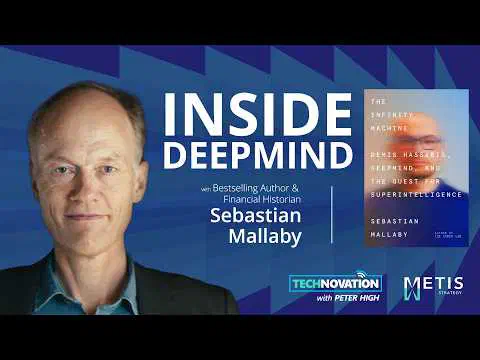
The infinity machine
Demis Hassabis, DeepMind, and the Quest for Superintelligence
Edward Scheer · 2009 ↻
Sebastian Mallaby's biography of DeepMind founder Demis Hassabis — the quest for AGI.
The infinity machine

The infinity machine

Demis Hassabis, DeepMind, and the Quest for Superintelligence

Edward Scheer — 2009

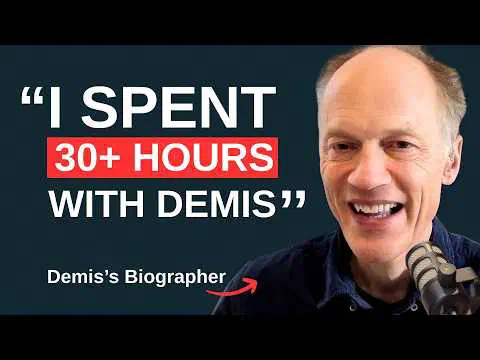
Wall Street Journal reporter and bestselling author Sebastian Mallaby's biography of Demis Hassabis, based on 30+ hours of interviews with Hassabis and over 100 interviews with those in his circle. Traces Hassabis from child chess prodigy and teenage game designer through neuroscience studies and founding of DeepMind to leading Google's AI effort. Winner of the 2024 Nobel Prize in Chemistry for AlphaFold.

ISBN
9780593831847
Published
2009
More →

Profile

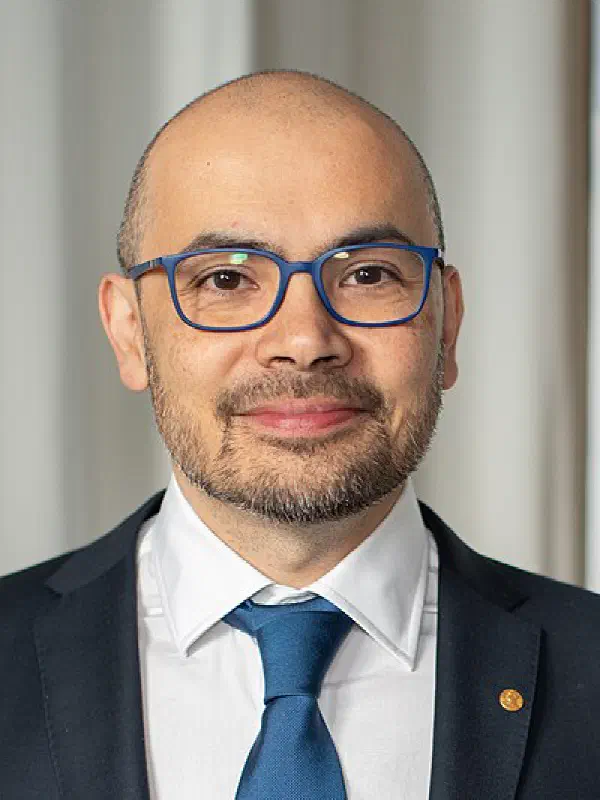
Demis Hassabis is the closest thing modern AI has to a polymath founder-scientist: chess prodigy at four, lead AI programmer on Theme Park at seventeen, Cambridge computer science, a UCL PhD in cognitive neuroscience, and — since 2024 — a Nobel laureate in Chemistry. He co-founded DeepMind in London in 2010 with Mustafa Suleyman and Shane Legg on an explicitly two-step thesis: “solve intelligence, then use it to solve everything else.” Google acquired the company in 2014. Today he runs Google DeepMind — the merged entity that owns essentially all of Google’s AI research and, increasingly, its AI products — and separately founded and leads Isomorphic Labs, the Alphabet spinout trying to turn AlphaFold into a drug-design business.

For developers, Hassabis matters because his lab produced the two clearest demonstrations that deep learning plus search is not just pattern matching. AlphaGo beating Lee Sedol in 2016 — built with David Silver — showed that value networks and Monte Carlo tree search could exceed human intuition in a domain everyone had said was decades away. AlphaFold, built with John Jumper, did something arguably harder: it took a fifty-year-old open problem in biology, hit near-experimental accuracy at CASP14, and then gave away structure predictions for ~200 million proteins. The Nobel committee split the 2024 Chemistry prize between Hassabis, Jumper, and David Baker for exactly this. If you want a concrete argument for why “AI for science” isn’t just a slide in a keynote deck, AlphaFold is it — and the architectural lesson (domain-specific inductive bias plus large-scale learning beats either alone) is one worth internalizing before you reach for a generic transformer.

The awkward part of his current job is that the thing he’s most famous for is not the thing Google needs from him. Since the 2023 DeepMind/Google Brain merger — which absorbed Jeff Dean’s organization and ended DeepMind’s research-lab autonomy — Hassabis has been running a product engine. Gemini went from an embarrassing second-place launch to genuinely competitive, and by mid-2026 Google is shipping model families on a cadence that would have been unthinkable for pre-merger DeepMind. Hassabis frames this as continuous with the mission: he calls the Gemini app’s endpoint a “universal AI assistant” and “one of our key milestones on the road to AGI,” and the world-model line running through Genie, Project Astra, and Veo is a real research bet, not just marketing. But it’s fair to note that the researcher who spent a decade arguing against racing is now, structurally, one of the racers. He puts AGI around 2030 and has publicly said the field has “little margin for error.”

He’s also become the industry’s most specific voice on governance. In July 2026 he published a personal manifesto proposing a Frontier AI Standards Body — a FINRA-style, industry-funded, federally overseen organization that would define “frontier-class” models, run pre-deployment evaluations for cyber and bio risk, and eventually gate US market access. Sam Altman and Elon Musk both responded warmly, which tells you something in both directions. Hassabis is genuinely more comfortable than most CEOs sitting in public with the question of whether any of this should be built at all; he is also the CEO of the lab with the most to gain from a definition of “frontier lab” that only a handful of companies can satisfy. Worth reading him closely and weighing both. (For background, Sebastian Mallaby’s biography The Infinity Machine, published March 2026, is the deepest reported account of how he got here.)

Key Articles & Papers

Patients with hippocampal amnesia cannot imagine new experiences 2007 — His pre-DeepMind neuroscience work, and one of Science's Breakthroughs of the Year — the origin of his conviction that memory, imagination, and planning share machinery worth copying in silicon. Human-level control through deep reinforcement learning 2015 — The DQN paper. One agent, raw pixels, 49 Atari games, no per-game engineering — the result that convinced Google to buy DeepMind and convinced a generation of researchers that deep RL was real. Mastering the game of Go with deep neural networks and tree search 2016 — AlphaGo. Policy network + value network + MCTS. Still the canonical worked example of combining learned intuition with explicit search — the pattern the industry rediscovered in 2024 as 'test-time compute.' Mastering the game of Go without human knowledge 2017 — AlphaGo Zero: drop the human games entirely and let self-play generate its own curriculum. The cleanest existence proof that superhuman performance doesn't require human data. Neuroscience-Inspired Artificial Intelligence 2017 — Hassabis's clearest statement of method: what AI should and shouldn't borrow from the brain. Useful antidote to both 'neural nets are like brains' hand-waving and 'biology is irrelevant' dismissal. Highly accurate protein structure prediction with AlphaFold 2021 — The Nobel-winning paper. Evoformer, structure module, end-to-end training on 3D geometry — and a masterclass in encoding domain structure into an architecture rather than brute-forcing it. Gemini: A Family of Highly Capable Multimodal Models 2023 — Google's answer to GPT-4 and the technical foundation of everything Hassabis now ships. Natively multimodal from pretraining, not bolted on afterward. Accurate structure prediction of biomolecular interactions with AlphaFold 3 2024 — Extends AlphaFold from single proteins to proteins-with-DNA, RNA, ions, and small-molecule ligands — the step that makes it a drug-discovery tool rather than a structural-biology one. Nobel Lecture: Accelerating scientific discovery with AI 2024 — His own retrospective connecting games, neuroscience, and protein folding into a single research program. The best short summary of how he actually thinks about picking problems. A Framework for Frontier AI and the Dawning of a New Age 2026 — His governance manifesto proposing a FINRA-style Frontier AI Standards Body with pre-deployment evals and market-access gating. Whatever you think of it, it's the most concrete regulatory proposal any frontier lab CEO has put their name on.

Videos

YouTube video
YouTube video
YouTube video
YouTube video
YouTube video
YouTube video
YouTube video
YouTube video
YouTube video

Controversies

The military-use reversal. When Google acquired DeepMind in 2014, Hassabis negotiated a commitment that DeepMind’s technology would never be used for weapons or military surveillance. In February 2025 Google removed the military-use prohibition from its AI Principles, and Google now sells AI services to militaries including the US and Israel. Hassabis’s defense — that frontier capability is broadly available today in a way it wasn’t a decade ago, and that “the benefits have to substantially outweigh the risks” — is a real argument, but it is also a straightforward reversal of a founding condition he personally extracted.

NHS patient data. DeepMind’s Streams kidney-injury app was built on 1.6 million Royal Free NHS Trust patient records. In 2017 the UK’s Information Commissioner ruled the transfer failed to comply with the Data Protection Act — patients weren’t adequately informed, and the volume of records was excessive. No fine was issued. DeepMind acknowledged it had “underestimated the complexity of the NHS and of the rules around patient data.”

AlphaFold 3’s closed launch. AF3 was published in Nature in May 2024 without code or weights — a sharp break from AF2’s open release, and driven by Isomorphic’s commercial interests. Researchers publicly objected, including in letters to the journal, and DeepMind released the code for academic use about six months later. A useful case study in what happens when a research lab acquires a drug pipeline.

Isomorphic’s slipping timeline. Hassabis said publicly that AI-designed drugs would be in clinical trials by end of 2025; that didn’t happen, and he later told Bloomberg he had “misspoke” and meant pre-clinical. Isomorphic has since raised $2.1B (May 2026, led by Thrive Capital, $2.7B total) and targets first-in-human trials before the end of 2026. As of now no patient has been dosed with an Isomorphic compound. The science is impressive; the timelines have been optimistic.

Regulatory capture concerns. His Frontier AI Standards Body proposal has drawn the obvious critique: an industry-funded body whose membership criteria are set by incumbents, gating US market access, is a structure that could entrench the current leaders as much as it constrains them. Hassabis argues speed matters more than perfect design and wants it operational by year-end 2026.

Spotify Podcasts

An AI@GSB Special: Demis Hassabis Thinks We’re in the ‘Foothills of the Singularity’
View From The Top
2026
Demis Hassabis' Vision For the Future!
NothingButTech
2026
Demis Hassabis: We're Three Quarters of the Way to AGI
AI Ascent
2026
How to Build the Future: Demis Hassabis
Y Combinator Startup Podcast
2026
20VC: DeepMind's Demis Hassabis on Why AGI is Bigger than the Industrial Revolution | Why LLMs Will Not Commoditise & We Have Not Hit Scaling Laws | Bottlenecks in AI & The Energy Crisis Caused By AI | Whether AI Will Do More to Harm or Help Inequality
The Twenty Minute VC (20VC): Venture Capital | Startup Funding | The Pitch
2026
#416 The Relentless Missionary Creating AGI: Demis Hassabis
Founders
2026
#475 – Demis Hassabis: Future of AI, Simulating Reality, Physics and Video Games
Lex Fridman Podcast
2025
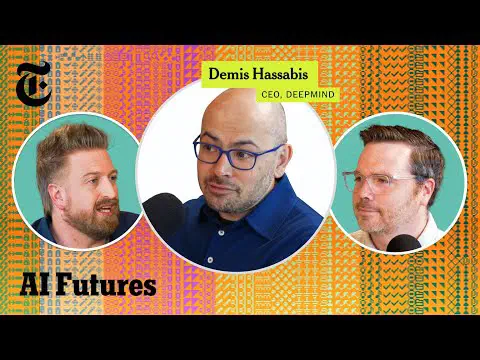
Google DeepMind C.E.O. Demis Hassabis on Living in an A.I. Future
Hard Fork
2025
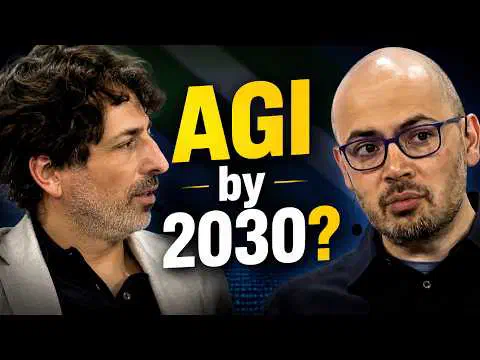
Google DeepMind CEO Demis Hassabis + Google Co-Founder Sergey Brin: Scaling AI, AGI Timeline, Simulation Theory
Big Technology Podcast
2025
#299 – Demis Hassabis: DeepMind
Lex Fridman Podcast
2022

YouTube

YouTube video
2026
YouTube video
2026
YouTube video
2026
YouTube video
2026
YouTube video
2025
YouTube video
2025
YouTube video
2025
YouTube video
2025
YouTube video
2025
YouTube video
2024
YouTube video
2022

Related People

pioneer Sam Altman pioneer Sundar Pichai
© 2026 PrometheusRoot