Google/Alphabet CEO, leading the shift to AI agents
Sundar Pichai
Biographies
Profile
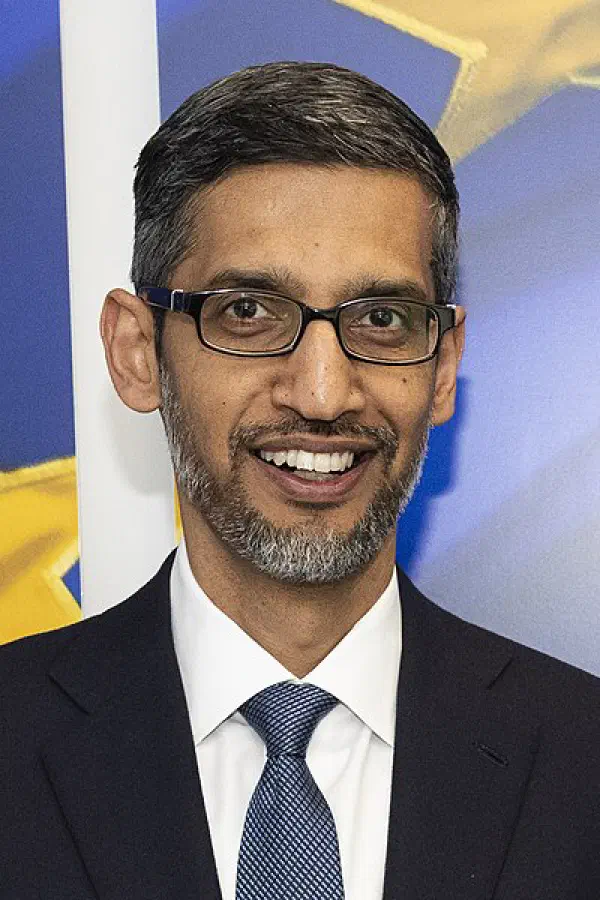
Sundar Pichai is the least flamboyant person running a frontier AI lab, and that is precisely why developers should pay attention to him. He is not a researcher, not a founder, and not a public intellectual about machine intelligence. He is a materials engineer from Madurai who joined Google in 2004 to work on a browser toolbar, shipped Chrome against every internal objection, inherited Android, took the CEO job in 2015 and the Alphabet CEO job in 2019. His entire career is a study in operational patience — and the AI era has turned that from a personality quirk into a strategic weapon.
The bet that defines him was placed early. In his 2016 Founders’ Letter he wrote that Google would move “from mobile first to an AI first world,” a line that read as executive boilerplate at the time and looks prescient now. What followed was a decade of unglamorous infrastructure work: TPUs, the DeepMind acquisition and its eventual merger with Google Brain under Demis Hassabis, the research culture that produced Attention Is All You Need under people like Jeff Dean, Noam Shazeer, and Ashish Vaswani. Then OpenAI shipped ChatGPT and Google looked, for about eighteen months, like the company that invented the transformer and forgot to productize it. The Bard launch was rushed and embarrassing. The Gemini image-generation fiasco was worse. Pichai absorbed both without panicking, and Google spent 2024–2025 quietly closing the gap.
By 2026 the picture has inverted. Gemini 3 shipped in November 2025 and put Google back at the frontier; the Gemini app crossed 900 million monthly users at I/O 2026 and roughly 950 million by Q2, with AI Mode in Search past a billion. Google Cloud grew 82% with a $514 billion backlog. API traffic runs at 22 billion tokens per minute across 9 million-plus developers. Antigravity, the agentic coding platform, has 2.4 million weekly active users. Alphabet guided 2026 capex to $180–190 billion and said 2027 would “significantly increase” — a number that reset the industry’s spending bar and knocked the stock down when announced. Pichai’s structural argument is the “full stack”: Google owns the chips (TPUs), the datacenters, the models, the distribution surfaces, and the ad business that pays for it. Nobody else owns all five.
For a developer, the interesting thing about Pichai is not any model he shipped but the pivot he is executing on the business he already had. Search — the most profitable query interface ever built — is being reshaped into something closer to an agent orchestrator: you state an intent, agents fan out across Gmail, Docs, Maps, YouTube, and the open web, and results come back as actions rather than blue links. That is a deliberate act of cannibalizing a monopoly before someone else does it for you, and it is the clearest real-world test of whether an incumbent can survive a platform shift it did not start. He is also the rare CEO willing to say the quiet part out loud: in a November 2025 BBC interview he called parts of the AI investment boom irrational and warned that “no company is going to be immune, including us” if it unwinds — while continuing to spend $190 billion. Watch what he does with that tension. It is the most honest hedge any of the hyperscaler CEOs, including Satya Nadella and Sam Altman, has publicly articulated.
Key Articles & Papers
2016 Founders' Letter AI at Google: our principles An important next step on our AI journey Google Gemini update: Ultra 1.0 and Gemini Advanced Gemini 3: Introducing the latest Gemini AI model from Google I/O 2026: Welcome to the agentic Gemini era Alphabet earnings call Q1 2026: Sundar Pichai's remarks Alphabet earnings call Q2 2026: Sundar Pichai's remarksVideos
Controversies
Search antitrust. In August 2024 Judge Amit Mehta ruled Google had illegally maintained a search monopoly through default-placement payments. Pichai testified during the remedies phase that the DOJ’s data-sharing proposal amounted to a “de facto divestiture” of Google Search. The September 2025 remedies decision let Google keep Chrome but banned exclusive distribution contracts and ordered index and user-data sharing with qualified competitors. Google filed its appeal in January 2026; the DOJ cross-appealed for structural relief. Reasonable people disagree on whether behavioral remedies can dent a 90% share.
Gemini image generation. In February 2024 Gemini generated racially implausible historical figures — diverse Nazi soldiers, Black Vikings — after over-aggressive diversity tuning. Pichai told employees the failures were “completely unacceptable” and Google suspended people-generation for months. It remains the canonical example of RLHF-era alignment tuning applied without regard for context.
AI Overviews. The 2024 rollout produced widely mocked answers — glue on pizza, eat a rock daily — because the system could not distinguish satire from fact. The deeper, unresolved complaint is economic: publishers argue that answering queries in-place strips the referral traffic the open web was built on.
Dropping the weapons pledge. In February 2025 Google removed the commitment not to pursue AI for weapons or surveillance from its AI Principles, drawing a formal challenge from US senators. Google framed it as adapting to a changed geopolitical landscape; critics read it as a principle that lasted exactly as long as it was cheap.
Capex, energy, and the bubble question. The $180–190B annual spend has drawn scrutiny over datacenter power demand versus Alphabet’s climate targets, and over whether the returns justify it. To his credit, Pichai has said publicly that the boom contains “elements of irrationality” and that Google would not be spared a correction — an unusually candid position for someone writing the checks.
Spotify Podcasts






YouTube