OpenAI Chief Scientist leading reasoning model research
Jakub Pachocki
Profile
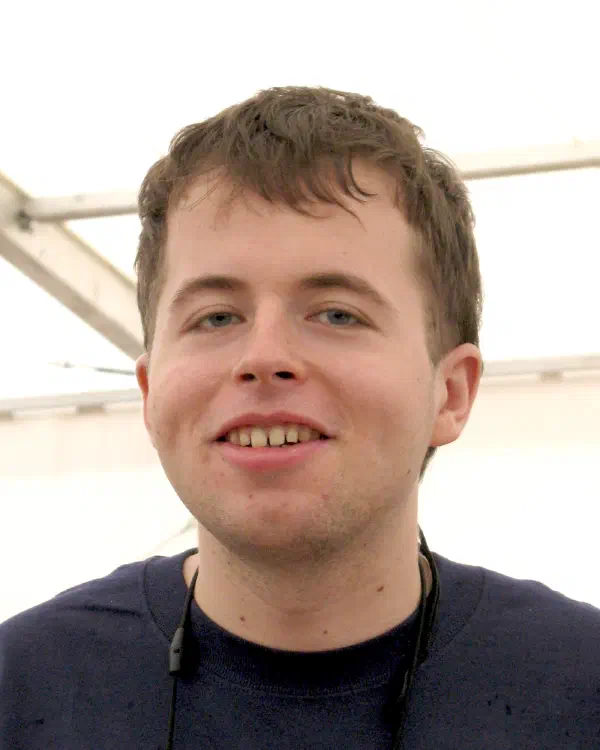
Jakub Pachocki is the Chief Scientist of OpenAI, and if you want to understand why AI models suddenly started “thinking” before they answer, he is the person to study. Born in Gdańsk, Poland, in 1991, Pachocki came up through the brutal meritocracy of competitive programming — a six-time finalist of the Polish Olympiad in Informatics, an ICPC World Finals gold medalist for the University of Warsaw in 2012, and the global champion of Google Code Jam the same year. He earned his bachelor’s at Warsaw and a PhD at Carnegie Mellon in theoretical computer science, where his work on spectral graph sparsification and fast Laplacian solvers landed at STOC, FOCS, and SODA. Then, in 2017, he walked away from a promising academic career and joined OpenAI. For developers, that arc matters: Pachocki is not a hype merchant. He is an algorithms person who thinks about compute and optimization at a level most of the field doesn’t.
His fingerprints are on nearly every system OpenAI is known for. He was a research lead on OpenAI Five, the reinforcement-learning system that in 2019 became the first AI to beat the reigning world champions at a professional esport (Dota 2). He led research on GPT-4 as Director of Research. And he is the principal architect of the o-series reasoning models — o1 and o3 — the line of work that replaced “predict the next token faster” with “spend more compute reasoning through the problem.” That single idea, test-time compute, is arguably the most important shift in applied AI since the Transformer, and it is the reason your coding assistant now writes a plan before it writes code.
In May 2024 Pachocki succeeded Ilya Sutskever as Chief Scientist, a promotion Sam Altman marked by calling him “one of the greatest minds of our generation.” The transition was not clean — more on that below — but the substance behind it is real: under Pachocki, OpenAI’s reasoning models reached gold-medal performance at the International Mathematical Olympiad and beat all but one human competitor in a top-tier coding contest, feats that would have sounded like science fiction to the same competitive-programming world he came from.
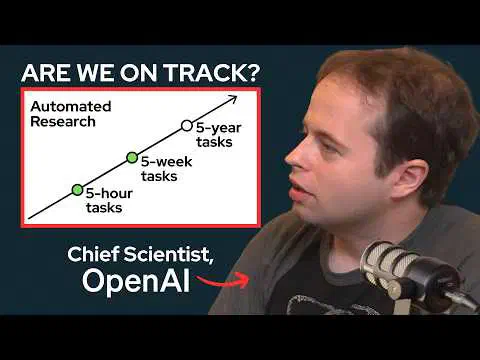
Today Pachocki is steering OpenAI toward what it calls the “automated AI researcher” — systems that can pursue long-horizon scientific problems largely on their own. He has publicly argued that current models already show evidence of producing genuinely novel insights, and he is a vocal advocate for chain-of-thought faithfulness and interpretability as core design constraints rather than afterthoughts. For anyone building with modern AI, Pachocki is the clearest signal of where the frontier is heading: away from bigger chat models and toward agents that reason, plan, and work.
Key Articles & Papers
Competitive Programming with Large Reasoning Models Learning to Reason with LLMs (introducing o1) Dota 2 with Large Scale Deep Reinforcement Learning (OpenAI Five) GPT-4 Technical Report 'AI models are capable of novel research': OpenAI's chief scientist on what to expectVideos


Controversies
Pachocki’s rise is inseparable from the departure of his predecessor. According to an internal Microsoft email from CTO Kevin Scott surfaced in litigation, Pachocki’s growing prominence was “deeply personal to Ilya” — Scott noted that “Jakub moreso than Ilya has been making the research breakthroughs that are driving things forward,” which led Altman to promote Pachocki and put him in charge of major model research directions. Sutskever left OpenAI in May 2024, days after which the Superalignment safety team he co-led with Jan Leike was effectively dissolved, with Leike publicly warning that “safety culture and processes have taken a backseat to shiny products.” Pachocki was not a decision-maker in the November 2023 board crisis, but as the technical leader who inherited Sutskever’s role amid that reshuffle, his ascent is a lasting flashpoint in the debate over whether OpenAI’s shift toward capability has come at the expense of safety.
Spotify Podcasts



YouTube