Microsoft CTO and EVP of AI, architect of OpenAI partnership
Kevin Scott
Profile
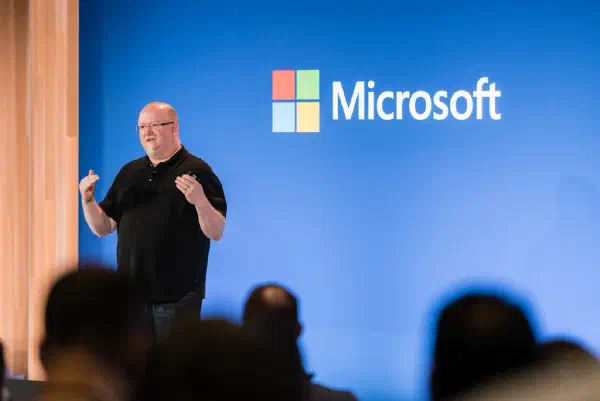
Kevin Scott is the closest thing enterprise AI has to a chief engineer — the person who decided, years before ChatGPT, that Microsoft should tie its future to a small research lab called OpenAI. As Chief Technology Officer and EVP of AI, he is the technical architect of the partnership that reshaped the industry, and the through-line connecting Microsoft’s research bets to the Copilot products that now sit in front of millions of developers. If you use GitHub Copilot, Azure AI Foundry, or Copilot in Office, you are using an AI stack whose strategic shape was substantially set by Scott.
His path is unusually grounded for someone at this altitude. Scott grew up in rural central Virginia, the first in his family to go to college, and worked his way through a B.S. at Lynchburg College and an M.S. at Wake Forest before starting — but never finishing — a computer-science PhD at the University of Virginia. He left academia in 2003 for Google, where he rose to senior engineering director running mobile ads engineering and integrating the $750M AdMob acquisition. He then spent six years as SVP of Engineering and Operations at LinkedIn, scaling it through its IPO, before Satya Nadella brought him to Microsoft as CTO in early 2017 after Microsoft acquired LinkedIn.
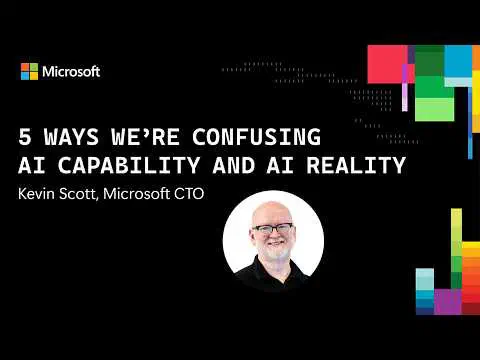
What matters most to developers is what Scott did next. In 2019 he wrote a now-famous internal email warning Nadella and Bill Gates that Microsoft was “multiple years behind” Google in ML scale — and turned that fear into a bet, spearheading Microsoft’s initial $1 billion investment in OpenAI. Sam Altman has said Scott was “most of the reason” OpenAI chose Microsoft. Scott’s thesis was simple and, at the time, contrarian: scaling laws are real, compute is the product, and the winner would be whoever committed capital and infrastructure to the bet with discipline. He describes himself as a “short-term pessimist, long-term optimist,” and that temperament shows in his current messaging — at Build 2025 he pushed an open “agentic web” built on standards like Model Context Protocol, and by Build 2026 he was openly warning that AI capability has outrun the value actually delivered to users.
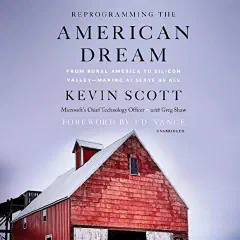
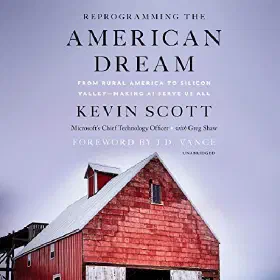
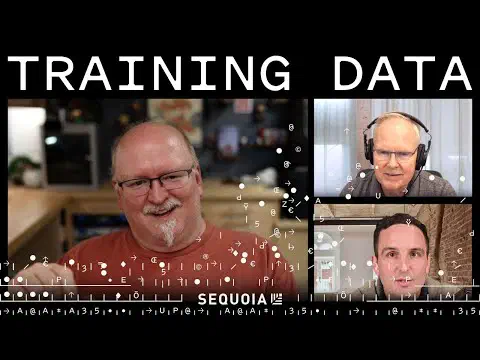
For someone building with AI today, Scott is worth understanding precisely because he is not a hype merchant or a doomer — he is an infrastructure realist who thinks the platform shift is genuine but the hard engineering is mostly still ahead. He also hosts the long-running Behind the Tech podcast, tinkers with AI music and coding tools himself, and champions the idea (the subject of his book) that AI should serve people outside the coastal tech bubble he came from.
Books
Key Articles & Papers
A Conversation with Kevin Scott: Reprogramming the American Dream Kevin Scott on 5 Ways Generative AI Will Transform Work What AI Can Learn From the Browser Wars: Microsoft CTO Calls for an Open 'Agentic Web' Interviews with Satya Nadella and Kevin Scott About the AI Platform Shift Microsoft CTO Kevin Scott on How Far Scaling Laws Will Extend Kevin Scott — TIME100 AI Profile
Videos
Controversies
Scott’s 2019 “Thoughts on OpenAI” email — in which he told Nadella and Bill Gates that Microsoft was “multiple years behind” Google and that Google’s Gmail autocomplete was “getting scarily good” — surfaced publicly through the U.S. antitrust case against Google, and resurfaced again as evidence in Elon Musk’s litigation against OpenAI and Microsoft, where Scott testified about it in 2026. The email is not scandalous so much as revealing: it shows how much Microsoft’s now-dominant AI position began as fear of falling behind, and it has become a focal point for critics scrutinizing the closeness of the Microsoft–OpenAI relationship. (GeekWire)
More broadly, Scott is a lightning rod in the debate over whether the enterprise AI buildout — the data-center capex, the Copilot rollouts that some users have found underwhelming — is matched by real delivered value. To his credit, he has increasingly acknowledged that gap himself rather than denying it.
Spotify Podcasts

YouTube