

Indie maker, $3M+ annual revenue from AI products
Pieter Levels
Profile
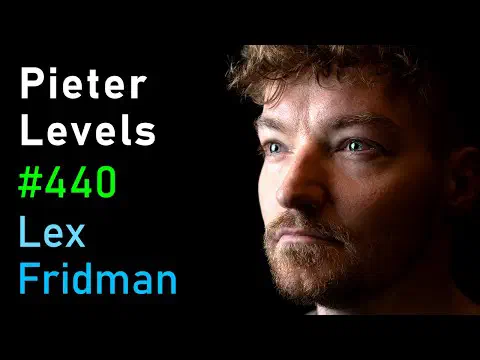
Pieter Levels — better known by his handle @levelsio — is the Dutch solo developer who has spent a decade proving an unfashionable thesis: that one person, using boring technology and no funding, can out-ship a venture-backed team. He is not an AI researcher and has never claimed to be. What makes him worth studying for anyone learning to build with AI is that he was already the fastest shipper on the internet before the models arrived, and he has been unusually honest — publicly, in real time, with revenue dashboards open — about exactly how much faster they made him.
The origin story is now indie-hacker canon. In 2014 he announced he would launch 12 startups in 12 months and did it, mostly badly. Two survived: Nomads.com (formerly Nomad List), a ranking and community site for remote workers, and Remote OK, a remote job board. He has since shipped 113+ projects by his own count, with roughly an 8% hit rate — a number he publishes rather than hides. The current portfolio is dominated by AI products: Photo AI, a photorealistic AI photo studio doing around $105K/month in revenue and $80K/month in profit, and Interior AI, an AI interior design tool. Total revenue sits north of $3M a year, with no employees, no VC, and no co-founder. His stack is vanilla PHP, jQuery, and SQLite on a single VPS. Photo AI is famously a single 40,870-line index.php. This is not ironic minimalism; it’s a load-bearing argument he makes explicitly in The web development industrial complex lied to your face.
The AI chapter began on 22 February 2025, when Levels opened Cursor, typed something close to “make a 3D flying game in the browser,” and shipped fly.pieter.com roughly three hours later with zero game development experience. He built it live on X. Elon Musk amplified it. Seventeen days later it was at $1M ARR from in-game sponsor slots. That single artifact did more to popularize Andrej Karpathy’s term “vibe coding” than any essay did — Levels followed it with the 2025 Vibe Coding Game Jam, which drew 1,170 AI-built games and $40K in prizes, and a Cursor-sponsored sequel in 2026.
Where he is now is the genuinely interesting part. Levels has moved from AI-as-autocomplete to AI-as-operator: he runs Claude Code directly on his production servers in bypass-permissions mode, and reported clearing his entire feature backlog across seven products in a week — roughly 10x his normal output. In May 2026 he published I don’t write code anymore, stating he hadn’t hand-written code in about six months. Two months later he published Indie hackers may be the first developers to go extinct with AI, arguing that when execution costs $20/month, the moat he spent ten years building — being able to ship faster than anyone — evaporates. That willingness to publish the argument that undermines his own advantage is why he’s worth reading. He also angel invests through Levels Ventures and wrote MAKE, the bootstrapping handbook that got Product Hunt’s Founder Book of the Year in 2019. For a developer learning AI in 2026, the lesson isn’t the PHP. It’s the loop: build the smallest thing that could charge money, put it in front of people the same day, and let the feedback — not the architecture — decide what happens next.
Books
Key Articles & Papers
I'm Launching 12 Startups in 12 Months How I Build My Minimum Viable Products The Web Development Industrial Complex Lied to Your Face fly.pieter.com, My First Vibecoded Flight Simulator Which Reached $1M ARR in 17 Days Photoai.com Is a 40,870 Line index.php Making $105,000/mo Revenue I Ran Claude Code on the Server in Bypass Mode and Outran My Todo List I Don't Write Code Anymore Indie Hackers May Be the First Developers to Go Extinct With AI List of All My Projects EverVideos

Controversies
Survivorship bias. The most persistent critique is that Levels’ advice — quit, travel, ship monthly, ignore best practices — reads as a repeatable method when it’s a single outcome drawn from an enormous distribution of failures. Krzysztof Kowalczyk’s "@levelsio and survivorship bias" is the canonical version. In fairness, Levels publishes his failure rate himself and repeatedly says most of his projects flopped; the distortion is more in how his audience reads him than in what he claims.
Vibe coding quality and security. fly.pieter.com drew sustained criticism from working developers over security, scalability, and maintainability, and became the standard exhibit in the broader argument that AI-generated codebases accumulate hidden bugs and technical debt. Levels’ response is essentially empirical — the products run, the revenue is real, and he accepts a ~99% correctness rate as a trade. That is a defensible position for a solo consumer product and a bad one for, say, a payments system; the disagreement is often really about context, not about the tools.
Photo AI and synthetic images of people. Building a photorealistic AI photo studio puts him squarely inside the consent, likeness, and NSFW-moderation debates around generative imagery. He has discussed the moderation problems openly rather than dodging them, but the product category remains genuinely contested.
Digital nomadism and its externalities. Nomad List has been criticized for accelerating the flow of high-income remote workers into lower-cost cities and contributing to local housing pressure — a critique Levels has engaged with but not resolved. He is also simply outspoken (on VC funding, on Europe’s economic trajectory, on developer tooling), and periodically draws pile-ons for it.
Spotify Podcasts







YouTube