
Figure AI CEO, scaling humanoid robotics
Brett Adcock
Profile
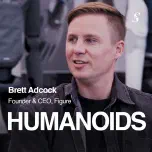
Brett Adcock is the founder and CEO of Figure AI, the humanoid-robotics company that, by mid-2026, has become one of the most richly capitalized bets in the entire AI industry — a roughly $39 billion valuation reached in under four years, with backing from Nvidia, Microsoft, Amazon, and Jeff Bezos. Adcock is not a researcher; he is a serial hardware founder who has made a career out of walking into capital-intensive, “physically hard” industries and vertically integrating them. Before Figure he co-founded Vettery, a hiring marketplace acquired by The Adecco Group for around $100 million, and then co-founded the eVTOL air-taxi company Archer Aviation, which he took public in 2021. Figure, launched in 2022, is his most audacious swing yet: general-purpose humanoids meant to enter factories, warehouses, and eventually the home.
What makes Adcock worth a developer’s attention is less the robot chassis and more the software pivot he forced in 2025. Figure had a headline partnership with OpenAI to supply the robots’ AI brains. Adcock ended it — publicly, bluntly, and by his own later account “fired them” — arguing that Figure’s in-house team, heavy with Google DeepMind veterans, had made an end-to-end robot-AI breakthrough and that OpenAI’s move back into robotics turned a supplier into a competitor. The result was Helix, Figure’s own vision-language-action (VLA) model. Its architecture is genuinely interesting to anyone learning applied AI: a dual-system design where a ~7B-parameter multimodal “System 2” reasons at 7–9 Hz while an 80M-parameter “System 1” produces continuous full-body motor control at 200 Hz — wrists, torso, fingers, the works.
The through-line of Adcock’s public messaging is a “Software 2.0” thesis: he has boasted about deleting more than 100,000 lines of hand-written C++ balance-and-control code and replacing it with learned neural weights, so that teaching the robot a new task becomes an act of uploading new model weights rather than programming. For a developer, that’s the embodied-AI version of the same bitter-lesson bet that reshaped NLP — scale learning over hand-engineering. Whether it holds up on real hardware, at real safety margins, is the open question. Adcock’s rivals (Elon Musk’s Tesla Optimus, Marc Raibert’s Boston Dynamics, and others) are chasing the same prize.
Where he is now: pushing manufacturing scale aggressively through Figure’s “BotQ” factory — claiming a single month in 2026 produced more robots than the company’s entire prior history — and floating a consumer future where a household humanoid is leased at roughly $400–600 a month, car-financing style. It’s an enormous, unproven promise. Adcock’s track record is that he ships hardware few thought a startup could; his recurring liability, visible across all three companies, is that his public claims tend to run well ahead of what has actually been demonstrated. Read him as a builder worth studying and a promoter worth discounting — usually at the same time.
Key Articles & Papers
Helix: A Vision-Language-Action Model for Generalist Humanoid Control Decision to leave the OpenAI Collaboration Agreement Helix: Accelerating Real-World Logistics The founding story of Archer Aviation & FigureVideos



Controversies
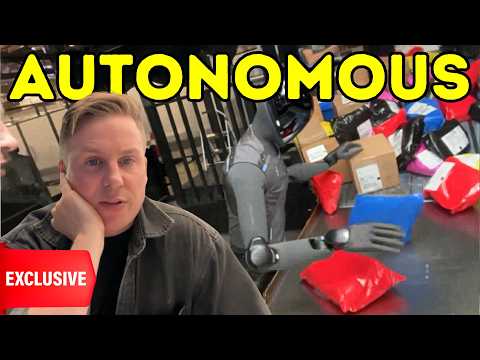
Overstated BMW deployment. In April 2025 a Fortune investigation reported that Figure’s public claims about its robots working autonomously on a BMW production line in Spartanburg, SC overstated what was in fact limited single-robot feasibility testing. Adcock rebutted the report as “downright lies” and threatened defamation litigation. Skepticism about how much of Figure’s demoed autonomy is real versus teleoperated has recurred around the Figure 03 launch. (TechCrunch)
Whistleblower safety lawsuit. In November 2025, former engineer Robert Gruendel sued Figure alleging he was fired days after raising documented safety concerns — including a claim that a malfunctioning robot gouged a steel refrigerator door and that the robots have the physical force to fracture a human skull. Figure disputes the account. The suit raises legitimate questions about safety governance at a company racing toward home deployment. (CNBC)
Archer investor suit. A 2023 class action alleged Adcock’s earlier company, Archer Aviation, exaggerated flight-test progress and FAA-certification timelines — a pattern critics note echoes the “claims ahead of reality” concerns now raised about Figure.
Spotify Podcasts







YouTube