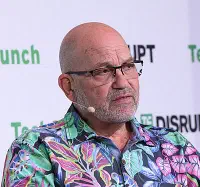
Executive Director of Boston Dynamics AI Institute, founder of Boston Dynamics
Marc Raibert
Profile
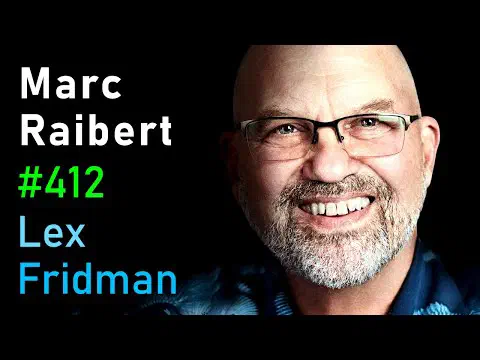
Marc Raibert is, without exaggeration, the person who taught robots how to move. Long before humanoid demos went viral or “physical AI” became a pitch-deck phrase, Raibert was building one-legged hopping machines in a lab and proving something the field doubted: that dynamic balance — the controlled falling that lets an animal run, jump, and recover — was a tractable engineering problem. He founded the Leg Laboratory at Carnegie Mellon in 1980, moved it to MIT in 1986, and from that work wrote the equations and control strategies that still underpin nearly every legged robot walking today. If you have watched an Atlas do a backflip or a Spot trot across a warehouse, you are watching Raibert’s intellectual lineage in motion.
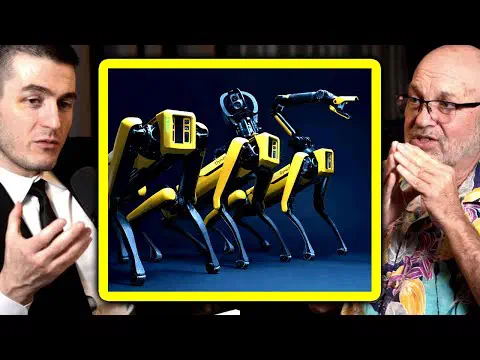
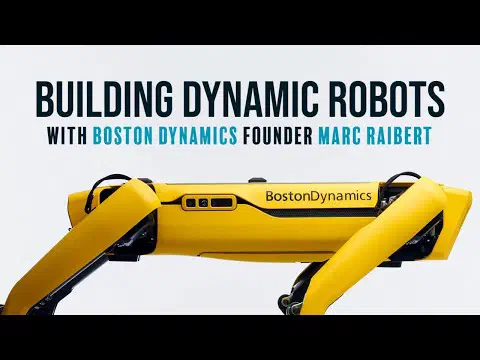
In 1992 he spun that research into Boston Dynamics, a company that spent two decades quietly surviving on DARPA contracts while producing the most jaw-dropping robot videos on the internet — BigDog, LS3, the cheetah, Handle, and eventually the commercial Spot and the electric Atlas. Raibert’s approach was famously stubborn and un-commercial: chase the hard locomotion problem first, worry about the product later. That patience paid off in credibility even when it delayed revenue. Boston Dynamics was sold to Google in 2013, to SoftBank in 2017, and finally to Hyundai Motor Group in 2020 — and through all of it Raibert remained the technical soul of the place, now serving as its Chairman.
Since 2022 his attention has shifted to the Robotics & AI Institute (originally the Boston Dynamics AI Institute), a Hyundai-funded lab in Cambridge with roughly 260 researchers where he is Executive Director. This is the part that matters most to developers today: Raibert is explicitly trying to marry what he calls “athletic intelligence” — the balance, perception, and manipulation his robots already have — with “cognitive intelligence,” the generalization, common sense, and planning that large language models and modern generative AI are beginning to offer. Projects like “Watch, Understand, Do” aim to have robots learn tasks by observing humans, and a 2025 partnership with Boston Dynamics built a shared reinforcement-learning pipeline for the electric Atlas.
For anyone building with AI, Raibert is a useful counterweight to the pure-software worldview. He is a living argument that intelligence embodied in a physical machine is a fundamentally different — and harder — problem than next-token prediction, and that the interesting frontier is not LLMs or robots but the seam between them. When he talks about robots needing to “know when they don’t understand something and ask a question,” he is describing exactly the grounding and uncertainty problems that language models still struggle with. His current work is a bet that the next decade of AI gets physical, and he has more standing to make that bet than almost anyone alive.
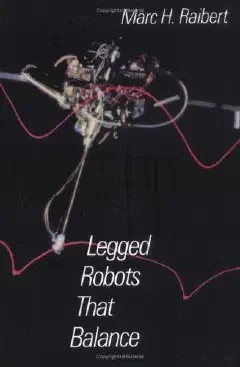
Books
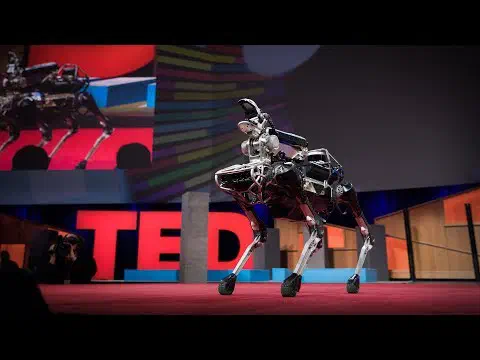
Videos
Controversies
Raibert and Boston Dynamics have long drawn scrutiny for the company’s deep military roots — federal databases list well over $150 million in defense funding, mostly from DARPA, dating back to the 1990s, including the LS3 “pack mule” built to carry gear for Marines. Raibert has generally framed this as the funding that kept fundamental locomotion research alive when no commercial market existed. Separately, the eerily lifelike, sometimes intimidating nature of the robots — and viral clips of Spot deployed by police departments — has fueled ongoing public unease about surveillance and weaponization. To their credit, Boston Dynamics publicly pledged in 2022, alongside several rival robotics firms, not to weaponize its general-purpose robots and to oppose others doing so. The tension between the technology’s origins, its dystopian optics, and the company’s stated ethics remains a fair thing to weigh.
Spotify Podcasts

![#412 - [Traducido con IA] Marc Raibert: Boston Dynamics y el futuro de la robótica](/images/people/marc-raibert/spotify/0RYmTNZz1CA7BZQSzYXcsM_hu_4bcdf075950aa55e.webp)



YouTube