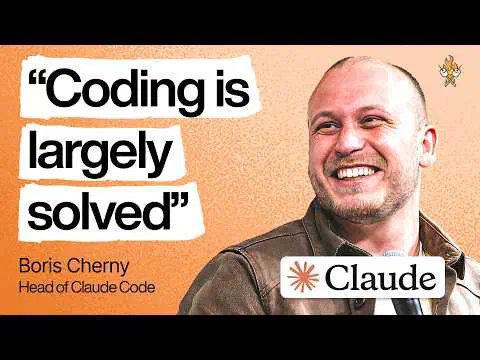

Head of Claude Code at Anthropic, Staff Engineer
Boris Cherny
Profile
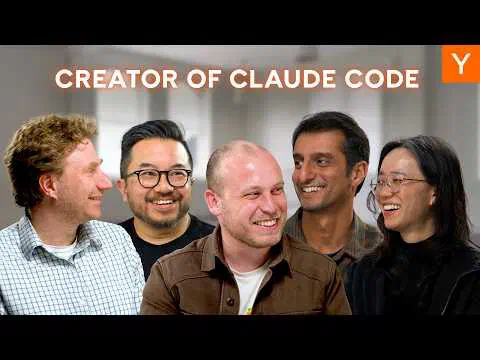
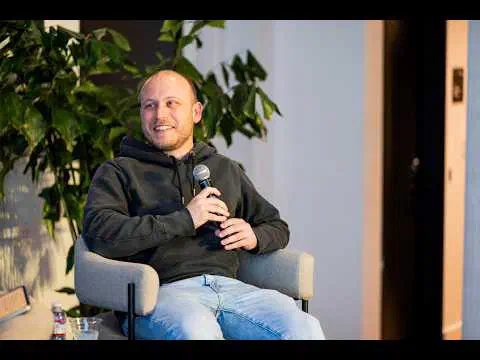
Boris Cherny is the creator and Head of Claude Code at Anthropic — the agentic command-line coding tool that, more than any other single product, defined what “AI writing your code alongside you” looks like in practice. If you use a terminal-based AI agent today, you are living inside decisions Cherny made: the CLAUDE.md convention for giving an agent project context, first-class support for MCP (the Model Context Protocol), and the hooks system that lets developers wire deterministic scripts into an otherwise probabilistic agent. This website was built with his tool.
His path there is unusually non-linear. Cherny studied economics, dropped out of college at 18 to run a startup, did a stint at a hedge fund, and then spent five years as a Principal Engineer at Meta. He’s a longtime functional-programming advocate and organized the San Francisco TypeScript Meetup — the kind of engineer who cares about type systems and correctness, not just shipping. He joined Anthropic in September 2024, and the tool that became Claude Code reportedly started as a throwaway project to tell him which song he was listening to before it turned into an internal coding agent. When he released the first version internally, roughly 20% of Anthropic’s engineers adopted it on day one.
What makes Cherny worth studying is that he is both the builder and the loudest field-tester of the agentic-coding workflow. His “Claude Code: Best practices for agentic coding” guide is the closest thing the discipline has to a canonical text — the source of now-standard habits like keeping a curated CLAUDE.md, iterating against visual mocks, and running multiple agent instances in parallel. He is candid, granular, and opinionated about how to actually get value from these tools, which is why his tips circulate far beyond Anthropic.
He is also one of the more provocative voices on where this all leads. Cherny has argued publicly that “coding is solved” and predicted the job title “software engineer” will begin to fade in 2026, replaced by something broader — a claim that is either clarifying or infuriating depending on your priors, and one he delivers without much hedging. For developers learning AI, he’s essential precisely because he sits at the intersection of the tooling and the argument: he built the thing, he uses it more aggressively than almost anyone, and he’s willing to say out loud what he thinks it means for the profession.
Books
Key Articles & Papers
Claude Code: Best practices for agentic coding Head of Claude Code: What happens after coding is solved Building Claude Code with Boris Cherny Claude Code's creator on the end of the software engineerVideos


Controversies
Cherny’s public claims that “coding is solved” and that the “software engineer” title will begin to disappear in 2026 have drawn sharp pushback from working developers who see them as overstated and self-serving, given that he sells the tool premised on that future. He has acknowledged the transition will be “painful” for many computer-based jobs. It’s less a scandal than a genuine industry disagreement — worth weighing critically, since the person making the prediction has a direct commercial stake in it being true. [VentureBeat coverage and the Platformer interview capture both the enthusiasm and the skepticism.]
Spotify Podcasts





YouTube