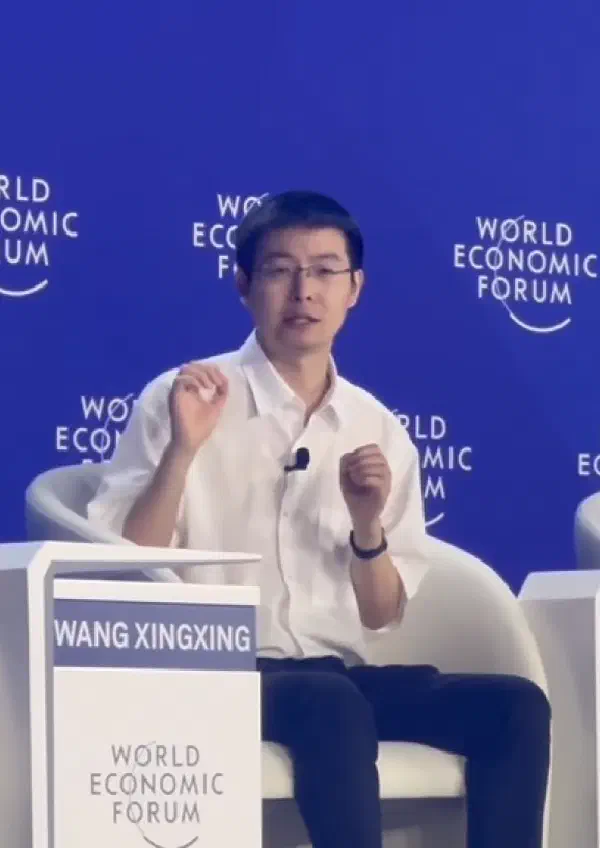
Unitree Robotics founder and CEO, humanoid robotics pioneer
Wang Xingxing
Profile
Wang Xingxing is the founder, CEO, and CTO of Unitree Robotics — and, at 35, arguably the single person who has done the most to move humanoid robots from research demos into shipping product. Born in 1990 in Ningbo, he was the kid who watched documentaries about Marc Raibert’s early Boston Dynamics experiments and never let go of the idea. As a first-year student at Zhejiang Sci-Tech University he built a small bipedal robot for under $30; in graduate school at Shanghai University he built a low-cost quadruped called XDog whose motor-and-control approach became the seed of Unitree. He did a two-month stint at DJI, decided he’d rather build his own thing, and founded Unitree in 2016 at age 26.
What makes Wang matter to developers is not a paper or a model — it’s a manufacturing and cost curve. Unitree took the “expensive lab robot” and turned it into a catalog SKU. Its Go-series robot dogs captured roughly two-thirds of the global quadruped market by being cheap, durable, and hackable, and its Go2 and G1 platforms became the default hardware for university robotics labs and reinforcement-learning researchers worldwide — roughly half of Unitree’s sales come from outside China. If you’re a student training locomotion policies in simulation and deploying to real hardware, there’s a very good chance the real hardware is a Unitree. That accessibility, more than any single spec, is Wang’s actual contribution to the field.
The company’s public profile exploded when its G1 and H2 humanoids danced at China’s 2026 Spring Festival Gala — a martial-arts routine performed by dozens of robots in synchronized swarm formation, watched by roughly 679 million people, without external motion-capture rigs. Behind the spectacle is a genuinely aggressive production story: Unitree shipped more than 5,500 humanoids in 2025, claims the global shipment lead, and is targeting 10,000–20,000 units in 2026. In February 2025 Wang was the only “post-90s” founder invited to speak at Xi Jinping’s symposium of private entrepreneurs, alongside the heads of Huawei, BYD, and Xiaomi — a signal of how central Beijing considers embodied AI to its industrial strategy. He was named to the 2025 TIME100 AI list, and in early 2026 became vice chair of China’s MIIT technical committee writing national standards for humanoid robotics and embodied intelligence.
Wang is refreshingly candid about what’s still missing, and this is the part worth internalizing. He argues that China’s humanoid makers — his own included — still lack a mature, unified “end-to-end” AI system for robots, that the hardware has run ahead of the intelligence, and that robots’ real “ChatGPT moment” is still one to three years out. He has publicly downplayed the current usefulness of large models for genuine autonomy, a notably contrarian take for someone racing to an IPO. For a developer, that’s the honest framing: Unitree has largely solved cheap, capable, mass-producible bodies; the brains — general-purpose manipulation and reasoning — remain the open research frontier where the next decade of work lives.
Key Articles & Papers
Meet Wang Xingxing, the young Chinese robotics star from Unitree at Xi Jinping's symposium China's Unitree Robotics Is Leading the Humanoid Revolution Wang Xingxing — TIME100 AI 2025 China's humanoid robot makers lack unified 'end-to-end' AI system, Unitree CEO says Interview: Unitree Robotics shares vision for China's robot revolution Kung fu, somersaults and scale: Unitree eyes 20,000-robot output in 2026 after gala Unitree IPO to test valuations as venture capital floods China robotics
Videos



Controversies
“Tech fraud” accusations after the gala. After the 2026 Spring Festival Gala performance, some online critics dismissed the routine as staged, arguing the robots were merely remote-controlled rather than autonomous. Unitree has said the swarm performance ran without external motion-capture positioning, but the debate reflects a real and recurring problem in robotics marketing: viral choreographed demos routinely outrun what the hardware can do unsupervised in the field. (source)
Buyer disappointment. As Unitree robots went mainstream, some purchasers publicly complained that real-world capabilities lagged the promotional videos — one widely quoted reviewer called a six-figure-yuan robot “a toy” — and that the rental novelty that made money in February had dried up by April. It’s a useful reminder for developers: a demo-ready platform is not the same as a general-purpose autonomous worker, a gap Wang himself acknowledges. (source)
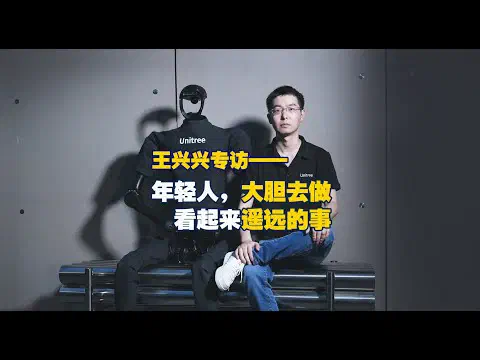
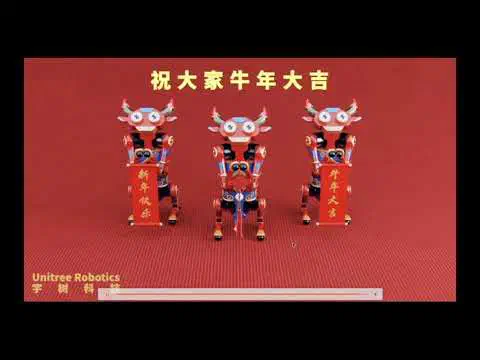
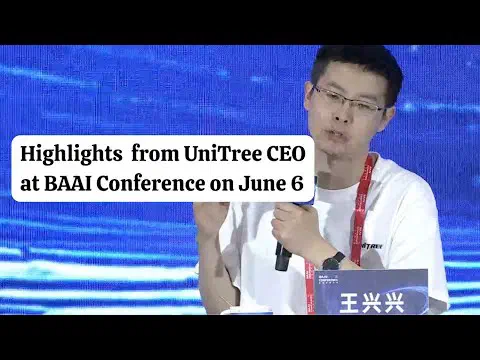
A note on the videos above: I included only YouTube IDs that surfaced directly in search results (a 2025 World Robot Conference keynote, interviews, an ICRA 2021 legged-robotics talk, and BAAI/youth-forum appearances). I could not independently verify each ID actually resolves, so if any 404 on render, drop them and let the API-populated section fill in.
Spotify Podcasts