CEO at tiny corp, tinygrad creator, hardware builder
George Hotz
Profile
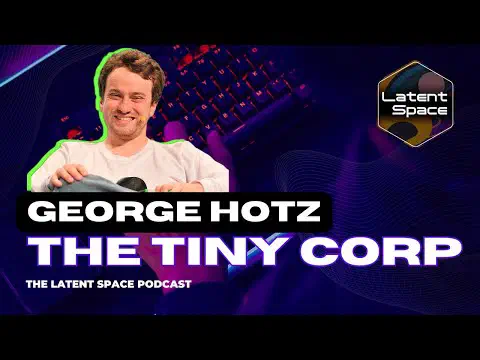
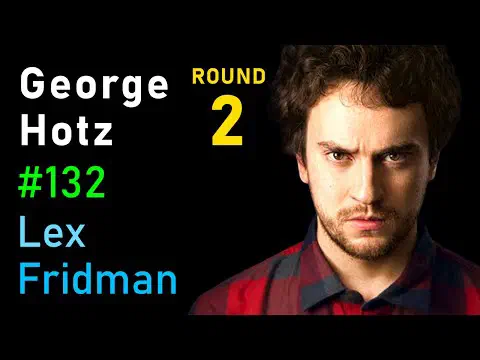
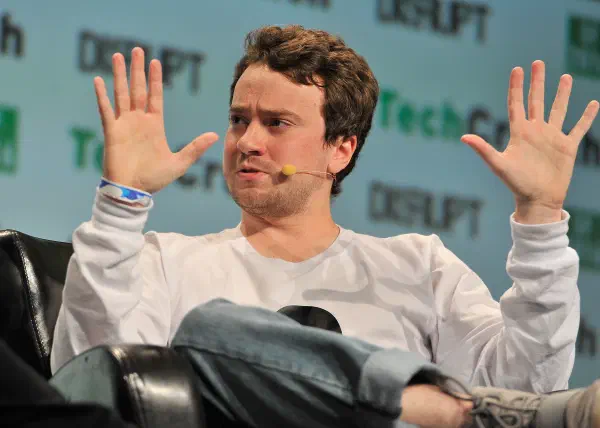
George Hotz is the closest thing modern AI infrastructure has to a punk rock act. He first became famous at 17 for carrier-unlocking the original iPhone in his mother’s New Jersey kitchen, then achieved hypervisor-level access on the PlayStation 3 in 2010 — which got him sued by Sony under the DMCA in a case that became a landmark fight over what you’re allowed to do with hardware you own. Between the hacking eras he did stints at Facebook, Google’s Project Zero, and the AI startup Vicarious. In 2015 he founded comma.ai and shipped openpilot, an open-source driver-assistance system that runs on a phone-class device bolted to your windshield and now supports hundreds of car models. He stepped back from comma’s day-to-day in late 2022 — he remains its president and sole board member — and founded the tiny corp on November 5, 2022.
The tiny corp exists to attack one specific thing: NVIDIA’s software moat. The product is tinygrad, a deep learning framework written in roughly 19,000 lines of Python — a hard line-count budget that Hotz treats as a design constraint, not a stat. Where PyTorch has thousands of hand-written kernels, tinygrad decomposes everything into a small set of primitive ops (elementwise, reduce, movement), builds a lazy graph, and compiles fused kernels per-backend. It’s the rare framework you can actually read end to end in a weekend, which makes it the best available teaching artifact for how a modern AI stack really works — from Tensor.matmul down to the GPU instruction stream. It’s not just a demo either: openpilot runs tinygrad in production on mobile GPUs, and after five years Hotz claims it beats PyTorch on a meaningful set of workloads.
The hardware arm is tinybox: pre-built, pre-debugged multi-GPU machines you put in a room you own. As of 2026 the lineup runs from the AMD-based red v2 (four 9070XTs, 64GB of GPU RAM, $12k) up to a Blackwell-based green v2 with four RTX PRO 6000s and 384GB of GPU RAM ($65k) — enough to run 120B-parameter models entirely offline. The company is deliberately small: about six employees, hired almost exclusively out of merged pull requests, roughly $2M/year in box sales plus contract work benchmarking AMD MI350X silicon. Hotz’s stated long game is a “training box” — a machine in your house whose weights actually update from interacting with you — and eventually custom chips, on the theory that nobody’s accelerator wins without a sovereign software stack underneath it first.
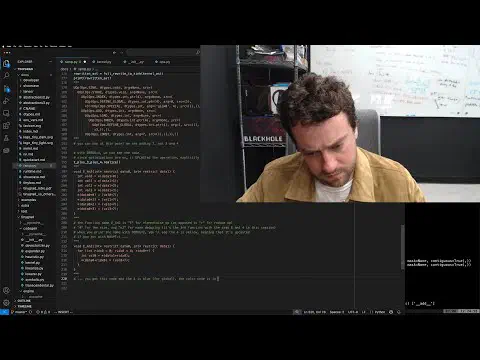
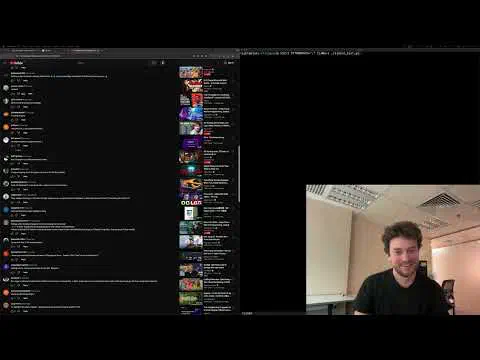
For a developer learning AI in 2026, Hotz matters for a specific reason: nearly everyone else is teaching you to call an API, and he is teaching you what’s underneath it. His thesis — “commoditize the petaflop” — is that AI compute should be a thing you buy and own rather than rent, and tinygrad plus tinybox is the working proof. He’s also, bluntly, an unreliable narrator about a lot of things outside the compiler: he blogs prolifically and combatively about UBI, politics, e/acc, and AI doom, and in May 2026 he quit the live-coding streams that made him famous, arguing that streaming had turned into performance rather than hacking. Read the code and the compute arguments closely; treat the rest as opinion from a very good engineer, which is what it is.
Key Articles & Papers
the tiny corp raised $5.1M Five years of tinygrad A dive into the AMD driver workflow AMD YOLO Can tinygrad win? tiny corp's product — a training box A Breakdown of AI Chip Companies Where the Bitter Lesson ends There is no hard takeoff Punk, or why I don't stream anymoreVideos
Controversies
Sony v. Hotz (2011). Sony sued him under the DMCA’s anti-circumvention provisions after he published his PS3 hypervisor exploit, and won a subpoena for the IP addresses of everyone who visited his site — a move that drew heavy criticism from privacy advocates and triggered a wave of retaliatory attacks on Sony by others. It settled out of court in April 2011 with Hotz permanently enjoined from hacking Sony products. Sony’s position was legally conventional; the tactics were what made it notorious.
comma one and the NHTSA (2016). Regulators sent comma.ai a special order warning about shipping an aftermarket driving-automation product. Hotz cancelled the commercial device and open-sourced openpilot instead — arguably the best outcome for developers, though critics reasonably note that shipping driver-assistance as unregulated open source moves liability onto the user.
The Twitter internship (2022). Elon Musk hired him for a 12-week stint to fix search; he resigned in under five weeks. He’s since been candid that the environment wasn’t one where he could ship.
The AMD fight. For roughly two years he publicly hammered AMD over ROCm bugs and demanded the Micro Engine Scheduler firmware be open-sourced, escalating to a direct standoff with CEO Lisa Su and briefly pivoting tinybox to NVIDIA. Some saw it as a small vendor bullying a partner in public; AMD did subsequently open-source the MES and more of its stack, and shipped him MI300X hardware. The pressure worked, but the style is genuinely divisive.
Political and cultural blogging. His posts on UBI, “wokeism,” e/acc, and AI risk are deliberately provocative and have drawn sustained criticism, including from people who otherwise admire the engineering. Worth separating from his technical claims, which stand or fall on their own.
Spotify Podcasts






YouTube