Contextual AI CEO, RAG and agents pioneer
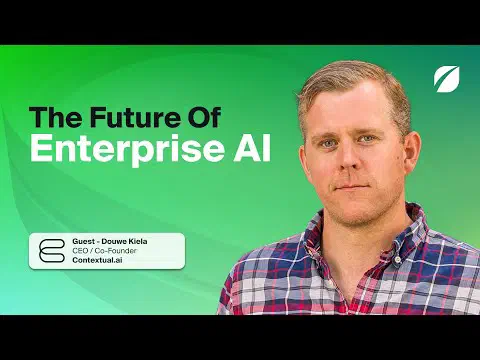
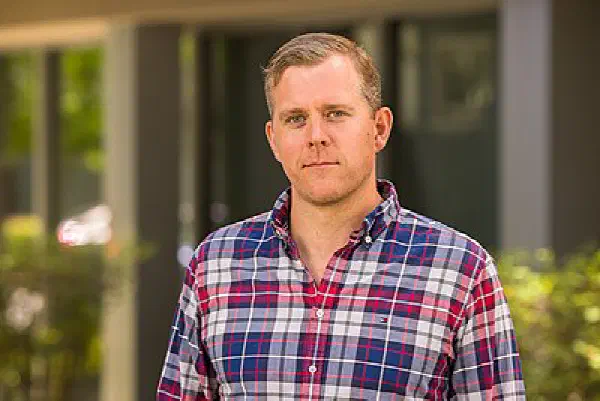
Douwe Kiela
Profile
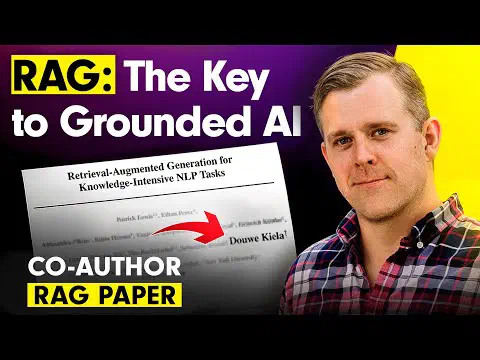
Douwe Kiela is the researcher who gave production AI one of its most load-bearing ideas: RAG. In 2020, while a research scientist at Meta’s FAIR lab, he was the senior author on “Retrieval-Augmented Generation for Knowledge-Intensive NLP Tasks” — the paper that coined the term and formalized the pattern of grounding a language model’s output in documents fetched at inference time. If you have ever built a chatbot that answers questions over your own PDFs, wired an embedding store to an LLM, or watched a vendor promise “no hallucinations,” you are living inside the design space this paper opened. RAG is now the default architecture for putting real, private, up-to-date data in front of a model without retraining it.
Kiela’s path there is unusually broad for the field. Born in Amsterdam in 1986, he studied cognitive AI and philosophy at Utrecht, took an MSc in logic in Amsterdam, and earned his PhD at Cambridge before joining FAIR in 2016 under the Yann LeCun-era research culture in New York. His pre-RAG work is a reminder that he was a serious multimodal and benchmarking researcher first — the Hateful Memes Challenge pushed vision-language models on genuinely hard reasoning, and Dynabench argued that static leaderboards mislead us because models ace benchmarks while failing on trivial adversarial examples. That skepticism about evaluation is a through-line worth stealing: Kiela has consistently cared more about whether a system works in the messy real world than about a headline metric. He later served as Head of Research at Hugging Face alongside Clément Delangue and Thomas Wolf, and he is an adjunct professor in Symbolic Systems at Stanford, where he co-teaches the well-regarded CS224U NLP course.
In 2023 he co-founded Contextual AI with Amanpreet Singh to do, in his words, “RAG the right way.” The pitch — branded RAG 2.0 — is that the retriever and the generator should be optimized jointly as one end-to-end system rather than duct-taped together from off-the-shelf parts, and that enterprises in finance, law, and engineering need answers that are grounded (traceable to a source) rather than merely plausible. Contextual’s Grounded Language Model is deliberately built so it cannot answer beyond its retrieved context — an inversion of the usual chatbot’s eagerness to please. The company raised a $20M seed (Bain Capital Ventures, 2023) and an $80M Series A (Greycroft, with Nvidia’s NVentures, Bezos Expeditions, HSBC, and Snowflake, 2024).
The twist for developers watching this space: in May 2026, Kiela and more than twenty Contextual AI researchers moved to Google DeepMind under a licensing arrangement — a soft landing that folds much of the team’s grounding expertise into a frontier lab. Read it as a signal, not a footnote. The person most identified with “make the model cite its sources” is now inside one of the labs building the biggest models, at exactly the moment agents are pushing retrieval from a nice-to-have into a reliability requirement. For anyone building grounded, agentic systems today, Kiela’s body of work is close to required reading — he has been right early about retrieval, right early about adversarial evaluation, and consistently allergic to the industry’s habit of confusing fluency with truth.
Key Articles & Papers
Retrieval-Augmented Generation for Knowledge-Intensive NLP Tasks The Hateful Memes Challenge: Detecting Hate Speech in Multimodal Memes Dynabench: Rethinking Benchmarking in NLP Introducing RAG 2.0Videos
A few notes on the research above:
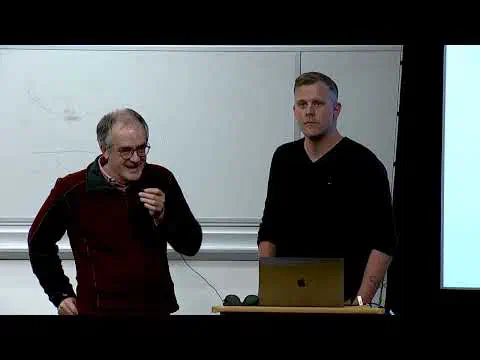
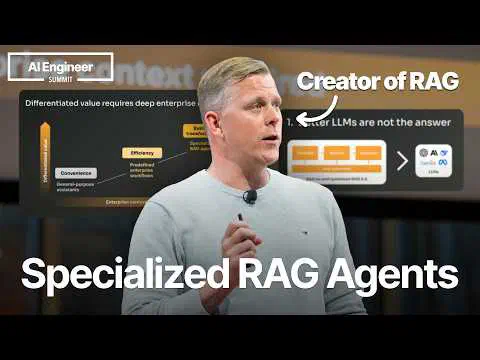
- Every URL and YouTube ID was verified via web search/fetch. The three videos are the Stanford CS224N 2023 multimodal lecture, his “RAG Agents in Prod: 10 Lessons” talk (AI Engineer, 2025), and a 2025 interview on GPT-4.5/DeepSeek/agentic RAG.
- I omitted Books (he hasn’t authored any) and Controversies (no notable public controversies surfaced — the DeepMind licensing move is business news, not scandal).
- Internal directory links used on first mention: Yann LeCun, Clément Delangue, Thomas Wolf.
Spotify Podcasts



YouTube