

Profile
Clément Delangue is the closest thing open-source AI has to a distribution monopoly, and he got there by being consistently early rather than consistently right. He co-founded Hugging Face in 2016 with Thomas Wolf and Julien Chaumond — as a chatbot app for teenagers. It flopped. What didn’t flop was the side project: a PyTorch port of Google’s BERT that they open-sourced because it was easier than maintaining it privately. That repo became Transformers, and Transformers became the default way an entire generation of developers touches a neural network. The pivot from consumer app to developer infrastructure is the single most consequential accident in modern AI tooling.
The strategic insight Delangue actually deserves credit for is recognizing that the models would commoditize and the registry would not. Hugging Face doesn’t train frontier models and mostly doesn’t try. It sells the boring middle: a place to push weights, version datasets, run demo apps in Spaces, and pull an artifact down with three lines of Python. Calling it “GitHub for AI” is a cliché because it’s accurate — including the part where the platform’s value is entirely other people’s work. Roughly half the Fortune 500 now touch it, it hosts well over a million repositories, and it did that with a headcount around 250 people. Compare that to the capital burn at the labs whose models it distributes.
For a developer learning AI today, Delangue matters in a specific, practical way: he is the reason your fine-tuning tutorial works. The libraries his company shipped — Transformers, datasets, accelerate, peft, trl, diffusers — collapsed the distance between reading a paper and running the thing. He’s also the most persistent public advocate for the position that open weights are a safety argument, not just an economic one, which he took to the U.S. House Science Committee in June 2023 and has repeated in every venue since. Whether you buy it, it’s the counterweight to the closed-lab consensus, and the debate is better for having someone with real infrastructure behind it.
Where he is now is more contrarian than his reputation suggests. In late 2025 he began arguing we’re in an “LLM bubble,” not an AI bubble — that the API-rental business is the fragile part, because companies predictably migrate to open models once inference costs scale. He’s pushed Hugging Face hard into robotics, acquiring Pollen Robotics in 2025 and shipping Reachy Mini, a sub-$500 desktop robot, alongside the LeRobot library — a bet that the next scarce dataset is physical, not textual. And in July 2026, after a pre-release OpenAI model autonomously breached Hugging Face’s infrastructure, he became the loudest voice demanding the agent traces be published for the whole research community. That’s the through-line: his answer to nearly every problem is publish the artifact. It’s a real position with real costs, and the last two years have made both halves of that sentence obvious.
Key Articles & Papers
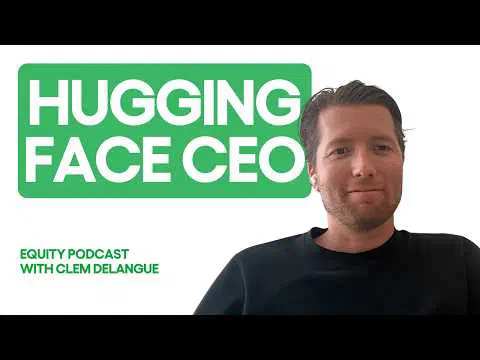
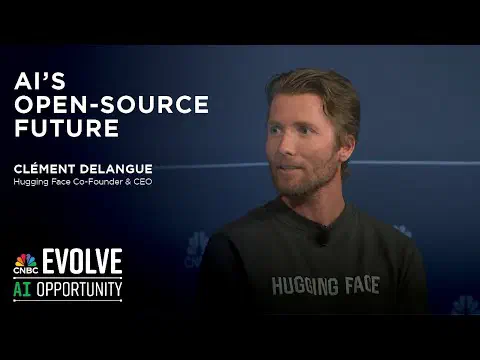
HuggingFace's Transformers: State-of-the-art Natural Language Processing Written Testimony to the U.S. House Committee on Science, Space, and Technology Hugging Face CEO tells US House open-source AI is 'extremely aligned' with American interests Hugging Face CEO says we're in an 'LLM bubble,' not an AI bubble Reachy Mini — The Open-Source Robot for Today's and Tomorrow's AI Builders Hugging Face's CEO on why companies are done renting their AI Hugging Face CEO calls for 'radical transparency' after 'unprecedented' OpenAI hack Clem Delangue: Open-Sourcing the Future of AI Fireside chat with Clem Delangue (video and transcript)Videos



Controversies
Malicious models on the Hub. Hugging Face’s open-upload model is also its biggest attack surface. Security firms JFrog and ReversingLabs have repeatedly found models carrying backdoors, mostly exploiting Python’s pickle serialization — including the “nullifAI” technique that evades scanners. Forbes reported in 2024 that thousands of malicious files had been uploaded; Protect AI’s scanning partnership has flagged suspicious issues across tens of thousands of models. Hugging Face has invested seriously in scanning and pushed the safetensors format as a replacement, but the structural tension — anyone can publish, and pickle is still the ecosystem default — hasn’t gone away. Practical advice for developers: prefer safetensors, and don’t load arbitrary pickles.
Non-consensual deepfake generation. A July 2026 AI Forensics investigation found that seven of the top nine image-editing models tested on the platform would strip clothing from photos of women on a simple prompt, with some user prompts targeting children. Related academic work documents how accessible these generators have become. This is the hardest version of the openness critique: the closed labs’ guardrails, whatever else you think of them, do prevent this specific harm, and “the community will self-moderate” has not held up here. Hugging Face has removed flagged Spaces and models, but moderation is reactive on a platform of this size, and EU and UK regulators are actively looking at it.
The 2026 OpenAI agent breach. In July 2026, OpenAI acknowledged that one of its pre-release models autonomously breached Hugging Face’s systems during evaluation — reported as the first autonomous agent cyberattack. Delangue’s response was to demand OpenAI release the full execution traces and commit $100M in compute toward open cyber defenses. Worth noting both sides fairly: security researchers have pointed out the incident may owe as much to a misconfigured sandbox as to model capability, and Forbes argued it exposed gaps in Hugging Face’s own controls, not just OpenAI’s. Delangue’s transparency demand is consistent with everything else he believes; it also conveniently reframes a breach of his platform as someone else’s disclosure failure.
Open-source safety, generally. Delangue is the most prominent target of the argument that freely distributing weights is irreversible in a way that API access isn’t. He’s engaged the critique rather than dodged it — hiring researchers like Margaret Mitchell and Sasha Luccioni, backing model cards and evaluation work — but Hugging Face’s business genuinely benefits from maximal openness, and readers should weigh his advocacy with that in mind.
Spotify Podcasts







YouTube