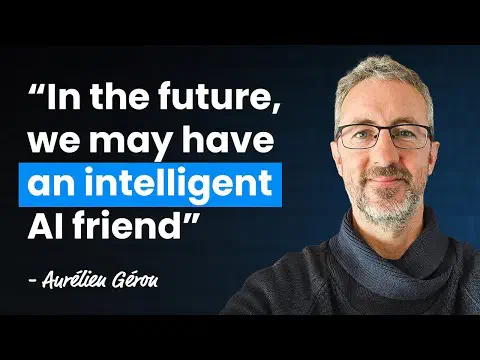

Machine learning author and independent consultant
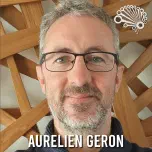
Aurélien Géron
Profile
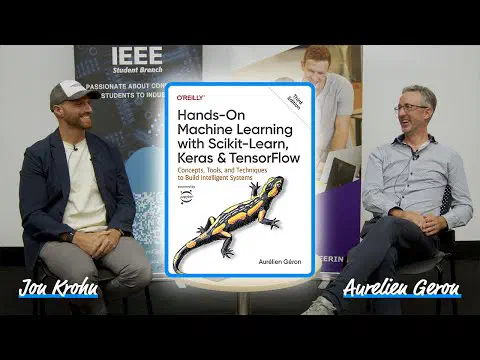
If you have learned machine learning by building rather than by theorizing, there is a good chance Aurélien Géron was your first real teacher. His O’Reilly book, Hands-On Machine Learning, is the closest thing the field has to a universal on-ramp: the book that sits on the desk of the self-taught engineer, gets assigned in university courses, and turns up in the “how did you learn ML?” answers of practitioners worldwide. It is practical to a fault — Jupyter notebooks, real datasets, working code — and that is precisely why it endured while flashier resources came and went.
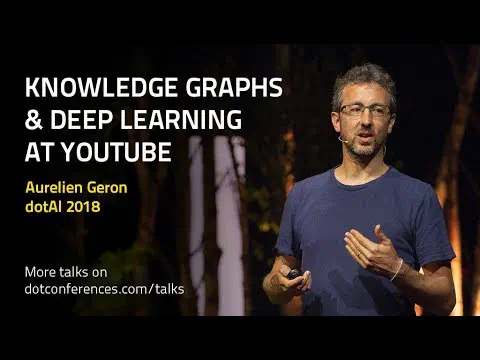
Géron’s path to becoming the field’s most-read practical author is unusual. He studied microbiology and evolutionary genetics before turning to software, then worked as an engineer across finance (JP Morgan, Société Générale), defense, and healthcare. In 2001 he co-founded Polyconseil and in 2002 founded Wifirst, a French wireless ISP he led as CTO for a decade. From 2013 to 2016 he led YouTube’s video classification team at Google — hard-won, production-scale ML experience that shows in how his writing treats the messy realities of shipping models rather than just the math.
Since then he has worked as an independent ML consultant and author, and is now based in New Zealand. The book has moved with the ecosystem: from the first edition’s Scikit-Learn and TensorFlow (2017), through the widely used third edition with Keras and TensorFlow (2022), to the October 2025 rewrite — Hands-On Machine Learning with Scikit-Learn and PyTorch — which pivots to PyTorch and the Hugging Face ecosystem and adds transformers and diffusion models. That willingness to tear up and rewrite a bestseller to follow where developers actually are is a large part of why the book stays relevant.
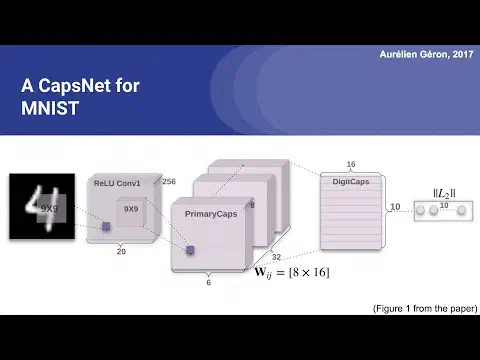
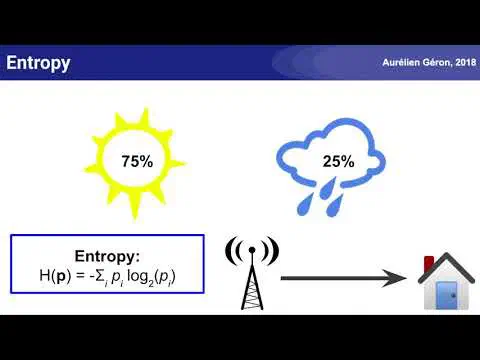
What makes Géron matter to someone building with AI today is temperament as much as content. He is a clarifier: his YouTube explainers on capsule networks and cross-entropy are small classics of “make the hard thing intuitive,” and his writing consistently favors the working example over the hand-wave. In a field crowded with hype and abstraction, he is the rare figure whose entire body of work is oriented around one goal — getting you to the point where you can actually build the thing.
Books
Key Articles & Papers
Introducing Capsule NetworksVideos
Spotify Podcasts
![[Pagsusuri] Hands-On Machine Learning with Scikit-Learn, Keras, and TensorFlow (Aurélien Géron) Nabuod.](/images/people/aurelien-geron/spotify/3VKsAz4MFZzpSkxCW5Fqtz_hu_cc95b66cd3a6457e.webp)
![[Ulasan] Hands-On Machine Learning with Scikit-Learn, Keras, and TensorFlow (Aurélien Géron) Ringkasan.](/images/people/aurelien-geron/spotify/2ZiUCSmXUbCOpN963YrDil_hu_d6cb4b36e80d167e.webp)
![[รีวิว] Hands-On Machine Learning with Scikit-Learn and PyTorch (Aurélien Géron) สรุปหนังสือ.](/images/people/aurelien-geron/spotify/1vtFnFcfPxYcNGn7BEEn1d_hu_b1cfa0e21eb9f592.webp)
![[รีวิว] Hands-On Machine Learning with Scikit-Learn, Keras, and TensorFlow (Aurélien Géron) สรุปหนังสือ.](/images/people/aurelien-geron/spotify/0KhjAdCmru93EOl7ChGOa9_hu_4f440a26bb999ed0.webp)
YouTube