
Mistral AI CEO and co-founder, building Europe's leading open AI models
Arthur Mensch
Profile
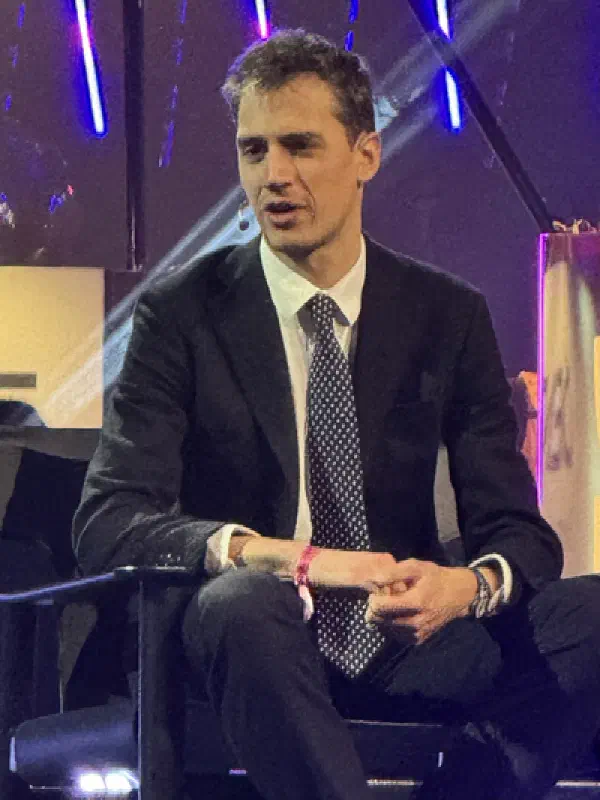
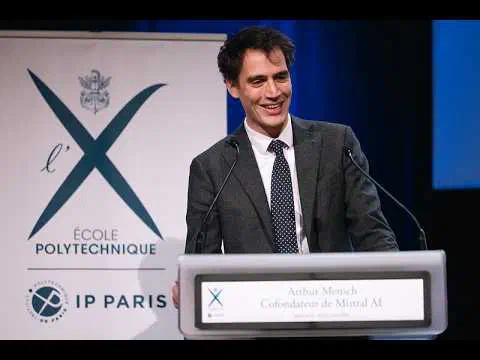
Arthur Mensch is the co-founder and CEO of Mistral AI, and the most credible answer Europe has produced to the question of whether frontier AI can be built outside a five-mile radius of Palo Alto. He is not a business-school founder who hired researchers — he is a researcher who learned to run a company. Born in 1992, he went through École Polytechnique, Télécom Paris, and the MVA master’s at Paris-Saclay, then did a PhD at Inria on stochastic optimization for large-scale functional MRI under Gaël Varoquaux and Julien Mairal. That work — matrix factorization on datasets too big to fit in memory — turns out to be excellent training for someone whose company’s entire thesis is “do more with less compute.” He joined Google DeepMind’s Paris office in 2020 and spent three years on the papers that defined the modern scaling era: he is a co-author on Chinchilla, on RETRO, and on Flamingo.
In May 2023 he left with Guillaume Lample and Timothée Lacroix, both from Meta’s LLaMA team, and founded Mistral. Four months later they shipped Mistral 7B under Apache 2.0 — a 7B model that beat Llama 2 13B, with grouped-query attention and sliding-window attention, released as a magnet link on Twitter. For a lot of developers that was the moment: you could run something genuinely good on a single consumer GPU, with no license lawyer involved. Mixtral 8x7B followed and made sparse mixture-of-experts a mainstream architecture rather than a Google-internal curiosity. Mensch’s positioning has been consistent since: weights you can download, deploy on your own hardware, and fine-tune are strategically different from an API, and enterprises that don’t understand that are handing a closed vendor permanent leverage over their cost structure and their data.
The company that argument built is now large. Mistral raised a €1.7 billion Series C in September 2025 at a €11.7 billion valuation, led by ASML — a chip-lithography monopolist buying into a model lab, which tells you something about how Europe is thinking about the stack. By mid-2026 it had crossed $400M ARR, was targeting €1 billion in revenue, was reportedly in talks around a €20 billion valuation, and had pivoted from “model company” to full-stack: Mistral Compute with Nvidia, data centers outside Paris, an industrial AI stack with Airbus and BMW as customers, and Le Chat rebranded as Vibe with a VS Code integration aimed squarely at Claude Code and Codex. Mensch has floated designing their own chips. The Mistral 3 family — a 675B-total/41B-active MoE flagship plus 3B/8B/14B dense models, all Apache 2.0 — is the current proof point, and it is a genuinely unusual artifact: the largest permissively-licensed model any major lab has shipped.
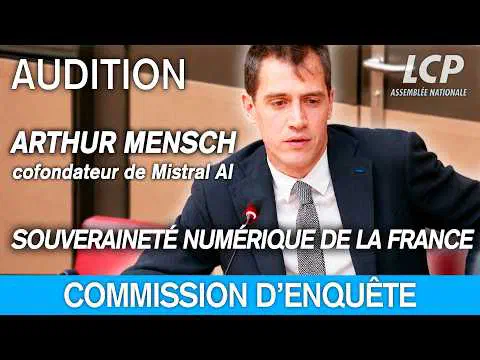
What makes him worth studying, for someone building with AI today, is that he is running the only serious hedge against a world where three American companies own inference. That comes with real tension. Mistral’s best-known models are open; its revenue increasingly comes from Studio, Forge, and enterprise deployments that are not. Defense work is now 10–15% of revenue, and Mensch says openly that Mistral will not police how defense customers use its systems. He is more sober than most CEOs about downside — he calls deskilling, not extinction, the biggest AI risk, and has warned the French National Assembly about employment effects — but he is also a lobbyist for his own regulatory environment, and he’s good at it. Treat him as the smartest available advocate for open weights, not as a neutral narrator.
Key Articles & Papers
Mistral 7B Mixtral of Experts Training Compute-Optimal Large Language Models (Chinchilla) Improving Language Models by Retrieving from Trillions of Tokens (RETRO) Flamingo: a Visual Language Model for Few-Shot Learning Introducing Mistral 3 Dictionary Learning for Massive Matrix FactorizationVideos

Controversies
The Microsoft partnership and the AI Act. In February 2024 Mistral announced a partnership with Microsoft, which took a small stake and put Mistral models on Azure — weeks after Mistral had lobbied hard to soften foundation-model obligations in the EU AI Act, positioning itself as the European champion that regulation would crush. Green MEPs asked the Commission to investigate whether Mistral had functioned as a lobbying proxy for Microsoft, and the Commission reviewed the deal under merger rules before dropping it. Mistral’s defense is that the stake was tiny and non-controlling, and that the lobbying reflected genuine startup interests. Both things can be true; the optics were still bad, and Corporate Europe Observatory’s “Trojan horses” report made the case at length.
Open-weight rhetoric vs. commercial reality. Mensch is the loudest CEO arguing that closed providers gain “immense leverage” over customers — an argument that is also a sales pitch for Mistral’s paid products. Mistral does ship serious open weights (Mistral 3 under Apache 2.0 is not a token gesture), but its most commercially important surfaces are proprietary, and critics reasonably note the gap between the open-source flag and the enterprise-license business.
Defense contracts. Mistral works with Helsing and holds contracts with the French, Singaporean, and Luxembourg armed forces — roughly 10–15% of revenue. In May 2026 Mensch said Mistral would not interfere in how defense customers use its models. He treats this as a straightforward consequence of European sovereignty rather than something to apologize for; whether that’s principled consistency or an abdication of responsibility is a live disagreement, and it sits awkwardly next to the open-weights position, since downloadable weights make use-restrictions largely unenforceable anyway.
Spotify Podcasts







YouTube