
Perplexity CEO, AI-native search engine builder
Aravind Srinivas
Profile
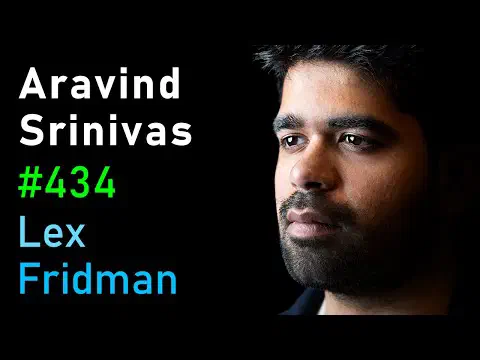
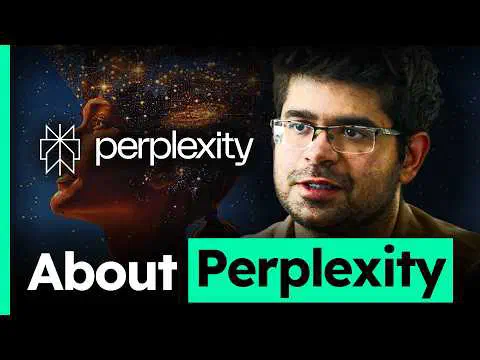
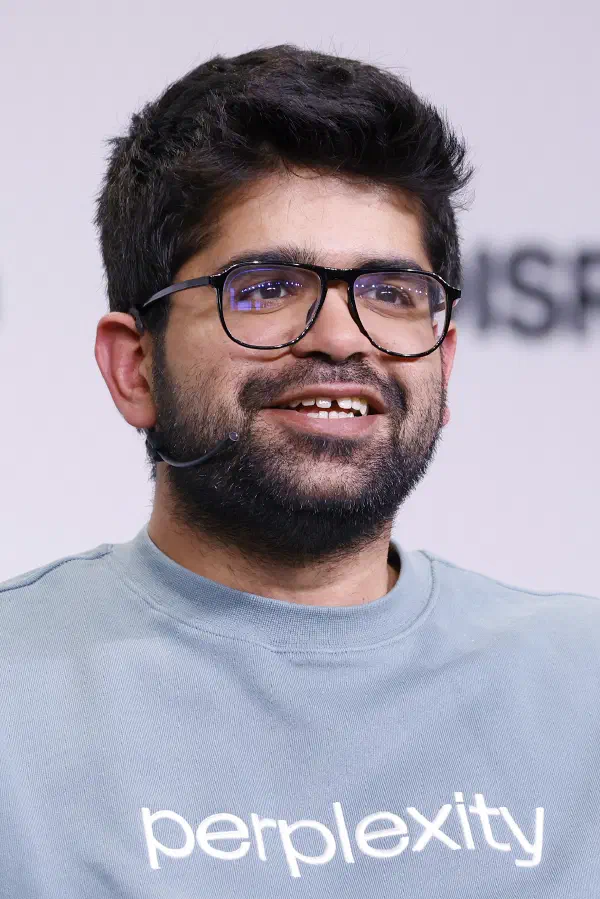
Aravind Srinivas is the co-founder and CEO of Perplexity AI, the “answer engine” that has become the most credible AI-native challenger to Google Search. Born in Chennai in 1994, he trained as an electrical engineer at IIT Madras before earning a PhD in computer science at UC Berkeley in 2021 under Pieter Abbeel. Along the way he interned and researched at Google, DeepMind, and OpenAI — returning to OpenAI as a research scientist before leaving in 2022 to build his own company. For developers, his arc is worth studying precisely because it isn’t the typical founder story: he was a serious deep-learning researcher first, and Perplexity is what happens when someone who understands transformers from the inside decides to ship a product with them.
His research pedigree is real, not decorative. He is a lead author on CURL, which brought contrastive representation learning to reinforcement learning from pixels, and a co-author on the influential Decision Transformer, which reframed RL as a sequence-modeling problem in the spirit of GPT. That background matters because Perplexity’s core bet is fundamentally an engineering one: pair a retrieval system with an LLM, force it to cite its sources, and treat hallucination as a product bug rather than an inevitability. It’s a live demonstration of retrieval-augmented generation at consumer scale, and anyone building RAG systems can learn as much from watching Perplexity’s product decisions as from any tutorial.
Founded in August 2022 with Andy Konwinski, Denis Yarats, and Johnny Ho, Perplexity has grown at a pace that borders on absurd — from a roughly $150M valuation in early 2023 to around $20B by late 2025, with reported valuations climbing past $21B into 2026, hundreds of millions of monthly queries, and a small team relative to its footprint. It is backed by an unusually credentialed roster including Jeff Bezos, Yann LeCun, and Jeff Dean. In 2025 the company shipped Comet, an agentic AI browser, and made headline-grabbing (mostly rhetorical) bids to buy TikTok’s US operations and Google Chrome — moves that read as much like marketing as M&A.
What makes Srinivas worth following is his sheer velocity and his willingness to attack incumbents head-on, paired with a genuine grasp of the underlying models. He is also a prolific, opinionated presence online, which makes him one of the more transparent windows into how a modern AI product company actually thinks about latency, cost-per-query, model routing, and “token value per watt.” The flip side — covered below — is that his aggressive posture toward publishers’ content has made Perplexity a lightning rod in the fight over how AI companies use the open web.
Key Articles & Papers
CURL: Contrastive Unsupervised Representations for Reinforcement Learning Decision Transformer: Reinforcement Learning via Sequence Modeling Getting Started with Perplexity (and the vision behind it)Videos


Controversies
Perplexity’s defining controversy is its relationship with the publishers whose content feeds its answers. Beginning in 2024, Forbes and Wired accused the company of closely paraphrasing their reporting — sometimes generating AI summaries and even AI-voiced podcasts — without adequate credit. Srinivas initially deflected blame toward third-party crawlers, then pivoted to launching a Publishers’ Program that shares ad and subscription revenue with partners like Time and Fortune.
The legal pressure has since escalated. News Corp’s Dow Jones and the New York Post sued in 2024; the New York Times, Japan’s Yomiuri Shimbun, Nikkei, and Asahi Shimbun followed, and Reddit sued in late 2025 alleging unlawful scraping of its data. Srinivas has framed these suits as incumbents resisting an inevitable technology, while critics argue Perplexity is building a business on others’ work without consent. For developers, it’s a sharp real-world case study in the unresolved legal and ethical questions around training data, retrieval, and attribution — worth watching regardless of which side you find more persuasive.
Spotify Podcasts






YouTube