Thinking Machines Lab adviser, independent AI researcher
Alec Radford
Biographies
Profile
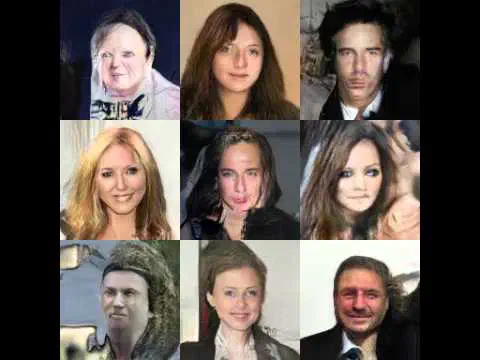
Alec Radford is the closest thing modern AI has to a ghostwriter. If you have used ChatGPT, searched images by text description, or run automatic transcription, you have used something he built or led — and yet he has given roughly three public talks in a decade. He dropped out of Olin College, co-founded a small ML startup called Indico, and in 2015 published DCGAN with Luke Metz and Soumith Chintala — the paper that made GANs actually trainable and taught a generation of practitioners that architecture constraints matter more than clever loss functions. He joined OpenAI in 2016 and stayed for eight years.
What he did there is the reason he belongs on any list of people who mattered. In 2017 he trained an LSTM to predict the next character of Amazon reviews and found that a single neuron inside it had spontaneously learned sentiment — nobody told it what sentiment was. That result is the seed of everything after: if you make a model good enough at predicting text, it has to learn the structure underneath the text. He then wrote the GPT-1 paper in 2018 as lead author, scaled it into GPT-2 in 2019, and the pattern held every time. Developers should sit with how contrarian this was. The field in 2017 was obsessed with supervised learning, task-specific architectures, and clever inductive biases. Radford’s bet was that a boring transformer, a lot of text, and next-token prediction would beat all of it. It did.
He did not stop at language. CLIP taught a model to align images and text from noisy web pairs, and it quietly became the backbone of an entire generation of image tools — Stable Diffusion, DALL·E, and most open-source multimodal search pipelines still lean on CLIP embeddings or its descendants. Whisper applied the same philosophy to speech: skip the fussy pipeline, train on 680,000 hours of weakly-labeled audio, ship the weights. Both are case studies in the same lesson — scale plus a dumb-but-general objective plus permissive data beats a decade of specialized engineering. If you are learning AI today, reading these three papers back to back is a better education in how to think about problems than most courses.
He left OpenAI in December 2024 to work independently, and since March 2025 has advised Thinking Machines Lab, the startup founded by Mira Murati, alongside former OpenAI research chief Bob McGrew. His independent output is notably not more scaling: a 2024 paper on sparse autoencoders with Ilya Sutskever and Jan Leike pushing interpretability to GPT-4-scale, a January 2026 paper on token-level pretraining data filtering as a way to shape what a model can and cannot do, and — most delightfully — talkie, a 13B model released in April 2026 with Nick Levine and David Duvenaud trained only on English text published before 1931. It is genuinely useful research (fully public-domain training data, a clean testbed for what models can extrapolate) wrapped in the best demo of the year: an LLM that has never heard of the internet. The man who proved scaling works now seems most interested in what’s inside the models and where their knowledge comes from. That is worth paying attention to.
Key Articles & Papers
Unsupervised Representation Learning with Deep Convolutional Generative Adversarial Networks (DCGAN) Learning to Generate Reviews and Discovering Sentiment Improving Language Understanding by Generative Pre-Training (GPT-1) Language Models are Unsupervised Multitask Learners (GPT-2) Language Models are Few-Shot Learners (GPT-3) Zero-Shot Text-to-Image Generation (DALL·E) Learning Transferable Visual Models From Natural Language Supervision (CLIP) Robust Speech Recognition via Large-Scale Weak Supervision (Whisper) Scaling and Evaluating Sparse Autoencoders Shaping Capabilities with Token-Level Data FilteringVideos
Controversies
The one durable controversy attached to Radford’s name is the GPT-2 staged release in February 2019. OpenAI announced the 1.5B model but withheld the weights, arguing the risk of mass-produced synthetic text was too high, and published a release-strategies paper defending the approach. Critics — including many open-science researchers — read it as risk theater that generated headlines while blocking independent study of the model’s biases and limits. OpenAI released the full weights in November 2019, saying it had seen no strong evidence of misuse, which critics took as confirmation the alarm was overstated. The fairer read seven years on: the specific harm forecast was wrong, but staged release became a normal industry practice, and the debate it forced was worth having. Radford was an author on the model and the release paper, not the architect of OpenAI’s communications strategy.
YouTube