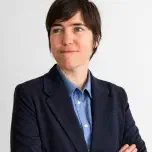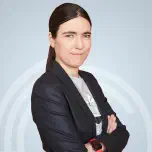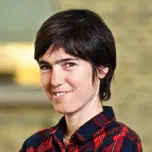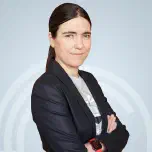
Waabi founder and CEO, autonomous trucking pioneer
Raquel Urtasun
Profile
Raquel Urtasun is one of the most technically credentialed founders in the autonomous vehicle industry, and she has spent the last several years making a contrarian bet that the rest of the field is doing it wrong. As Founder and CEO of Waabi, she argues that you cannot build safe self-driving by grinding out hundreds of millions of real-world miles and hand-coding rules for every edge case. Instead, Waabi trains and validates its “Waabi Driver” almost entirely inside Waabi World, a generative-AI simulator that reconstructs the physical world as digital twins and conjures dangerous scenarios that may never have happened on a real road. For developers, this is the interesting part: Urtasun is one of the clearest real-world examples of “simulation-first” AI, where the training environment is itself a learned generative model rather than a hand-built game engine.
Her academic pedigree is unusually deep for a startup CEO. Urtasun holds a PhD from EPFL, did postdocs at MIT and UC Berkeley, and has been a professor of computer science at the University of Toronto since 2014, where she co-founded the Vector Institute alongside Geoffrey Hinton. She is a genuinely prolific researcher — 200-plus papers and an h-index north of 120 — whose work on the KITTI benchmark, 3D object detection from LiDAR, and deep structured models shaped an entire generation of perception research. If you have read almost any autonomous-driving vision paper from the 2010s, you have brushed against her citations.
From 2017 to 2021 she was Chief Scientist of Uber’s Advanced Technologies Group, building out Uber’s self-driving research and its Toronto lab. When Uber offloaded ATG in 2021, Urtasun left to found Waabi with the thesis that autonomous trucking — long, structured highway routes — is where driverless technology will scale profitably first, ahead of chaotic urban robotaxis. That bet has attracted serious money: Waabi raised a $200M Series B in 2024 and then a $750M Series C in January 2026, co-led by Khosla Ventures and G2 Venture Partners with an Uber partnership, one of the largest venture rounds in Canadian history and a valuation around $3–4B.
What sets her apart from Waymo, Tesla, and Aurora is not just trucks — it’s the AI-first philosophy. Where others treat simulation as a supplement to fleet data, Urtasun treats it as the primary teacher, and pushes an end-to-end “single brain” model rather than a modular perception-planning-control stack. It’s a bold, still-unproven position — Waabi’s own driverless timeline slipped past its end-of-2025 target — but it makes her one of the most important people to watch on whether generative AI can safely operate in the physical world.
Key Articles & Papers
Are We Ready for Autonomous Driving? The KITTI Vision Benchmark Suite Vision Meets Robotics: The KITTI Dataset PIXOR: Real-time 3D Object Detection from Point Clouds Deep Continuous Fusion for Multi-Sensor 3D Object Detection An AI-First Approach to Autonomous Driving (Waabi launch essay)
Videos



Spotify Podcasts