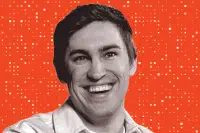
ElevenLabs CEO, building voice AI and conversational agents
Mati Staniszewski
Profile
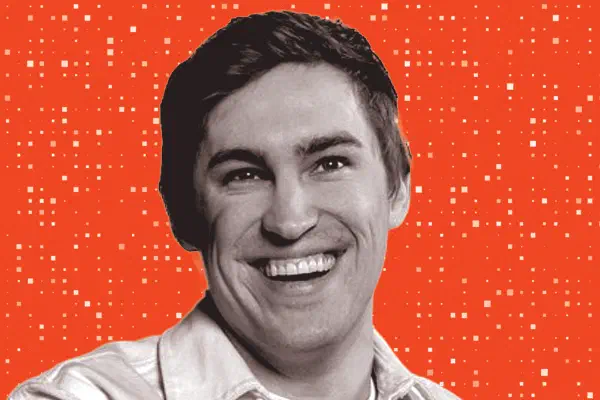
Mati Staniszewski is the co-founder and CEO of ElevenLabs, the company that, more than any other, made synthetic speech sound human. If you have built an AI agent in the last two years and wanted it to talk, there is a good chance you reached for ElevenLabs’ API — and there is a good chance the voice you shipped was better than anything the big foundation labs offered. That is the whole point of Staniszewski’s bet: audio is not a feature you bolt onto a text model, it is a hard problem worth a company.
Born in 1995 in a town outside Warsaw, Staniszewski studied mathematics at Imperial College London, then did the classic ambitious-European-technologist tour: product work at Opera, a stint at BlackRock, and nearly four years as a deployment strategist at Palantir. His co-founder, Piotr Dąbkowski — a former Google machine-learning engineer — is his high-school friend from Warsaw’s Copernicus lyceum. The origin story is genuinely charming and worth knowing: as teenagers they watched American films dubbed into Polish by a single monotone narrator (“lektor”) reading every character, and decided that flattening of human emotion was a solvable engineering problem. They founded ElevenLabs in 2022 and launched the text-to-speech platform in January 2023.
What matters to developers is focus. While OpenAI, Google, and others treated voice as one modality among many, ElevenLabs stayed “laser-focused on audio” — contextual, emotionally aware text-to-speech, then multilingual dubbing, then voice cloning, and now ElevenAgents, a full conversational-AI stack for building voice agents. That focus produced a technical lead the incumbents have struggled to close, and a business to match: in February 2026 the company raised a $500M Series D led by Sequoia, with Andreessen Horowitz and ICONIQ doubling down, valuing ElevenLabs at $11 billion and reportedly running past $200M in revenue. Staniszewski also joined the board of Klarna in 2025.
His central thesis — repeated across a year of podcasts — is that voice will become the primary interface for AI: not a novelty, but the default way humans talk to software, from healthcare intake to government services (ElevenLabs powers Ukrainian digital-government voices) to the phone tree that finally stops being terrible. Whether or not you buy the maximalist framing, Staniszewski is the person most responsible for making high-quality voice a commodity API call, which makes him essential context for anyone building AI products that speak.
Key Articles & Papers
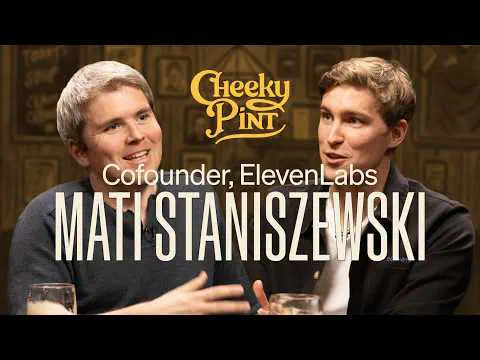
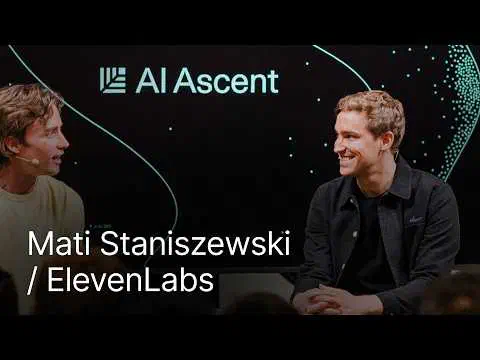
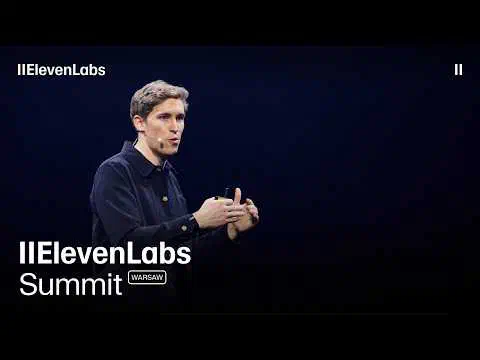
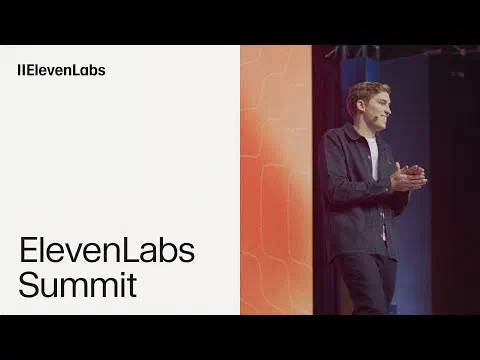
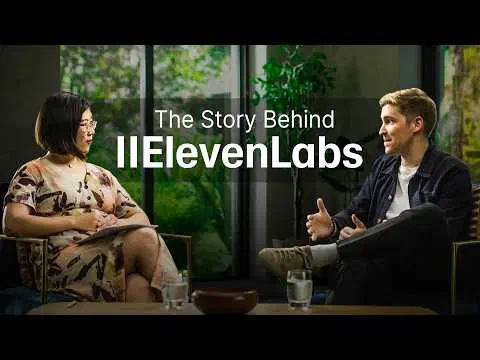
ElevenLabs raises $500M Series D at $11B valuation How a Tiny Polish Startup Became the Multi-Billion-Dollar Voice of AI ElevenLabs CEO: Voice Will Be the Core Interface for TechVideos
Controversies
ElevenLabs’ greatest strength — voices indistinguishable from real ones — is also its central risk. In January 2024, a robocall impersonating President Biden told New Hampshire voters to skip the primary; forensic analysis by Pindrop and UC Berkeley’s Hany Farid concluded with high confidence that it was generated with ElevenLabs’ tools. The company suspended the responsible account and the incident helped push the FCC to move against AI-generated voices in robocalls. (Engadget, Pindrop)
More broadly, ElevenLabs’ tools have been used to generate nonconsensual celebrity deepfakes and abusive content, a recurring concern for any voice-cloning provider. To its credit, the company has invested in safeguards — AI speech detection, voice-verification for cloning, and partnerships with detection firms — but the tension between open, high-fidelity synthesis and misuse is inherent to the product, and worth weighing if you build on it. Staniszewski has argued publicly that provenance and detection, not restriction alone, are the durable answer.
Spotify Podcasts


![[EXTRAIT] Mati Staniszewski - Ce que l'IA ne pourra jamais faire à votre place](/images/people/mati-staniszewski/spotify/5txlyjBYXCvYCYGvQhMjjR_hu_c673421d8eb8950b.webp)
![[SNIPPET] Mati Staniszewski - What AI will never be able to do for you](/images/people/mati-staniszewski/spotify/6IMkTWBec00xcz6J5pQwBb_hu_c673421d8eb8950b.webp)