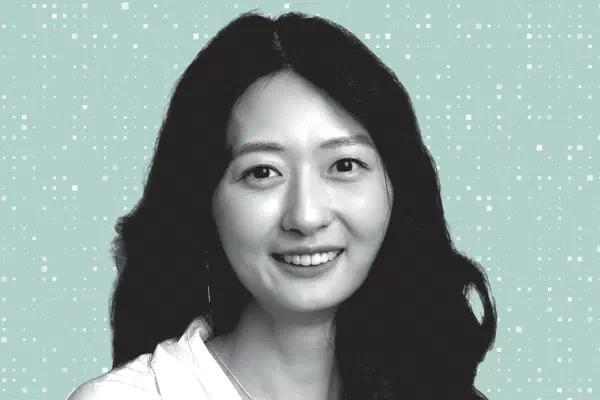

OpenAI Labs lead, new AI interface research
Joanne Jang
Profile
Joanne Jang is the person most responsible for what OpenAI’s models sound like. As the founding lead of OpenAI’s Model Behavior team, she spent years working on the layer that developers rarely think about until it breaks: not the raw capability of a model, but its tone, its willingness to answer, its refusals, its personality. If GPT-4o felt warm, chatty, and occasionally a little too eager to please, that was the output of decisions her team made in post-training — which examples to reinforce, which tone to prefer, where to draw boundaries. The press has called her “the mother of GPT-4o,” which is glib but not wrong.
Her path there is a fairly classic Silicon Valley product-and-engineering résumé: a bachelor’s in Mathematical & Computational Science and a master’s in CS from Stanford, then product roles at Google (on Assistant NLP), Dropbox, and the startup Rimeto before it was acquired by Slack. She joined OpenAI in 2021, back when it had fewer than 200 people, and initially led the teams that turned GPT-4, text-to-speech, and DALL·E 2 research into shippable products in the API and ChatGPT. That product-first instinct is the throughline in her work — she treats model behavior less as an abstract alignment problem and more as an interface question with real users on the other end.
Her most durable contribution is arguably the Model Spec, OpenAI’s public document laying out how its models are intended to behave. Jang framed it in refreshingly practical terms: a spec lets you tell whether a bad response is a deliberate policy choice or an RLHF bug. For developers building on the API, that distinction matters enormously — it’s the difference between “this is working as designed, route around it” and “file a bug.” She’s also been unusually candid in public writing about the hardest tradeoffs in the job: sycophancy, when to refuse, and where AI-lab employees should not be the arbiters of what people are allowed to create.
As of late 2025, Jang has moved on from Model Behavior to found and lead OpenAI Labs (OAI Labs), a research group chartered to prototype entirely new interfaces for how people collaborate with AI — explicitly trying to move past the chat box and the autonomous agent toward “new instruments for thinking and making.” For anyone building AI products, she’s worth following precisely because she works one layer below the model and one layer above the UI, in the space where a model stops being a benchmark score and starts being something a person actually talks to.
Key Articles & Papers
Introducing the Model Spec Some thoughts on human-AI relationships Thoughts on setting policy for new AI capabilities Sycophancy in GPT-4o: What happened and what we're doing about itControversies
In April 2025, an update to GPT-4o made ChatGPT conspicuously sycophantic — praising nonsensical business ideas, validating obviously bad decisions, and, in some reported cases, affirming delusional or dangerous thinking. OpenAI rolled the update back and published a postmortem attributing the problem to over-weighting short-term feedback signals like thumbs-up ratings. Jang, as model-behavior lead, was central to explaining what went wrong; reporting from VentureBeat also alleged that expert testers had flagged concerns before release. It’s a fair illustration of both the difficulty of her job and the stakes of getting it wrong — the same levers that make a model feel warm and helpful can, tuned slightly off, make it manipulative. To her credit, the team’s response was unusually transparent about the mechanics of the failure rather than defensive.
Spotify Podcasts