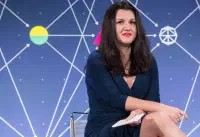
CEO of AGI Deployment at OpenAI, ex-Instacart
Fidji Simo
Profile
Fidji Simo is the rarest kind of figure in AI: not a researcher, not a founder, but the operator brought in to turn a research lab’s breakthroughs into products that reach billions. In May 2025, Sam Altman created a brand-new role for her at OpenAI — CEO of Applications — and she started full-time that August, later titled CEO of AGI Deployment. In that seat she owned essentially everything that wasn’t frontier research: product, engineering, sales, marketing, finance, legal, and policy, with the company’s COO, CFO, and CPO all reporting up to her. The message was blunt. Altman wanted to focus on research and safety; Simo was there to run the company that ships ChatGPT to the world.
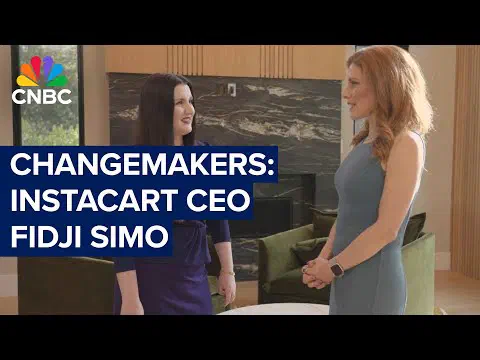
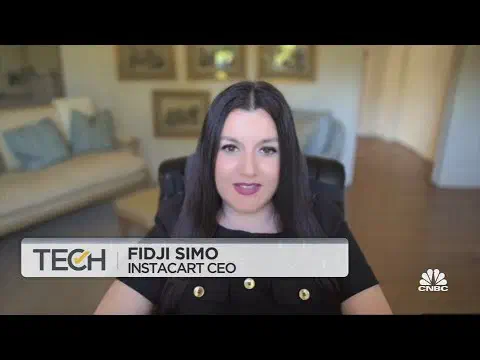
Her path there is worth understanding, because it explains the mandate. Simo spent a decade at Facebook, where she started by launching advertising in the News Feed and rose to lead the entire Facebook app — News Feed, Stories, Groups, Video, Marketplace, and the teams that built Facebook Live and Watch. She then spent four years as CEO of Instacart, taking the grocery-delivery company public in 2023 and pivoting it toward advertising and machine-learning-driven logistics. Before all that she grew up in a fishing family in Sète, in the south of France, was the first in her family to graduate high school, and earned degrees from HEC Paris and UCLA’s Anderson School. She joined OpenAI’s board in 2024 before Altman pulled her operational.
For developers, Simo matters because she represents a specific thesis about where AI value gets captured: not only in the model weights, but in the product surface, the distribution, and the business model wrapped around them. Her stated goal — that “AI should change lives for everyone,” reaching billions rather than hundreds of millions — is the consumer-scale ambition that shapes how ChatGPT gets packaged, priced, and eventually monetized. She has been candid that OpenAI will introduce advertising, though she insists it will resemble Google’s intent-based model rather than the surveillance-heavy Facebook machine she helped build, and that ads will stay “a minority” of revenue. Whether you build on OpenAI’s platform or compete with it, her decisions define the terrain.
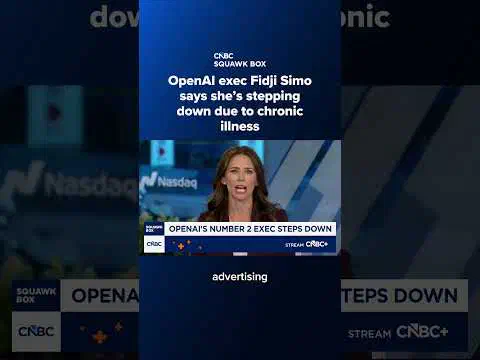
In July 2026, Simo stepped back from the full-time role, transitioning to a part-time advisory position after a severe flare of Postural Orthostatic Tachycardia Syndrome (POTS), a chronic neuroimmune condition she has lived with since 2019. Her exit is notable beyond the org chart: she has been unusually public about illness and endurance in leadership, founding the now-shuttered Metrodora Institute to treat neuroimmune disorders and writing frankly that “grit and endurance are not the only skills required to have impact over decades.” It is a candid coda to one of the most consequential product-leadership tenures in AI’s commercial era.
Key Articles & Papers
Leadership Expansion with Fidji Simo OpenAI's Fidji Simo on ads in ChatGPT and ending the Code Red Fidji Simo — TIME100 Most Influential People in AI 2025 Sam Altman carved out a brand-new 'CEO' role for her at OpenAI OpenAI exec Fidji Simo says she's stepping down due to chronic illness The Path to CEO: An Interview with Fidji SimoVideos


Controversies
Simo’s central point of contention with developers and users is advertising. She built her early career launching ads in Facebook’s News Feed, and her arrival at OpenAI immediately fueled concern that ChatGPT would be steered toward an ad-supported, data-driven model. Simo has pushed back directly, arguing that “the thing people don’t like about ads very often is not the ads themselves, it’s the use of the data behind the ads,” and promising an intent-based system closer to search than to social feeds, with ads remaining a minority of revenue. Critics note that these are commitments, not guarantees, and worth stress-testing as OpenAI weighs an IPO — the same tension between monetization and user trust that defined her previous roles now plays out on AI’s most-used consumer product.
Spotify Podcasts



![Fidji Simo: Meta, Instacart, & OpenAI journey [Glue Guys Classic]](/images/people/fidji-simo/spotify/1lI1Fxk8xKXLGQou43xhZO_hu_af13c41de822a1a9.webp)
![Fidji Simo - Creating Delightful Consumer Experiences - [Invest Like the Best, CLASSICS]](/images/people/fidji-simo/spotify/2b1oTVLtrl0DhOq4vdpSQc_hu_4178562b3357fe90.webp)
![Fidji Simo: Harnessing Inner Power - [Glue Guys, EP.19]](/images/people/fidji-simo/spotify/6vqtMu0BXdzJZUemWF5kxQ_hu_4fcce83095fae51c.webp)
![Fidji Simo - Creating Delightful Consumer Experiences - [Invest Like the Best, EP.328]](/images/people/fidji-simo/spotify/4h5ypj54BTMIfVfdCsBR16_hu_6cf7e0c987db73c2.webp)


YouTube