

Wharton professor, clearest AI-for-practitioners writer
Ethan Mollick
Profile
If you want to understand what actually happens when knowledge workers pick up an AI tool — not the hype, not the doom, but the messy reality — Ethan Mollick is the writer to read first. He’s an Associate Professor of Management at The Wharton School of the University of Pennsylvania, where he co-directs the Generative AI Labs and holds the Ralph J. Roberts Distinguished Faculty Scholar chair. Before AI ate his research agenda, he studied entrepreneurship and innovation; that grounding in how organizations actually adopt technology is exactly why his AI writing lands where most doesn’t. He is relentlessly empirical and refreshingly non-tribal — neither a booster selling a product nor a skeptic defending a discipline.
Mollick’s real influence runs through One Useful Thing, his Substack newsletter read by hundreds of thousands of practitioners, educators, and executives. The premise is exactly what the title promises: each post gives you something you can use, backed by research and, crucially, by his own hands-on experimentation with every frontier model as it ships. He was among the first serious academics to treat models from OpenAI, Anthropic, and Google as objects of empirical study rather than speculation — running them, breaking them, and reporting the shape of what they can and can’t do.
His single most important contribution to how developers and organizations think about AI is the “jagged frontier” — the idea that AI capability is wildly uneven and unpredictable, brilliant at some tasks and confidently wrong at adjacent ones that look equally easy from the outside. He introduced it alongside the “centaur” and “cyborg” metaphors (dividing labor with AI vs. tightly interweaving with it) in work tied to a landmark field experiment at Boston Consulting Group, where 758 consultants using GPT-4 finished more tasks, faster, at higher quality — with the largest gains going to the weakest performers. That “skill leveler” finding, and the warning that AI also silently degrades work that falls outside the frontier, remain the most-cited practical results in the field.
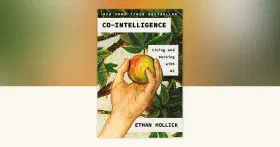
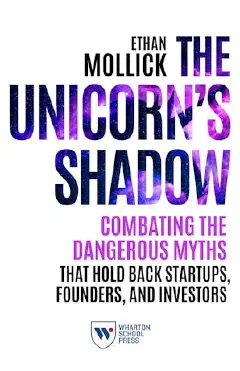
In 2024 he published Co-Intelligence: Living and Working with AI, an instant New York Times bestseller and a Best Book of the Year pick from The Economist and the Financial Times, and was named one of TIME’s 100 Most Influential People in AI. What makes Mollick matter to anyone building with AI today is his refusal to abstract: he insists you get “three sleepless nights” of hands-on use before you have opinions, that you treat the model as a fallible collaborator rather than an oracle, and that you figure out the frontier by trial and error because no one can hand you the map. That’s advice a developer can act on this afternoon.
Books
Key Articles & Papers
Centaurs and Cyborgs on the Jagged Frontier 15 Times to Use AI, and 5 Not To On Working with Wizards Giving Your AI a Job Interview The Shape of the ThingVideos

Spotify Podcasts




YouTube