Physical Intelligence co-founder building general-purpose robot models
Chelsea Finn
Profile
Chelsea Finn is one of the people most responsible for turning “robots that learn” from a research curiosity into a serious engineering discipline. As a PhD student at UC Berkeley — advised by Pieter Abbeel and Sergey Levine — she co-invented MAML (Model-Agnostic Meta-Learning), the 2017 algorithm that made “learning to learn” concrete and practical. The idea is deceptively simple: instead of training a network to solve one task, train its initial weights so that a handful of gradient steps on a brand-new task produces a good model. It works for classification, regression, and reinforcement learning, and because it’s a plain optimization trick rather than a bespoke architecture, it slotted into everything. Her dissertation, Learning to Learn with Gradients, won the 2018 ACM Doctoral Dissertation Award. For developers, MAML is worth understanding not because you’ll reach for it directly today, but because it crystallized the framing — few-shot adaptation, fast fine-tuning — that now underpins how we think about foundation models generalizing to new tasks.
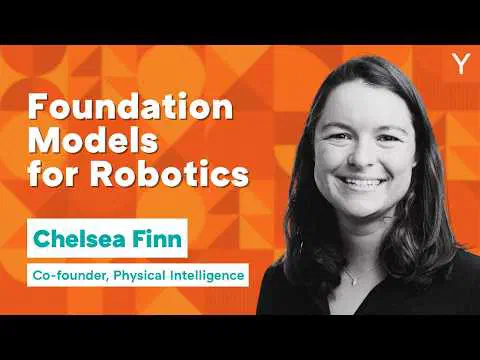
Today Finn is an assistant professor at Stanford, where she runs the IRIS lab (“Intelligence through Robotic Interaction at Scale”), and a co-founder and Research Lead at Physical Intelligence (π), the San Francisco startup building general-purpose foundation models for robot control. Physical Intelligence was founded in 2024 alongside Karol Hausman, Sergey Levine, Brian Ichter, and Lachy Groom, and it raised roughly $400M at a $2B+ valuation almost immediately — a bet that the recipe behind large language models (scale, broad data, one model many tasks) can be transplanted onto physical hardware. Their π0 model, a vision-language-action (VLA) flow model for general robot control, and its successors π0.5 and beyond are among the most closely watched artifacts in embodied AI.
What makes Finn’s work matter to anyone building with AI is her insistence on scale and real-world messiness over clean benchmarks. Her Stanford group produced Mobile ALOHA, a ~$32k open-hardware bimanual mobile robot that learned to cook shrimp, ride elevators, and do household chores from around 50 teleoperated demonstrations per task — a viral demonstration that low-cost data collection plus behavior cloning goes shockingly far. That project embodies her thesis: the bottleneck in robotics isn’t clever architectures, it’s data and generalization. She’s consistently pushed the field away from simulation-only results toward robots that survive contact with the actual world.
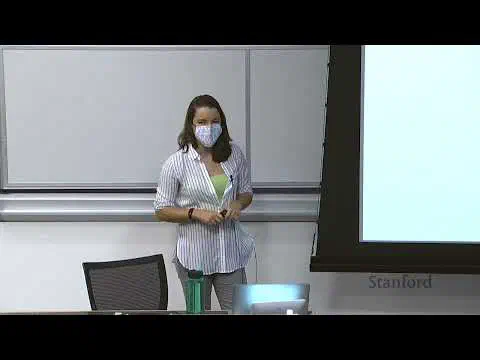
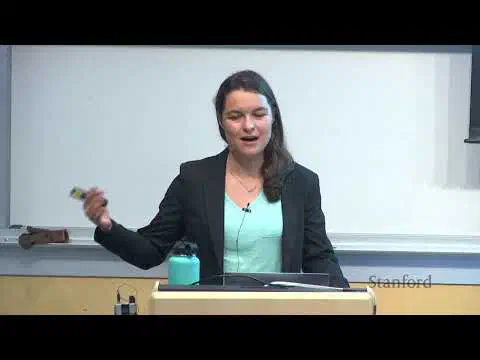
She’s also a genuinely excellent teacher, which is rare among researchers at her level. Her Stanford course CS 330: Deep Multi-Task and Meta Learning is freely available on YouTube and is one of the best structured introductions to transfer learning, meta-learning, and multi-task training you can find. If you’re a developer trying to build intuition for how modern models generalize, her lectures are a high-leverage place to start. Finn’s recognition — a Sloan Fellowship, NSF CAREER Award, the Presidential Early Career Award (PECASE), and MIT Tech Review’s 35-under-35 — reflects a career that has been both foundational and unusually accessible.
Key Articles & Papers
Model-Agnostic Meta-Learning for Fast Adaptation of Deep Networks (MAML) π0: A Vision-Language-Action Flow Model for General Robot Control Mobile ALOHA: Learning Bimanual Mobile Manipulation with Low-Cost Whole-Body Teleoperation π0.5: A VLA Model with Open-World Generalization Learning to Learn with Gradients (PhD Dissertation) End-to-End Training of Deep Visuomotor PoliciesVideos
Spotify Podcasts




YouTube