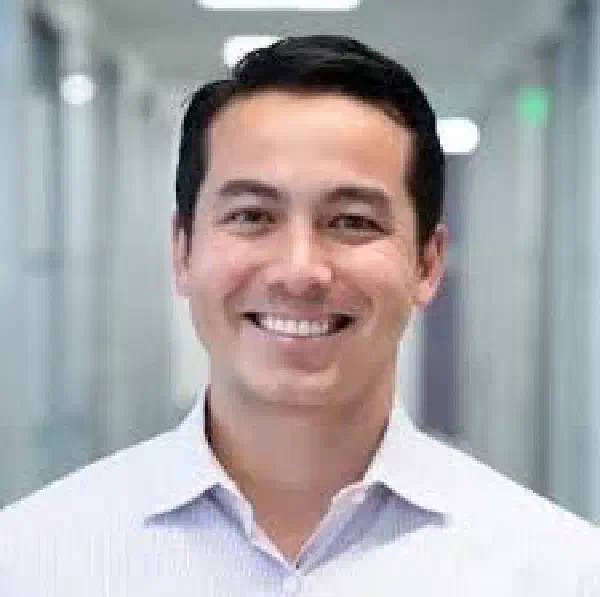
Shield AI President and Co-Founder, AI combat pilot builder
Brandon Tseng
Profile
Brandon Tseng is one of the clearest test cases for a question the AI field mostly debates in the abstract: what happens when autonomy leaves the simulator and starts flying combat missions in a real war. As President and Co-Founder of Shield AI, Tseng has spent a decade building AI “pilots” — software that flies aircraft with no human at the stick and, increasingly, no GPS to lean on. He is not a machine-learning researcher; he is a former Navy SEAL who served seven years, deployed twice to Afghanistan and once to the Pacific, and came home convinced that robots should be the ones walking into the room where someone might be waiting. He founded Shield AI in 2015 with his brother Ryan and engineer Andrew Reiter, and holds a mechanical engineering degree from the U.S. Naval Academy and an MBA from Harvard Business School.
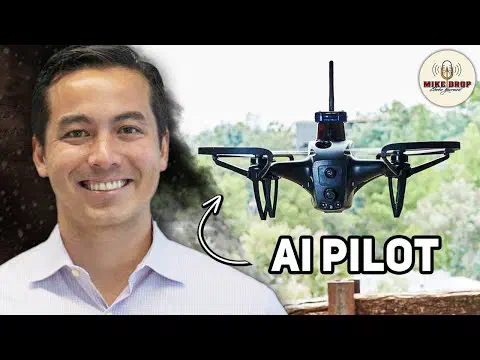
What makes Tseng worth a developer’s attention is the product philosophy, not the résumé. Shield AI’s core asset is Hivemind, an autonomy stack built on reinforcement learning that is meant to be portable across airframes — the same way you’d think of an operating system rather than a one-off control loop. Hivemind flies the V-BAT, a tail-sitting VTOL reconnaissance drone that, since 2024, has operated in Ukraine as arguably the only long-range ISR and targeting asset that keeps working under the heavy electronic warfare and GPS jamming that have grounded cheaper drones. That “works when the GPS is gone” property is the interesting engineering claim: autonomy that degrades gracefully in a contested, denied environment is a genuinely harder problem than the demo-friendly kind, and it’s the part most AI benchmarks never touch. Shield AI’s earlier acquisition of Heron Systems — whose agent swept a human F-16 pilot 5-0 in DARPA’s 2020 AlphaDogfight Trials — fed directly into the 2023 milestone of flying an AI agent aboard the X-62A VISTA against a live manned F-16.
Where Tseng is now is the ambitious end of that arc. In October 2025 Shield AI unveiled X-BAT, an AI-piloted, vertical-takeoff jet fighter designed to launch from a ship deck or a patch of ground with no runway, transition to jet flight, and run strike, reconnaissance, or electronic-warfare missions autonomously or teamed with crewed aircraft — Tseng calls runway-independent airpower “the holy grail of deterrence.” First vertical flight is targeted for fall 2026 and operational validation for 2028, so this is a promise, not a shipped product. It also puts Shield AI squarely in the fast-consolidating defense-tech pack alongside Anduril and Palmer Luckey, and Palantir and Alex Karp. Tseng was named to TIME’s 100 Most Influential People in AI in 2025.
For developers, the honest framing is this: Tseng represents autonomy graded by the harshest possible rubric — a live adversary actively trying to jam, spoof, and destroy your system. He is also careful, publicly and repeatedly, to draw a line he says the technology will not cross. Whether you find that reassuring or insufficient, his work is where a lot of the industry’s talk about “agents acting in the real world” stops being a metaphor.
Key Articles & Papers
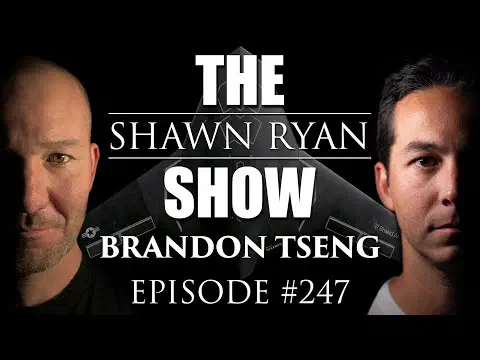
Shield AI Unveils X-BAT, an AI-Piloted VTOL Fighter Jet for Contested Environments Brandon Tseng: The 100 Most Influential People in AI 2025 'It will improvise': Shield AI's dogfighting algorithm developed novel fighter tactics Brandon Tseng's Statement for the U.S. Senate AI Insight Forum on National Security Shield AI's Founder on Death, Drones in Ukraine, and the AI Weapon 'No One Wants' How A Grisly Injury Threw $5 Billion Drone Startup Shield AI Off Course Shield AI unveils X-BAT autonomous vertical takeoff fighter jetVideos
Controversies
In April 2024, a U.S. Navy service member’s fingers were partially amputated by a V-BAT’s rotor during a demonstration near Fort Stockton, Texas. A Forbes investigation reported that Shield AI had internal warnings about propeller-strike hazards as early as 2022 — including an incident in which an employee’s shirt was shredded in testing — and that some former employees said they were pushed out after raising safety concerns. The fallout included months of V-BAT flight restrictions, missed revenue targets, and the departure of CEO Ryan Tseng (Brandon’s brother), replaced by Gary Steele. Shield AI says the injured sailor made a full recovery. The episode is a fair reminder that “combat-validated autonomy” is built by a company operating under startup growth pressure, and that the physical safety record deserves as much scrutiny as the AI claims.
Separately, Tseng and Shield AI sit inside the broader, unresolved debate over lethal autonomous weapons. Tseng’s public position is firm — “that is a human decision and it will always be a human decision” — and he stresses that Shield AI does not build systems that autonomously choose to kill. Critics of the field note that the same underlying autonomy stack is what would make such a capability technically feasible, and that current U.S. policy restricts but does not ban it. Readers should weigh Tseng’s stated principles against the dual-use nature of the technology itself.
Spotify Podcasts