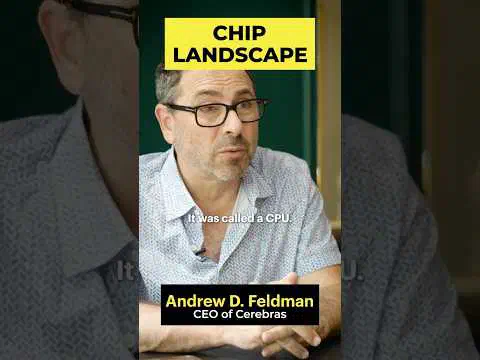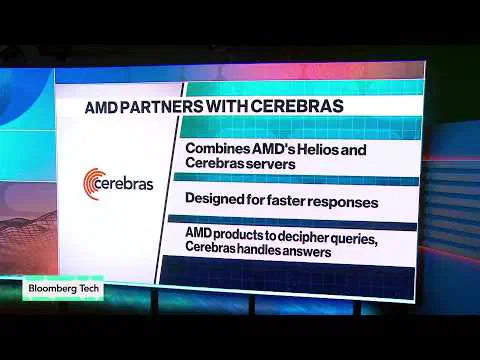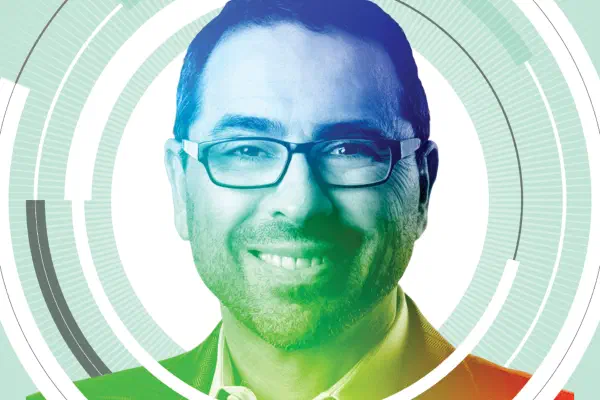

Cerebras CEO building wafer-scale AI processor chips
Andrew Feldman
Profile
Andrew Feldman is the co-founder and CEO of Cerebras Systems, the company that decided the way to beat Nvidia was not to build a better GPU but to stop building GPUs entirely. While nearly every other AI hardware company iterates on the same rack-of-many-small-chips template, Cerebras builds the Wafer-Scale Engine (WSE) — a single processor the size of a dinner plate, etched from an entire silicon wafer that the rest of the industry would normally slice into dozens of separate chips. It is roughly 50 times larger than Nvidia’s biggest flagship, and Feldman’s entire thesis is that keeping the whole model on one piece of silicon — memory, compute, and interconnect fused together — sidesteps the communication bottleneck that dominates large-scale training and inference. For a developer weighing infrastructure choices beyond the GPU monoculture, Cerebras is one of the very few genuinely different architectures on the table.
Feldman is a serial hardware founder, not a first-timer who got lucky. He co-founded SeaMicro, an energy-efficient microserver company AMD bought in 2012 for about $357 million, and before that held senior roles at Force10 Networks (sold to Dell for ~$800M) and Riverstone Networks. Stanford undergrad, Stanford MBA, child of two Stanford professors — he is Silicon Valley in the deepest sense. That background matters because wafer-scale integration is an audacious, capital-hungry, physics-fighting bet, and Cerebras has survived long enough to matter largely because Feldman has done the long grind of semiconductor commercialization before.
The story that put Cerebras on developers’ radars is speed. Independent benchmarks from Artificial Analysis have clocked Cerebras inference at multiples of GPU-based clouds — over 2,500 tokens/second on Llama 4 Maverick versus roughly 1,000 on Nvidia Blackwell, and around 969 tokens/second on the 405B-parameter Llama 3.1, with sub-quarter-second latency. Feldman calls this the “broadband moment” for AI, the dial-up-to-fiber jump — and the pitch lands hardest for exactly the workloads developers care about most today: agents, code generation, and multi-step reasoning, all of which are choked by token-by-token latency rather than raw throughput. On raw single-user inference speed, Cerebras has consistently outrun its closest specialist rival, Groq (founded by Jonathan Ross).
Where Feldman is now is a public company under a microscope. Cerebras IPO’d on Nasdaq (CBRS) in May 2026 in the year’s largest offering — shares nearly doubled on day one — minting Feldman a fortune north of $3 billion on paper. The company reported $510M in 2025 revenue (up ~76%) and a Q1 2026 that grew over 90% year-over-year. But the same filings expose the fragility beneath the growth: for years the revenue was overwhelmingly concentrated in UAE-linked customers G42 and MBZUAI, and a reported $10 billion multi-year compute deal with OpenAI (Sam Altman’s company) is what finally re-shaped the customer base enough to make the IPO viable. Feldman is a compelling evangelist and a real engineer’s founder; he is also running a company whose story still carries, in one analyst’s phrase, “too much hair.”
Key Articles & Papers
Cerebras Beats NVIDIA Blackwell: Llama 4 Maverick Inference Cerebras CS-3 vs. Groq LPU Llama 3.1 Model Quality Evaluation: Cerebras, Groq, SambaNova, Together, Fireworks Cerebras S-1 Teardown: Is the $23B Wafer-Scale IPO the End of GPU Homogeneity? AI Chipmaker Cerebras' CEO Is Now Worth $3.4 Billion After Long-Awaited IPO
Videos

Controversies
Riverstone Networks accounting case. Long before Cerebras, Feldman was a marketing/business-development executive at Riverstone Networks. In connection with a 2001–2002 revenue-recognition scheme, the SEC charged him and other executives; in 2007 Feldman pled guilty to one count of circumventing a company’s accounting controls and was sentenced to probation and a $5,000 fine, and in 2008 settled the SEC’s civil claims — without admitting or denying wrongdoing — paying roughly $290,000 plus interest. It’s decades old and periodically resurfaces as a red flag in coverage of the Cerebras IPO. (SEC)
Customer-concentration and geopolitics. Cerebras’s pre-IPO revenue was extraordinarily concentrated — at points the great majority came from two UAE-affiliated customers, G42 and Mohamed bin Zayed University of Artificial Intelligence — which drew SEC and CFIUS scrutiny and delayed the offering. Analysts flagged that export-control friction or the loss of a single customer could hit the revenue base hard; the OpenAI contract mitigated but did not eliminate the concern. (CNBC)
Spotify Podcasts










YouTube